Looking for recommendations for probe thermometer to measure dry ice slurry. Just a kitchen cook- dont have the budget you pro’s do. Tia
Popular choice
https://www.amazon.com/Thermometer-Thermocouple-Channel-Datalogger-Temperature/dp/B01HD4WMS8
Cheaper 4 channel option
https://www.amazon.com/Perfect-Prime-4-Channel-Thermometer-Thermocouple-200-1372°C/dp/B0142HFA06
My vote (cheap and supports K/J/T/E/R/S/N type)
https://www.amazon.com/JuviPerpric-Thermocouple-Thermometer-Thermocouples-Temperature/dp/B0DCJMVTB5
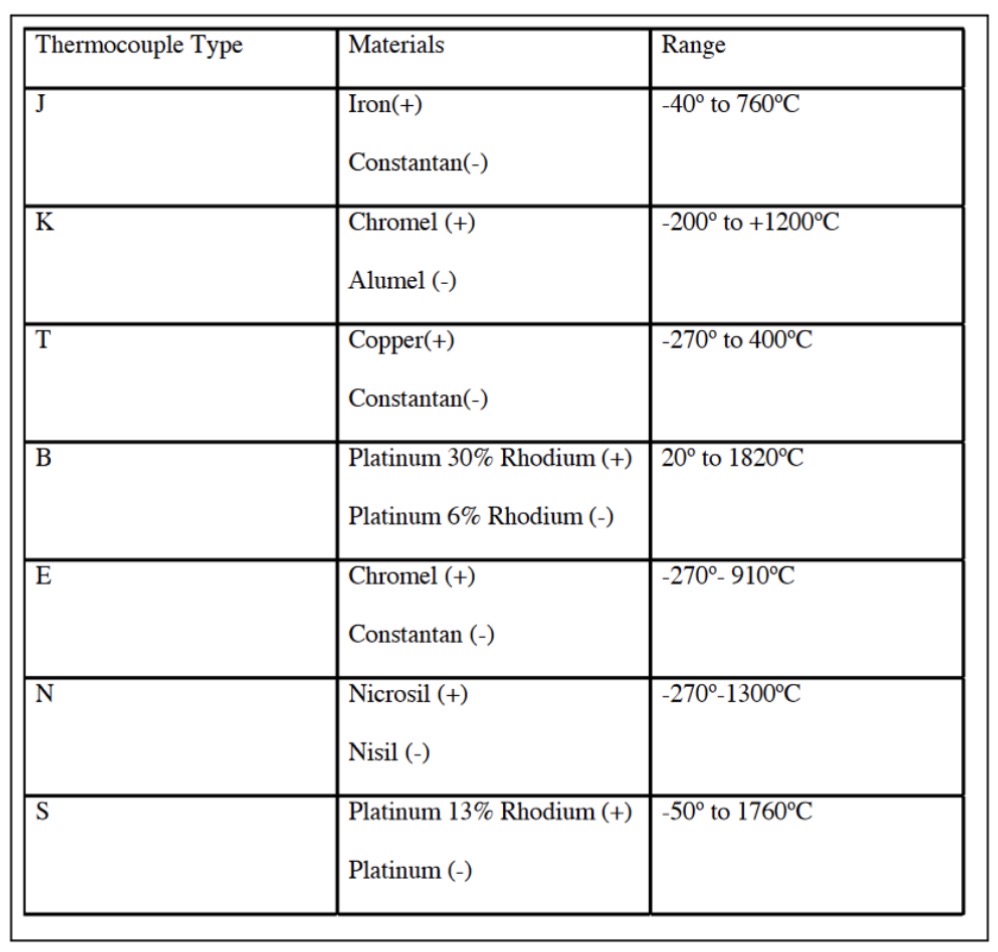
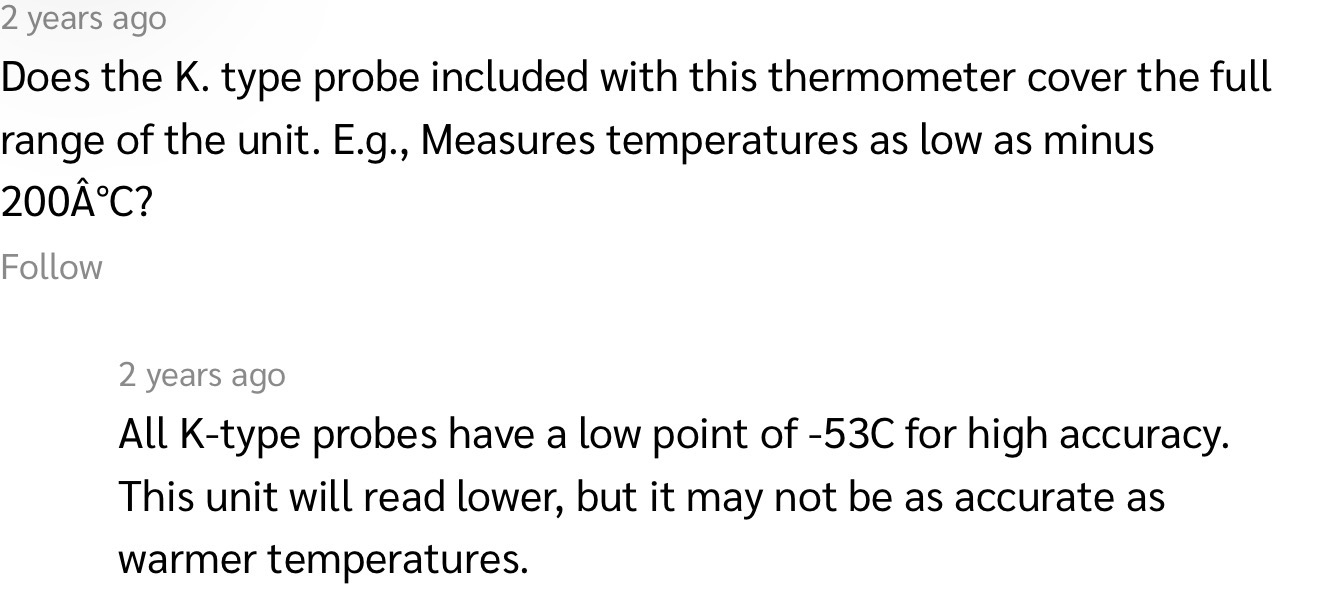
Type T for higher accuracy, but K should be more than sufficient for your needs
2 Likes
My question is why
Dry ice slurrrys with specific solvents give known temperatures
Meaning if the slurry had time to freeze to temperature constant reaching the boilingpoint
Of dry ice in that solvent as long as there is dry ice present visually in 25% of volume
You can trust the temperature the system ( dryice /solvent) is at
8 Likes
Rogue makes an excellent point.
Measuring the slurry won’t tell you anything. Actual process temp is what’s important (depending on what you’re trying to accomplish).
7 Likes
I think it’s useful to know your cold trap is stable (if thats the use case), I did not pay attention to it when I used dry ice. But with immersion chillers I do.
But prob not something to worry about depending on scale.
2 Likes
Ding ding ding!
“What temp is my boiling water?”
“How cold is this ice water slurry?”
Enquiring minds want to know…
Which is a good thing. AND some things are just knowns, so you don’t actually need to measure them.
3 Likes
We like the Tegam temp probe. It’s intrinsically safe and can see down to -250 Celsius.
2 Likes
thx- above the budget for a home cook! did find extech which are made by flir
What temp IS your slurry?
Have you found any variance in the temperature??
Or are you actually measuring the temperature of something other than your dry ice slurry? (Eg the process you’re trying to control).
What is the temperature range on the thermometer you chose? (Link? For the rest of the class…)
The first extech thermometer I find is only rated down to -58F which won’t get you the temp of a dry ice slurry…
https://www.zoro.com/extech-thermometer-lcd-28-in-thermocouple-ea11a/i/G0907024/
Edit: turns out that same model (EA11A) is sold elsewhere with claims of -200F.
https://www.amazon.com/Extech-EA11A-Single-Input-Thermometer/dp/B000R8C3HS/
Manufacturers website lists -58F
https://www.extech-online.com/index.php?main_page=product_info&products_id=208
Just because it has a k (or T) type thermocouple, doesn’t necessarily mean the reader will actually display those temps.
Genuinely curious on what you have found.
apparently meter reads lower, have to find suitable k type immersion probe
flir meter is here in town, might just ask them. its more than dry ice, also trying ca/cl slurry. and will also try radiator fan to condense ethanol. as many different things going on with extraction, measuring will help make certain everything is working properly. dont always trust ir thermos. ok to trust, but i like to verify. im just a kitchen cook noob…
1 Like
I would never argue against measuring process temps…
(Recommend that entire thread)
Does that mean you purchased one and are NOT able to measure -78C?
Stating that explicitly is helpful for the rest of the class…especially if you can wander into a local store and get the real skinny on a thermocouple reader that covers the required temp range.
The spec sheets on flir’s website suggest the TM100 is a more appropriate response than the EA11A.
Which reader did you purchase?
i am looking at both- will get advise from flir. the tm100 is an older model. they make a flir branded model buts its 400 plus probes. the equipment list just gets longer every day. low temp freezer, nano emulsifier, some quality boro glassware this time, etc etc. friend was commercial and has co2 equip in storage- might try that later. alot more to this! graduating from everclear and a crockpot to ethanol wash, buchner, freezing and filtering then recovering ethanol.
1 Like
So cold (only?) AFTER extraction?
As in “winterization”?
Getting my solvent cold and not picking up anything that was insoluble at XX temp has always looked like the shortest route to me.
Get it colder than XX temp, because I just can’t extract any colder, but I can chill and filter colder, and there is still stuff I think I want out? Sure.
Reduce solvent volume before winterizing? Probably makes sense in most cases. Depends how you optimized your extraction solvent volume.
Iirc you mention 12lb in 10gal with expected 500g yield?
If I was going to winterize 500g, I would dissolve it in about a gal of ethanol. Not 10 (or 8 or whatever you get back).
1gal = 3.75liters. 3.75/0.5 = 7.5:1 solvent extract ratio
the wash is 10 gal, before distilling. thought i would do cold filtering before any distilling. should i partially distill first? i dont have an ultra low temp freezer btw- yet. again- home cook here…
Round here”distilling” is the distillation of cannabinoids.
You’re recovering solvent.
(Just notes on the jargon to make finding stuff easier)
If your target doesn’t go through a phase change, you haven’t distilled it.
Should you recover solvent before “cold filtering”?
Depends on your goal for that process. Is the goal winterization?
Did you read @Future’s write up on the subject linked above? Or the discussion on Ethanol Ratio During Winterization
What IS your expected yield? As I said if it’s 500g, then you only want ~1gal of solvent in there if you’re actually trying to precipitate the fats and waxes (winterize).
Edit: you’d probably benefit from reading TheLostBiologist Bucket and Post Processing Tek for Golden Extract as another take on “cold filtering”…
2 Likes
The goal is not to follow a recipe, it is to understand the process (to hell with your protestations to the contrary  ).
- what’s the goal of “cold filtering”?
- how does that work?
- how do I achieve it (with parts on hand)?
I’m going to assume the goal is to “winterize”.
Can you a) confirm and b) explain what that means to you?
-
it’s all about solubility.
You want your target to remain soluble, and as much of your non-target as possible to NOT be soluble. -
solubility generally decreases with temperature, so by getting things cold, we reduce the solubility of both target and non-target.
We can also reduce the amount of solvent.
Those two “levers” will need adjusting to find your sweet spot. 10:1 solvent requires lower temps than 5:1 to “reject” (precipitate/fail to dissolve) the same amount of any given solute.
-80C might drop some of your non-target at your current 37.5liters/0.5liters =75:1 solvent ratio, but you could remove a whole lot more at -20C (home freezer) if you reduced the solvent volume so it could not dissolve as much.
2 Likes
thx. will be running a few batches so will try evaporating 5 gallons wash down to 1 gal, then freeze and filter, then finish evap.