Can you elaborate about on your temps? Pressures?
Running active/ passive?
1 Like
I’ve been running both for nearly two years now; I prefer propane. It flashes out of the resin at a much lower temp, and I sincerely have NEVER come across the ‘burnt’ flavor you alluded to. It’s less polar than butane, and so doesn’t pull the lipids as much, but the terps come across just fine.
4 Likes
Exactly same results
It s awfully hard to find cleane propane where I am
I buy refrigerant cans 700 ml
So I barely use the tech but it works well for shure
Thx @Griffin.Labs and your self 
2 Likes
I run between -30C and -40C.
IMO, running any colder doesn’t offer further benefits and is a waste of time. I always LOL when I see people thinking they need to run live resin at -60C or -70C.
And don’t even get me started about people running these silly jacketed columns thinking they need to freeze their material columns to -60C to run live resin. What an unnecessary pain in the ass that must be.
What exact pressure are you wondering about, collection pot? Vapor assist? Solvent tank?
I run an active system, which I think is pretty much necessary when running a medium/large propane system.
Do to its -42C BP @STP propane is much more of a beast to keep at 0 PSIG in the solvent tank during operation than butane and some pressure is usually always present in the tank. This problem compounds the larger the solvent tank gets and makes running a large passive system with propane much more difficult, IMO.
One of the unspoken advantages of an active propane system is that I can throttle the cooling power of the after pump heat exchanger to leave some appreciable pressure in the solvent tank (40-50 PSIG) which really helps reduce the need to vapor assist when flooding columns and cuts down on overall dry ice usage.
After I’m done vapor assisting using propane vapor I toss an extra scoop of dry ice in the heat exchanger and go load up another column while the inflow of cold solvent from the pump arrests the vapor assist pressure and lowers the tank pressure.
There’s no stopping the process. No unsafe venting and no very unsafe vacuuming down of vessels containing flammable liquids.
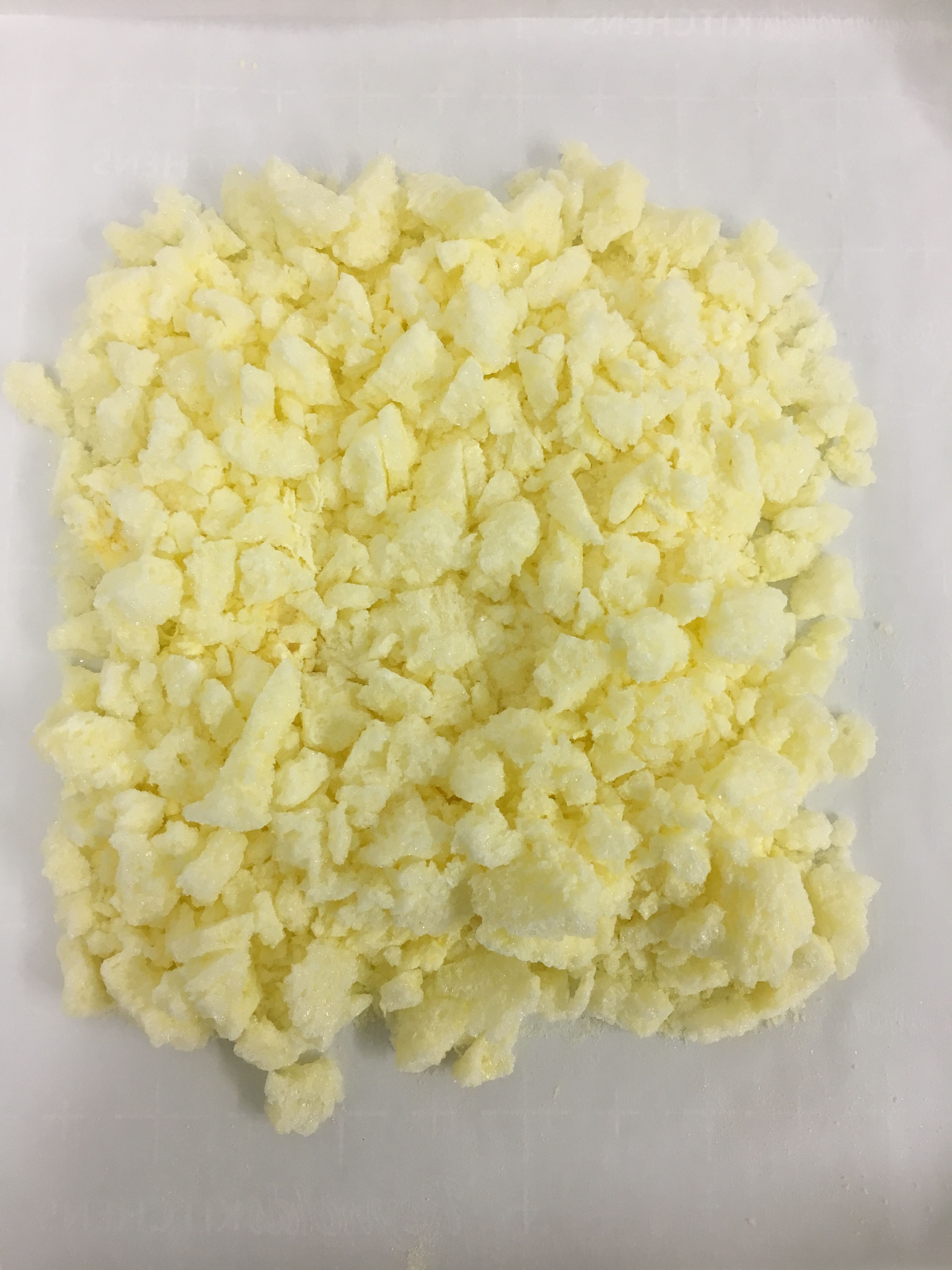
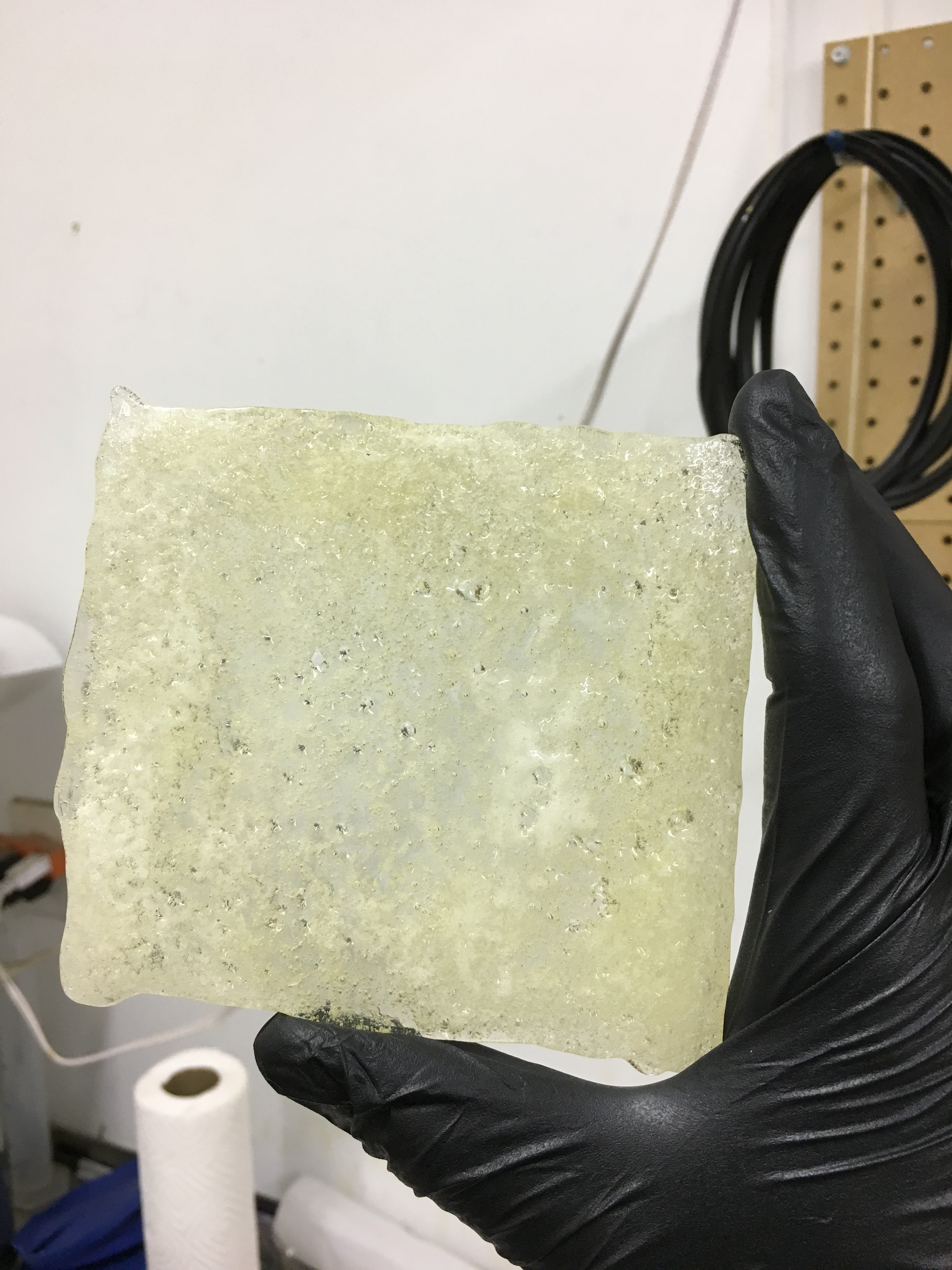
@dbgill Yep, most times the extract comes out of the collection pot sufficiently purged or only needing one partial vac pull in the oven. For the shatter portions I usually need to crush it up and melt it down into a slab at about 60C (140F) and do a single vac pull to remove the majority of the bubbles.
This much easier purge technique has saved me a lot of much time over the years. I consider it a major advantage of propane. No flipping slabs for days. No wall of ovens necessary.
Other advantages to propane besides less fats and the ability to fractionate terps include better overall color and much, much faster recovery rates. Seriously, switching to propane has to be the easiest way to increase recovery rate but you must have a proper recovery setup to handle it or your collection pot pressures can easily get out of hand.
11 Likes
what kind of results did you see during cured trim runs with this the switch to propane?
are the yields comparable to other solvents after washing 2-3 times?
1 Like
Would you run the same temps -30 or -40 for n-butane?
1 Like
I’ve noticed lighter color oil and yields still about the same.
The yields might be a little less than butane but it’s not much and I’ve run extra washes to make sure I’m getting all the cannabinoids and terps with propane. I feel like all that would be left to get are undesirables.
I’ve also noticed most oils seem terpier and runnier which I think might have to do with decreased lipids and pheophytin.
I still get shatter sometimes but usually it’s soft and crystallizes. I try to explain to people that this is good and isn’t a problem. Some people are really hung up on having shatter consistency but once they realize runnier=better they start to come around.
I did start doing an extra rinse when I made the propane switch, so three total washes with two column flushes. I would do this if I still ran butane just to make sure I’m getting everything.
I think flushing and re-flooding the column multiple times is way more important than soaking when it comes to making sure you’re getting all the yield. Especially if you’re not bottom flooding for one of the washes.
Yep.
I haven’t noticed any benefit to going colder.
I think it’s some kind of “If cold is good, colder must be better” thinking that got people thinking they need -60C or colder.
I’m also not sure where the notion that you need jacketed columns at -60C to run live resin came from.
I get that it sounds like a good idea and I’m sure system manufacturers are more than happy to recommend/sell them to people but I think it’s totally unnecessary. Not only are the columns expensive, but they’re heavy and a real pain in the ass to deal with.
5 Likes
if cold doesnt mattter then why does ice water hash need to be cold? if you did water hash with room temp/warm/hot water youll extract more chlorophyll due to temp; its the same “science” with hydrocarbons, -60c will lock chlorophyll in place/ make it less easy to absorb into the solvent… thats just science. -60c versus -80c is what doesnt matter you only need -50 to -60 and ethanol only needs -40c
3 Likes
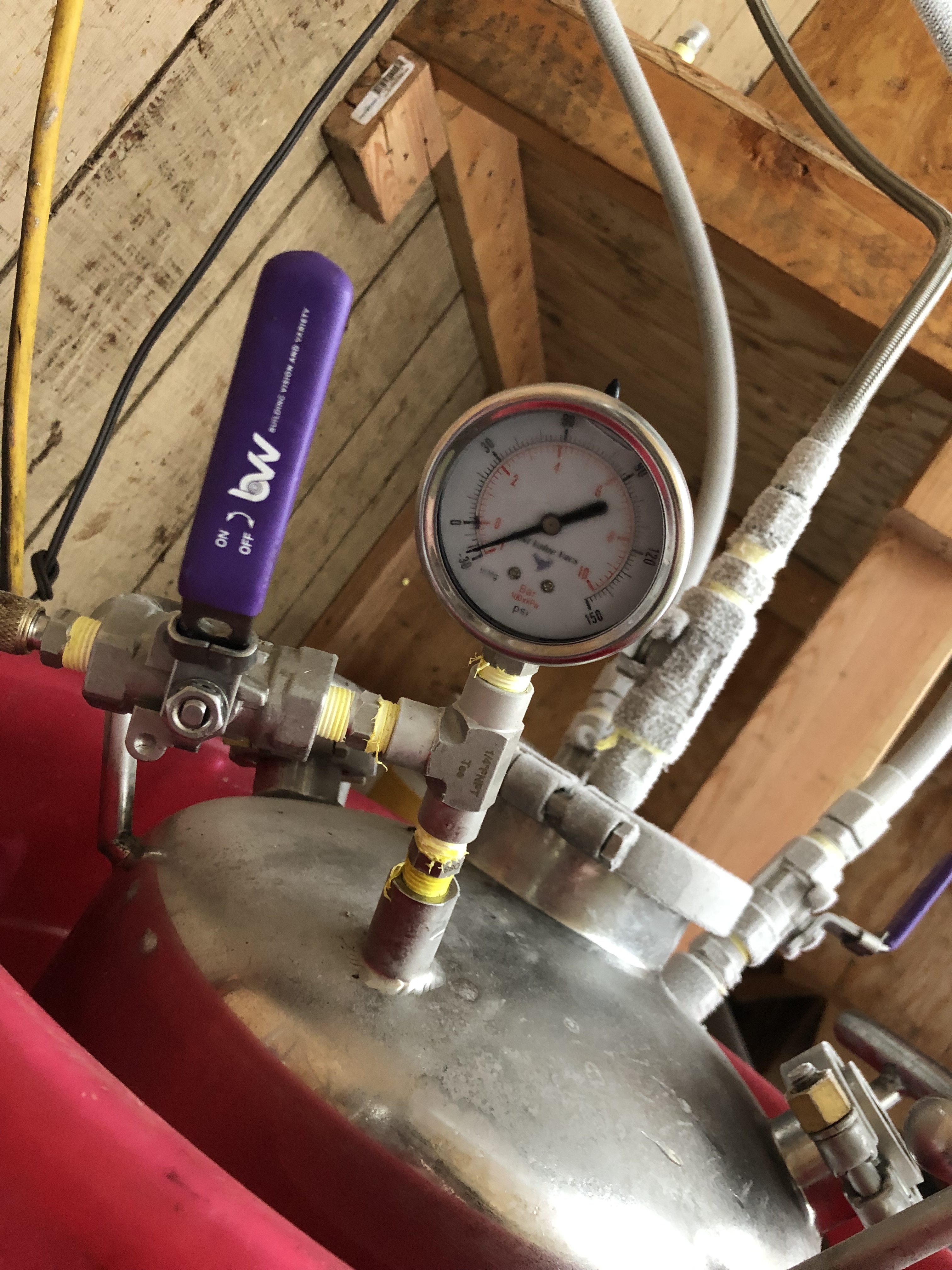
I have been running 95propane/5isobutane. This is my solvent tanks gauge mid recovery. I have no issues keeping my pressure below 0. It’s a 50lb stainless tank in dry ice/ denatured alcohol slurry.
6 Likes
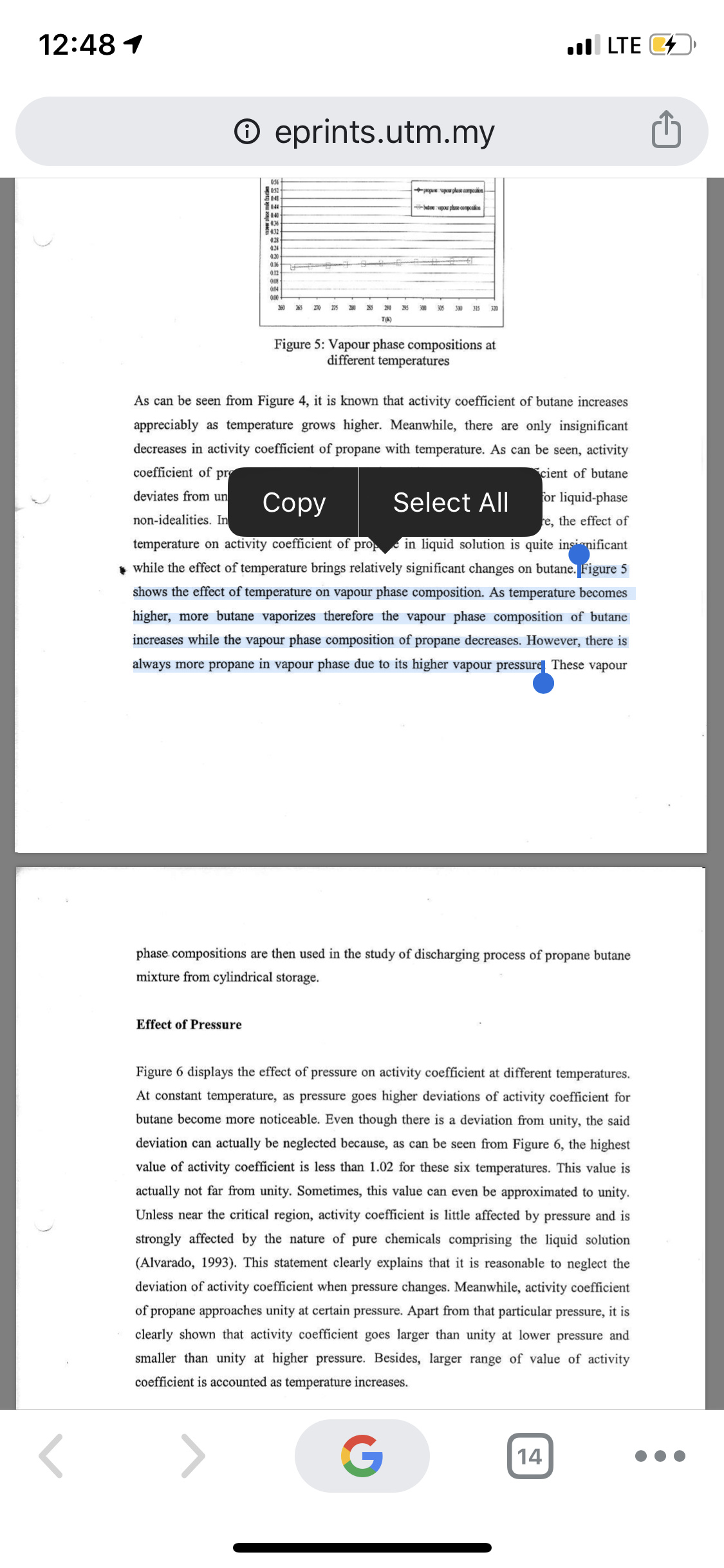
http://eprints.utm.my/id/eprint/5262/1/ZainalZakaria2005_ThePredictionOfVapourLiquidEquilibrium.pdf
This is a good read for everyone wondering about propane/butane azeotropes. Talks about liquid/vapor equilibrium at several temperatures. It’s dense but it’s helpful—a very important factor is the fact that gases aren’t ideal, we have to consider fugacity (for gas’s phase) and activity (for liquid phase). These phenomena are also compounded by pressure, because the gases are compressible and so are the liquids.
In the context of this discussion though, there is a portion of evaporated gas that is a mixture of propane and butane. In fact, most of the vapor created is a mixture—initially more rich in propane and then more rich in butane. Not one followed by the other, more of a gradient.
Raoult’s Law mentioned earlier is probably the best starting point.
Edit: Here’s an excerpt
11 Likes
have never made water hash, but ice water cannot be cold enough to lock out chlorophyll no? i always thought the ice water was used to keep the frozen trichs frozen so you can break em off lol i guess i got that wrong…time to research making water hash
2 Likes
That is exactly why you use ice cold water, to make the trich heads brittle. You’re right about that.
4 Likes
cold water makes the trichome head brittle from the stalk, if you use really good quality nugs and know what youre doing, you can most definitely get icewax that is chlorophyll free. icewax however isnt lipid/wax free due to the cuticle layer surrounding each individual trichome…
3 Likes
Imagine getting stuck in this…
yes but is the temperature of ice water enough to lockout chlorophyll?
And someone putting on the pump
2x165cfm 
What to do
1 Like
Thanks for posting!
2 Likes
No one has said that cold doesn’t matter.
With LPG extraction, lowering the temperature of the solvent reduces the solubility of all constituents and lowers the ability of the solvent to hold solute in general but it slows down the dissolution of the heavier C-55 (chlorophyll) and C-30 (wax) molecules more than the C-10 through C-22 targeted elements.
What I’m saying is that I have found -30C to be my threshold of “cold enough” for making nice dabbing oil and live resin with propane using decent material. Any colder than -30C doesn’t seem to offer any further benefits.
Chlorophyll has both polar and non-polar attributes on the molecule. It’s not soluble in highly polar water or highly nonpolar LPG. I believe it is most soluble in mid-polar solvents like alcohols.
Once the water soluble chlorophyll binding proteins (WSCP) that hold the chlorophyll in place are washed away, chlorophyll can be transported in water as micelles. A higher percentage of broken leaf margins in the material will expose more WSCP and chlorophyll to the solvent.
Why do you think -60C is the magic temperature instead of -30C? Hitting -30 is pretty easy so I’ve never really experimented with warmer temps, though I have had a few times where my initial runs are -20C while everything is still chilling down.
You’re citing “science” but not giving any evidence and that’s what I’m getting at here. For some reason people think it’s necessary to have -60C or colder and I haven’t found that to be the case.
I have been running between -30C and -40C for a few years and it works fine. I’ve never seen a green tint to any extracts.
When you start talking about older material you start to bring more of the breakdown products of chlorophyll into the mix, namely pheophytin.
Pheophytin is basically a chlorophyll molecule that has had the central Mg ion replaced with a proton (hydrogen). This increases the non-polar attributes of the molecule and increases its solubility in nonpolar LPG solvents.
Pheophytin is an olive brown color as opposed to green. I believe the increase in conversion of chlorophyll to pheophytin in aging material is highly responsible for the brown colors that appear in older extracts and is something we’re filtering out with CRC but I’m still working on the theory.
10 Likes
I’m not saying it’s impossible to keep propane at or close to 0 PSI in a passive system, just that it’s more difficult than butane.
I’m sure that your method is working fine for you but lets say you have a system that uses 250-300 lbs of propane in a much larger tank where you can’t dunk it in slurry.
A jacket is probably not going to work due to the square cube law so you’ll probably need an internal heat exchanger and chiller to handle it and make a passive propane system work.
My main issue here is that a chiller that has good cooling capacity at -40C or colder is significantly pricier than one capable of handling butane at 0C.
Keeping the propane supply tank at 0 PSI to facilitate recovery in a passive system has other drawbacks, IMO.
If you have a passive propane system with 0 PSI in the tank you’re of course going to need to vapor assist to achieve liquid flow.
If you have an active propane system you can throttle the amount of cooling in the post-pump heat exchanger and actually maintain around 60-70 PSI in the solvent tank while recovering. This alleviates the need to add back so much assist pressure, if any at all.
Butane never really builds this kind of useful pressure until very high temps so it doesn’t work as well with this method.
Do you see how it’s kind of inefficient to cycle back and forth in a passive system (or an active system that over cools the post pump heat exchanger) between having 0 or very low PSI in the supply tank to facilitate recovery and 50-60 PSI+ to facilitate liquid flow?
An active system allows you to maintain the tank pressure at 60 PSI+ the whole time and still have good recovery rates. I’m hoping to dial it in and operate with a warm tank (not warm extraction) and not need to use any vapor assist at all.
For people using warm vapor as their assist gas, assisting is not even a huge deal.
But those using N2 where you have to stop the process, vent the vapor and then pull a vac on your solvent tank would probably love to be free of that whole routine.
8 Likes