Haha! ^^^That was Post # 420!  ^^^
^^^
13 Likes
Nice post! that is the best hypothesis I have seen to date.
Is there a way to prevent the bonding or control it with something that is safe or can be removed ?
4 Likes
Why are you talking like your facility has processed with butane in 5 years?
Thanks, @Myrrdin… I just hope it helps folks narrow it down for purposes of trace analysis. Now that they have a class and size of compounds to target, they can install the right chromatography columns and employ proper methods for extraction and/or chromatographic separation of analytes from the butane, as well as subsequent detection via triple-quad MS and concise software libraries of ion spectra for secondary/tertiary amines.
REMEDIATION
Water washing works well. So does proper media filtration.
I quickly wrote a potential gas phase butane / water bubbler system description in the private medusa group, which I can now copy here. I’ll also describe the correct media and approximate amounts necessary to clean up (and DRY) masses of freshly delivered butane and blends.
…
☆BUBBLER☆
A bubble column for vapor phase butane:
Run the filtered liquid butane from a tank, down into a heated floor-level assembly that is filled with pure DI water… I considered adding acid to salt the amine, but see *NO Acid… below
Something like a “Hochstrom” SS table-top Buchner on a heating pad, with a fine sintered SS disc as the membrane support, a hydrophobic 0.1μm pore PTFE membrane, and maybe a 36" tall column holding 30" of water over it, which is capped over the headspace with another hydrophobic PTFE membrane “Hochstrom” assembly, piped over to a bottom-up, high-capacity drying column… bottom ⅓rd filled with desiccant grade activated alumina beads, topped with good ol’ 13X.
Alternatively, you could sparge butane gas into water with a dip tube and diffuser, then run the vapor up, out, and through a 4Å molecular sieve bead drying column… Same concept, maybe easier to implement.
 *NO Acid… Salt buildup would be horrible for such a thing! Even if it took a long time, it would eventually clog the membrane.
…
☆SPE☆ (Solid Phase Extraction)
The best solid media-based medusa & fast-crash remediation method so far is running all fresh LIQUID butane (and any blends with propane) through columns of Carbon Chemistry’s granular activated alumina (or Alumicel A for best performance), then 10Å (13X) molecular sieves in equal amounts by volume… That is, about a 12"L × 6"Φ spool of each media per 100 to 200lbs of butane.
Alumicel A is especially important for fast-crash issues… I.e., butane with higher concentrations of the offending organic amine.
…
…
☆SYSTEM HYGIENE☆
Regardless of the remediation method used, your BHO CLS MUST BE THOROUGHLY CLEANED, either by running clean solvent through it a few times and RE-washing the solvent, or a complete tear-down and clean-up.
…
…
☆Solvent Cylinder FILL FILTER☆
It is beneficial to ALWAYS filter your solvents as you charge them into your CLEAN system from the delivery cylinders, no matter how clean they claim to be. It’s relatively simple and safe to do this, so I always recommend it!
A few stainless parts:
2x male jic to male npt flare fittings and
2x female npt “bell” adapters up to 1" OR
A pair of expensive ‘hydraulic’ jump size 1" Fnpt to ?" Mflare adapters (these are hex bodied for easier wrench  use)
use)
1x 1" npt × 2" length pipe nipple
Some large ss “tobacco” pipe screens
Also:
A roll of thick nickel-impregnated ptfe pipe tape
A bag of “Jumbo” size 100% cotton balls
Assembly:
*Clean the parts well with acetone and ethanol.
*Wrap both npt male ends of pipe nipple and flare adapters with ptfe tape.
*Insert a ss pipe screen or two into the larger opening of each bell adapter.
*Assemble one end with flare & bell adapter, using pipe wrench and crescent or 2nd pipe wrench as needed.
*Gently push up to 3 cotton balls into open end of pipe nipple; a spiral ‘flat’ side facing you for each.
Assemble remaining end of pipe nipple as should be obvious at this point.
*Etch arrows pointing  only one direction into the steel, and fill the marks with black crayon
  or grease pencil. This is your flow direction.
*Affix the flare at the back end of the arrow to a short ptfe hose with ss braid armor and female flare ends. This hose will attach to your solvent cylinders’ fittings.
*Affix another hose of required length and fitting to the flare at the pointy end of the arrow. This hose attaches to your solvent distillation boiler.
And after all that, it is much simpler to just buy some inline refrigerant “core” dryers to use as filters. Bonus: These core dryers are made of mol-sieve, which pre-dries the solvent. 
14 Likes
Carbon Chemistry recommends something similar, I mentioned 10A molecular sieve off hand, and they recommend using 13x/10A molecular sieve ONLY on the liquid side, and filtering through it along with alumicel.
The fellow took time to drive home that 10A molecular sieve is pointless in the vapor phase. I’m not sure I agree, it’s absorbing water, but that’s not what everyone else is using it for.
I’d like to say, I’m pretty sure everyone here is immensely grateful for you taking the time to dissect this issue.
Now’s the time for affected parties to try this filtration method, and report back. I believe I’ve been experiencing the fast crash side of the equation, but it’s another thing to get approval to add a new filtration method to our gas… I’ll report back when and if I can try this. I’ll certainly mess around with it on my personal system, but I only run personal runs 4-6 times a year, if that.
Sounds like it’s also time for gas suppliers to attempt to talk to their distributors about their purification methods.
5 Likes
I DO tell folks to avoid using 13X in gas phase… “The fellow” who took time to drive it home was either me or someone I advised, @anon88836658 
I know my advice is contrary to the goal of “selling it,” but I will always err on the side of my truth or caution, at the very least. Hashtag ScienceOverSales? 
7 Likes
Hmmm… are we have multiple conversations across multiple sites? It’s certainly possible
Since you’re here, another question from the class would involve whether you can regenerate 13x when used in this context?
Water is simple for me to remove, and I track my regeneration using mass.
Seems from the boiling points of some of these possible contaminants, the answer is much more likely “no, unless you have a kiln or a way to bake sieve above 600F”
2 Likes
Shadownaught and I were talking about 13x over the weekend and if it adsorbed any butane and I believe, I can be wrong, that 13x doesn’t adsorb butane at all. But, it does adsorb isobutane. I can certainly see if I can get him to clarify again
2 Likes
If you’ve told me about this before, can I trouble you to explain why again?
2 Likes
The guy I spoke to explained it like this
-
13x/10a molecular sieve is not appropriate for gas phase because it adsorb butane (I have not experienced this personally, but i haven’t looked terribly closely)
-
It should be used in liquid phase in conjunction with alumicel because it (i’ll quote here to not befuddle the words of someone else)
"However, in addition to (i.e. in-line after a column of) Alumicel A or activated alumina, I DO recommend running liquid butane (and blends thereof) through a column of 10Å mol-sieve as the remedy for folks having the “medusa stone” chalky THCa crystal problem nowadays!
(In short: Butane in liquid phase is at higher pressure and/or lower temperature than vapor phase; conditions which allow it to wash in and out of 10Å mol-sieve, depositing the strongly polar impurity molecules on the sieve!)"
1 Like
Shadownaught probably won’t chime in on here, so I won’t bother tagging him. But, I can easily find out on the telegram chat where he is active
3 Likes
13x sieve beads are used commonly in sweetening of LPGs, in liquid phase of course.
2 Likes
Read the 2nd referenced paper first.
6 Likes
Hmm….someone has one foot on the “playing field”…
We dealing with subjects and chemistry that are difficult to explain:
Intuitively OBVIOUS to those with Ph.D.s in the field, but never-the-less
Complicated due to the intrinsic complexities involved. Subjects that cannot be “dumbed down”
Or hand waved.
You can revise a SOP…and say “that works”…but whether you have an appropriate theory
To explain why it “works”…is another thing, and if you did , …well keep an open mind/framework of thought as it may require revision. No one has an appropriate theory of why Butane even works as a solvent in the first place….
Medussa? Can anyone take HIGHLY purified THCA , prepared from a least one normal phase preparative Silica column , or preferably a two step preparative chromatographic utilizing RP18…
And do a simple experiment…of producing Medusa from that material?
Photon, I know you were close.
If commercial butane gas has a dominate amine contaminate, which you can clean up,
Seriously, it should be an idiots delight to concentrate the contaminate and identify it.
In a standard BHO pour out…there are hundreds of contaminating chemicals…and those pour outs need to be distinguished from those produced by various and sundry CRC processed “pour outs”.
With respect to the “Co-crystal concept”/salt-like materials. The pharmaceutical industry has a well developed theory on the subject matter, but the matter is highly mathematical.
One take home lesson though: in either the crystallization process or dissolution dynamics,
Within a micron or two of the crystal surface the solution chemistry is NOT that of the bulk
Solvent. It is often dominated by the properties of the co-crystal factor.
One additional subject matter should be addressed:
What ever is responsible for the “fast Crash”…it is the greatest thing that ever happened to the cannabinoic acid purification industry.
“Fast Crash THCA” should be the standard of the industry as a commodity.
One should define the chemistry of the process, not to eliminate it, but to be able to always
Reproduce it.
Photon: Your note published above …is noteworthy and should bring all who claim to be “consultants” up to a new level of expertise and understanding.
For all: if you thought pKa’s were bad…well all amines have pKa’s and pKb’s ,
And these forming “complex-salts” with cannabinoates and cannabinoic acids….
It’s Cyclo’s-WTF time…or as WillBilly says “DUH”…. Give it up for the new light at end of tunnel.
15 Likes
It only made perfect sense once I thought about it. I have made multiple kilos of CBDa salt in the past and know the reaction works with all acidic molecules. Salts are usually a higher temp stable molecule than the free acid. CBDa salt can be purged at 150f under full vacuum without worry of decarb or breakdown.
I did find that there were different stability classifications depending on what base was used. Once the pH surpasses around 8-9 it will typically change colors from the reaction.
6 Likes
This is an interesting comment…but it is not clear what you mean.
- some amine salts of carboxylic acids are volatile…
Like those used in biochemistry as volatile buffers…
Do you mean purged in that sense?
That the r-NH2 is volatile and you leave behind the RCOOH?
Buy the application of suitable vacuum. but you need an Amine that is volatile. - Or do you mean purge the excess amine in a stoichiometric sense and leaving the
“Salt-co-crystal” behind.
Things go a bit squirrel once you get above the pKa of the first phenolate to
Ionize. The second goes off at about 11.5 for the triple negative charged CBDA. - Moreover, you need to think weak base weak acid…
So any thing above pH 5 the H of h-bonding comes from somewhere…
But depending on the amine…it might not have it…only a free electron pair…
NH2: So is this where hydrates come into play? - So if I understand you. You prepare say the ammonium salt of THCOO- NH3+
Crystallize…and subject to vaccuum approaching 0.5u for a prolonged period at 150F
And you get THCOOH left in the jar? With the lower mp.
this is not criticism…I am just wondering if I understand you.
3 Likes
I was not using an amine to make my salt but still the function is the same. Using various bases the stability would vary. Some would handle the high temps better than others. Some would break down and drop out a chemically decarbed product.
Once I found the right base, during the purge phase, all remaining waters and solvents are removed. The final product is a dry powder. This powder is capable of high temp purge that would otherwise decarb normal CBDa. Picking the wrong base could easily end in a chemical decab at room temp with my process.
4 Likes
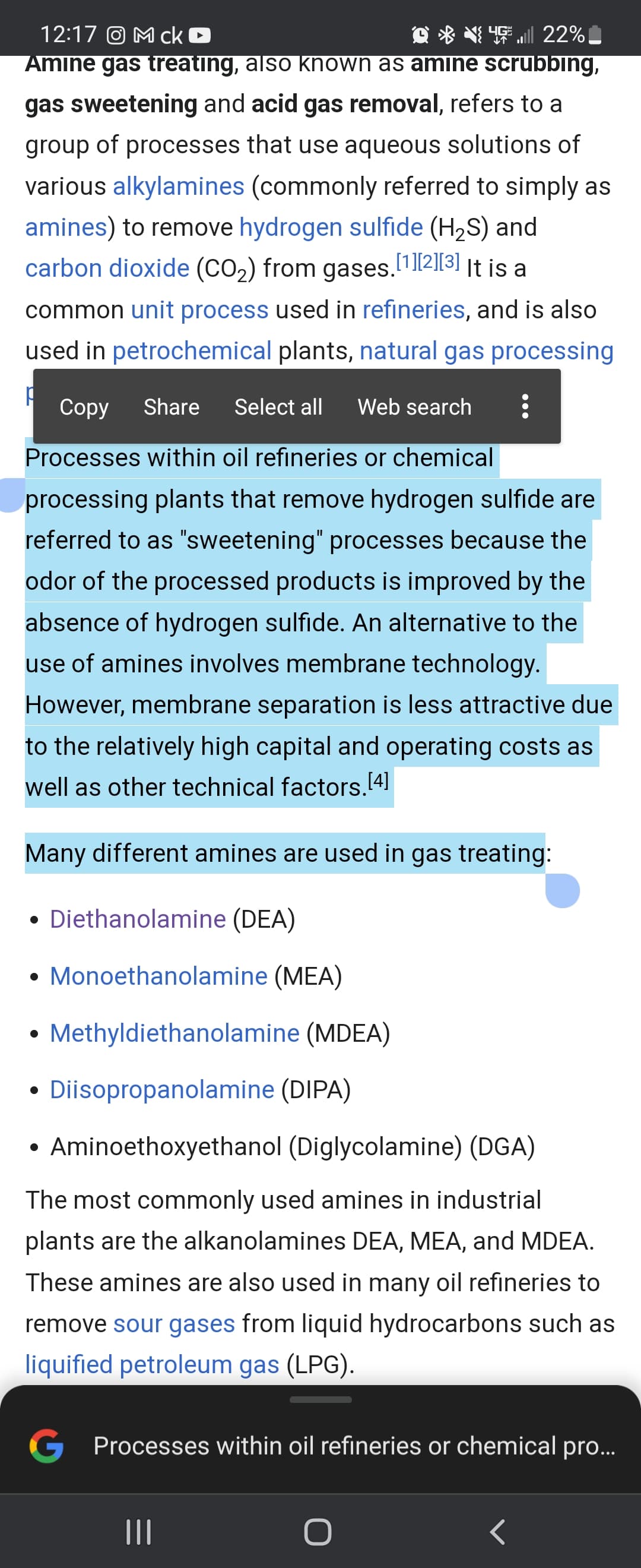
Insane in the membrane, curious do any of the membranes that a few are making, work to remove it?
Could a membrane be the pre treatment device we all need?
1 Like
Kind of an expensive route to take… Lots involved. You basically need a complete membrane skid with pumps and all that…
Or you could do some simple acid/base chemistry and a water wash. 
6 Likes
Getting all salty up in here…you boys smoked enough weed?!?
11 Likes