thank you…now I understand …Ignorance is my excuse!
2 Likes
what hypothesis do you like most? @Photon_noir
The propylene theory of dred pirate grabs me the most, but I’m on the less educated side here. It’s also the only one that really presents a method to remediate it (13x mole sieve)
5 Likes
cough cough anti-solvent…
4 Likes
Well, @anon88836658 , I certainly understand the many ways in which analytical chemistry can fail to detect things, as well as how directly different solvents can affect crystal growth and polymorphism, so I DO believe this is a trace contaminant in the butane. Propylene makes sense, considering its chemistry and the form of most medusa stones. However, even 5Å mol-sieve should adsorb it. I don’t feel 13X (10Å) is necessarily the best means to the end, here.
I think we can solve this mystery by supersaturating some room-temp pentane with medusa stones (turning, but not fully turned, yet) in a sealed vessel, then having thorough analysis performed on both the liquid & the headspace in said vessel. THEN we can take the evidence and the solution (mol-sieve or whatever) to the gas suppliers to run it up the chain, en masse!
Others have already suggested as much in this thread. No photon is a singularity, after all. 
12 Likes
I concur. The fact that recrystalization can eliminate the issue suggests that whatever is causing this isn’t sticking around, so being cognizant of that when deciding which phase of the process to do sampling with in order to best capture the causative agent is wise.
4 Likes
@anon64373531 @cyclopath @ photon_noir @anon88836658 and others.
Just to cover all possibilities, can we take chalk sourced, pentane-recrystallized diamonds and redisolve in “bad butane” to produce medusa stones once again?
This would eliminate all possible contributions of unknowns (up to 4000 in number) from the original terpene soup…and squarely place the problem in the Butane composition.
sort of an adjunct variation of Photon_noir’s proposed experiment…
Yes the head space…whatever the “problem” is, it may be highly volatile.
Photon_noir’s use of 98% pure “chalk” as a de facto standard…gets everyone on the
same page…to now describe alternative crystalline forms. It would be nice to get
a ICP-AES confirmation of “chalk”… no inorganic counter ion: Proof definite of chalk being R-COOH. So we would really nail the “de facto” standard.
FYI: there is a XRD unit currently on sale … govt surplus…should go dirt cheap
as most people have no idea what they are…DM if you want further info.
1 Like
Yes @moronnabis in fact if I take any form of thca, chalk or butane diamonds grown from good gas and dissolve them in bad gas they will form Medusa bullshit
10 Likes
@Dukejohnson thats what I would expect, agnostic of the source of the THCA having the same concentration (both thca and ‘contaminant’), temp, and pressure should yield the same results.
@moronnabis It’s an excellent way to winnow your variables. Start with isolate with known/tested composition and add gas with similarly known/tested composition.
4 Likes
@anon64373531 @Dukejohnson
That being done…one can be sure “bad gas composition” is source of problem.
The same step…recrystallized diamond…redissolved in “good butane”
one should be able to use as an “assay” for unknown contaminants poisoning the crystallization step.
starting with de facto defined THCA,
good gas yields good " defined crystal"…control.
suspected contaminants added one at a time to the good gas, (hydrogen peroxide, propylene for example) until, bingo-jar-moment…Medusa.
this is just a suggestion.
3 Likes
I do think most are using 3a or 4a, so a fair point to note here, if it proves to be the culprit.
1 Like
Well, unless the good butane picks up, holds onto, and/or even analytically “hides” the contaminant the same way it occurs in bad butane, right, @moronnabis ? That’s why I suggested using half-medusoid (partially zombified) crystals dissolved in n-pentane… since pentane works to dissolve and withhold, evolve, or otherwise allow the crystals to form normally, one would expect the contaminant to show up in the sealed headspace or the medusoid-supersaturated solution of pentane.
14 Likes
If unknown contaminant “X” was somehow incorporated into the crystal structure
of a “Medusa” or adsorbed onto the surface???
I think there are well known “solvent” effects on the crystallization dynamics and structure
that do not necessarily include being incorporated in such a manner.
In this topic, I think there was previous discussion about detailed head space analysis
by GC-MS…but it being expensive because for low MW alkanes it would take a special set up…
Would it not be easier just to add propylene or ethylene to (control) “good butane” and look for medusa vs diamonds…???
If the head space analysis (or analysis of mother-liquid pentane) is readily available it seems fine.
1 Like
I can do this
6 Likes
@Dred_pirate Please, it is possible someone could end this whole section
with one good experiment.
4 Likes
Apparently, I may have already done the groundwork for understanding this. I just realized it, today. Stay tuned!
11 Likes

@Dred_pirate Sir, I’m going to need you to blow in this bag…
and If we need to, I’m sure our GC is up for a road trip as well…
9 Likes
I’ll blow into whatever you give me
4 Likes
Fixed

4 Likes
As long as you say “what a lovely tea party” at the end
7 Likes
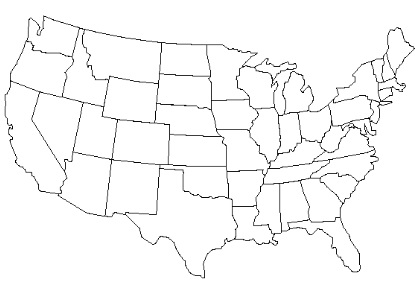
We could trace the source and spread by coloring in states where we know this is happening. Track the invasion of the medusa stone?
1 Like