I want to tip my hat toward all the work “Mag-Chem” has put into this posting.
His pratical advice and willingness to share what is normally considered
confidential protocols should be commended.
for all those with UF interests…the reference above is for the Department of Defense
training manual for UF of salt water to potable water using membrane RO.
There are a number of chapters on maintainence and care and operation of filters that would be of interest to all in the UF field.
At this size/scale, it is most likely for concentrating/purifying a biologic of some sort.
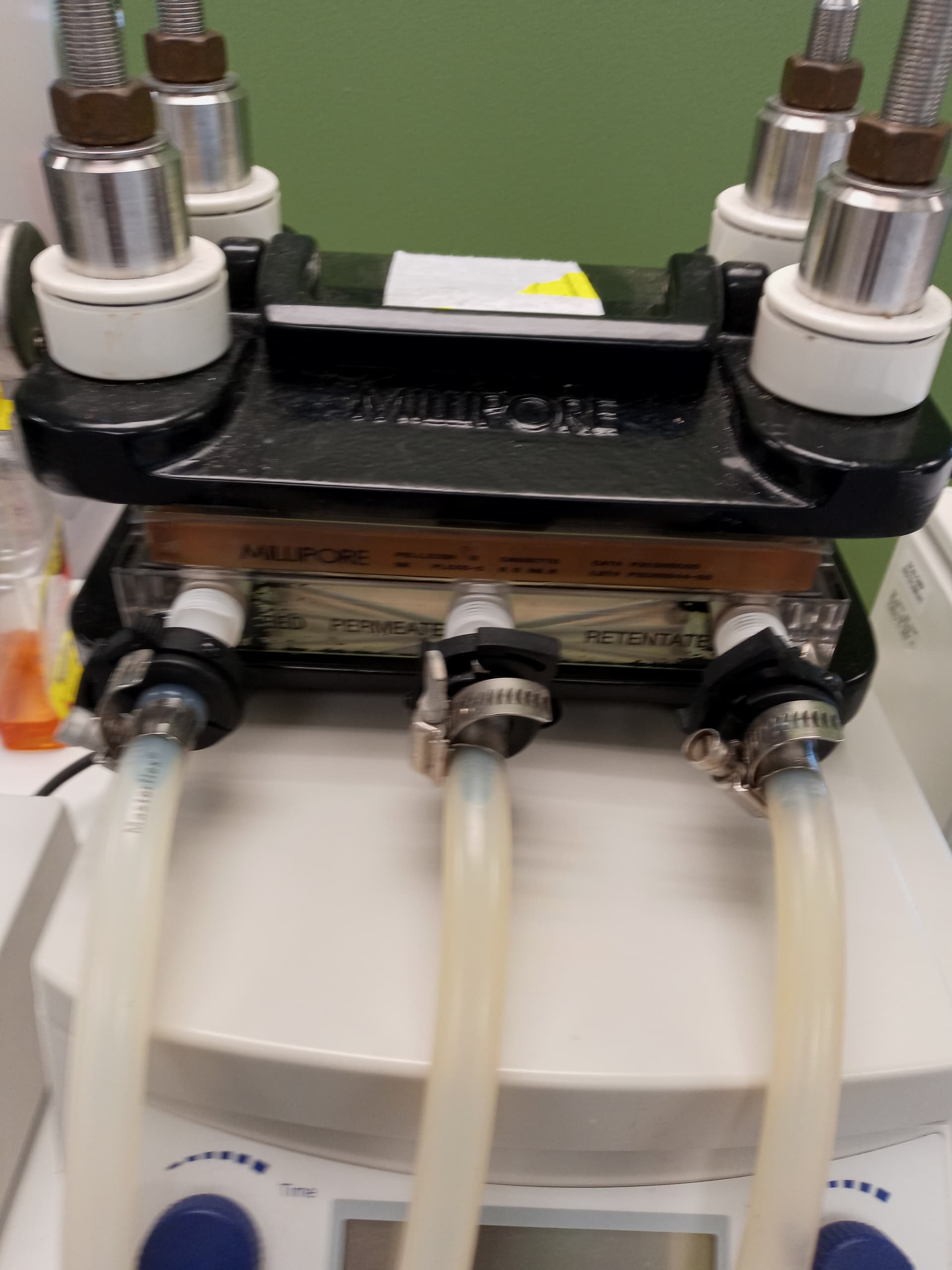
You can do a diafiltration where you have the cassette keep back the protein or virus or plasmid, whatever, and exchange the buffer from what you used to pull it off of your chromatography column and into something human injection friendly like sucrose and 1% salt solution. That way you can do your chemistry and purifications, which tend to include nasty detergents and solvents, and still be able to inject it into a human.
You can do TFF size cut off filtration where you keep passing your target biologic over the membrane to select for that kDa size and exclude anything bigger than the cutoff, this is good for separating fragmented pDNA.
You can concentrate a biologic by selecting the membrane to allow solvent through and nothing else. That way once you finish your process, you’re able to concentrate/dilute to the formulation you want, the loading concentration of your column, or process concentration for whatever step you’re on.
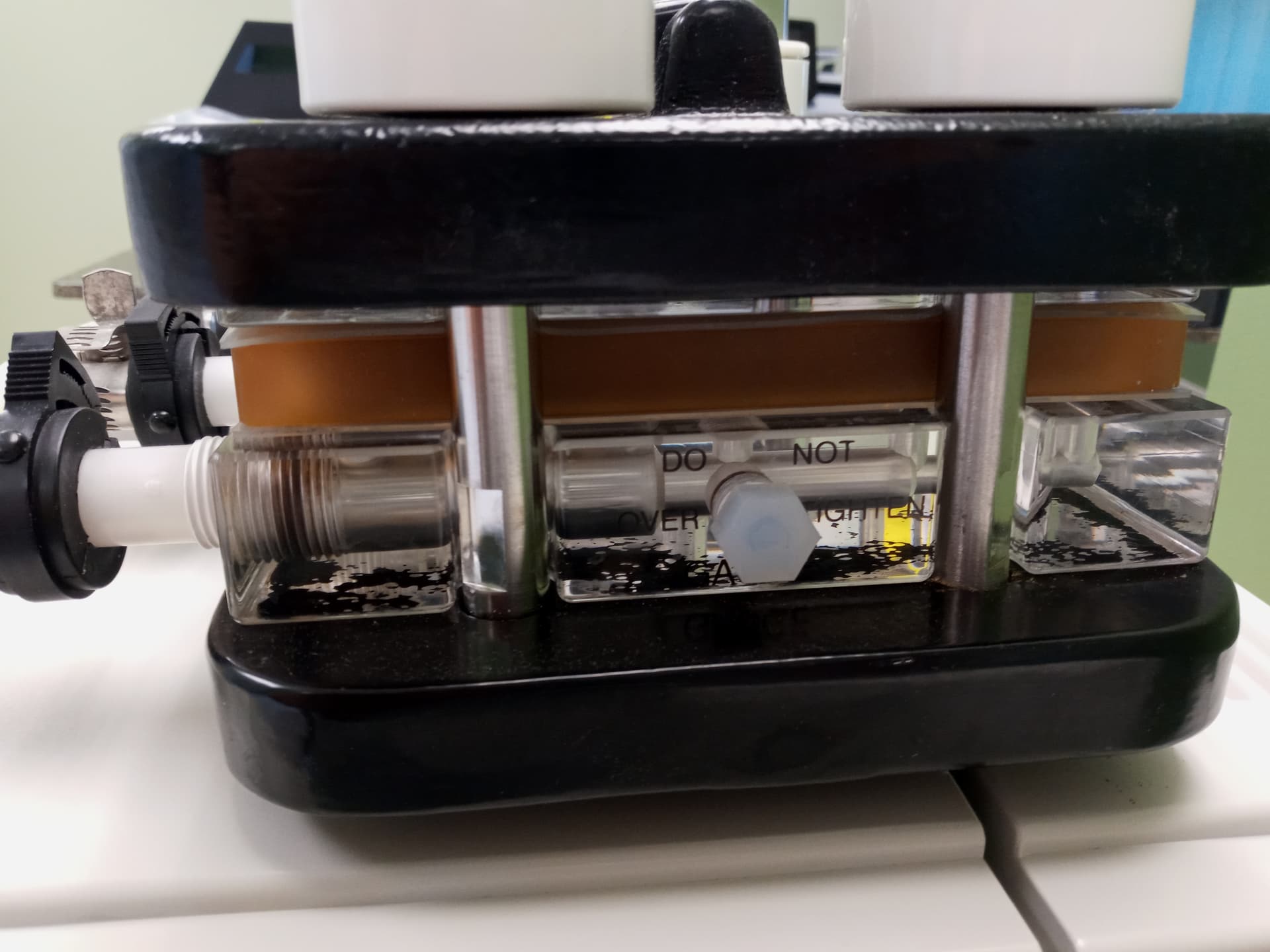
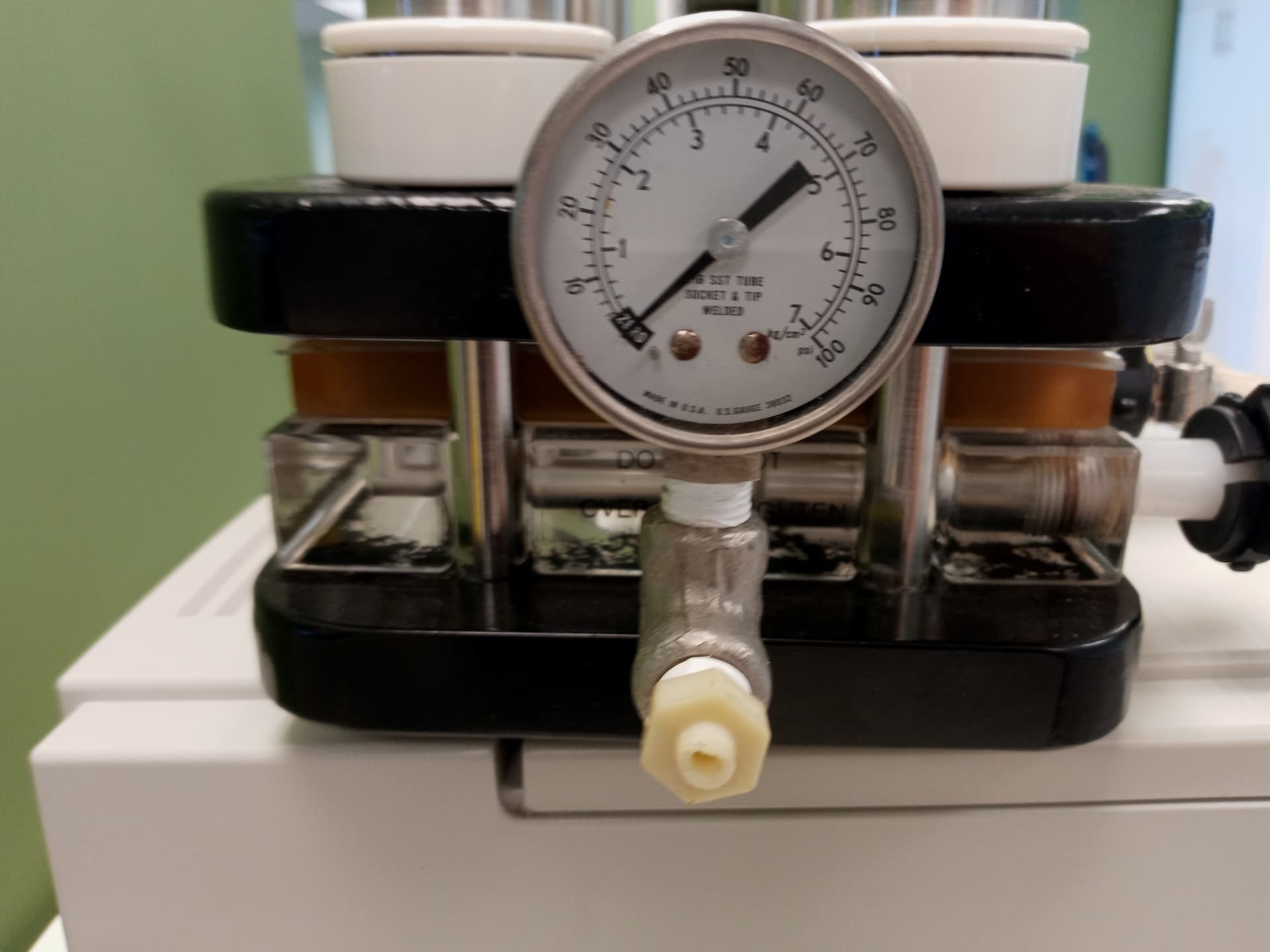
You get pressure from running a peristaltic pump on the intake side with a rolling clamp restrictor on the retentate side to increase transmembrane pressure, you monitor the cross membrane pressure using a pressure detector and three pressure probes. You don’t really see pressures higher than 30 psi using a peristaltic pump. I’m sure one could change out the membranes and run higher pressure, but I have not.
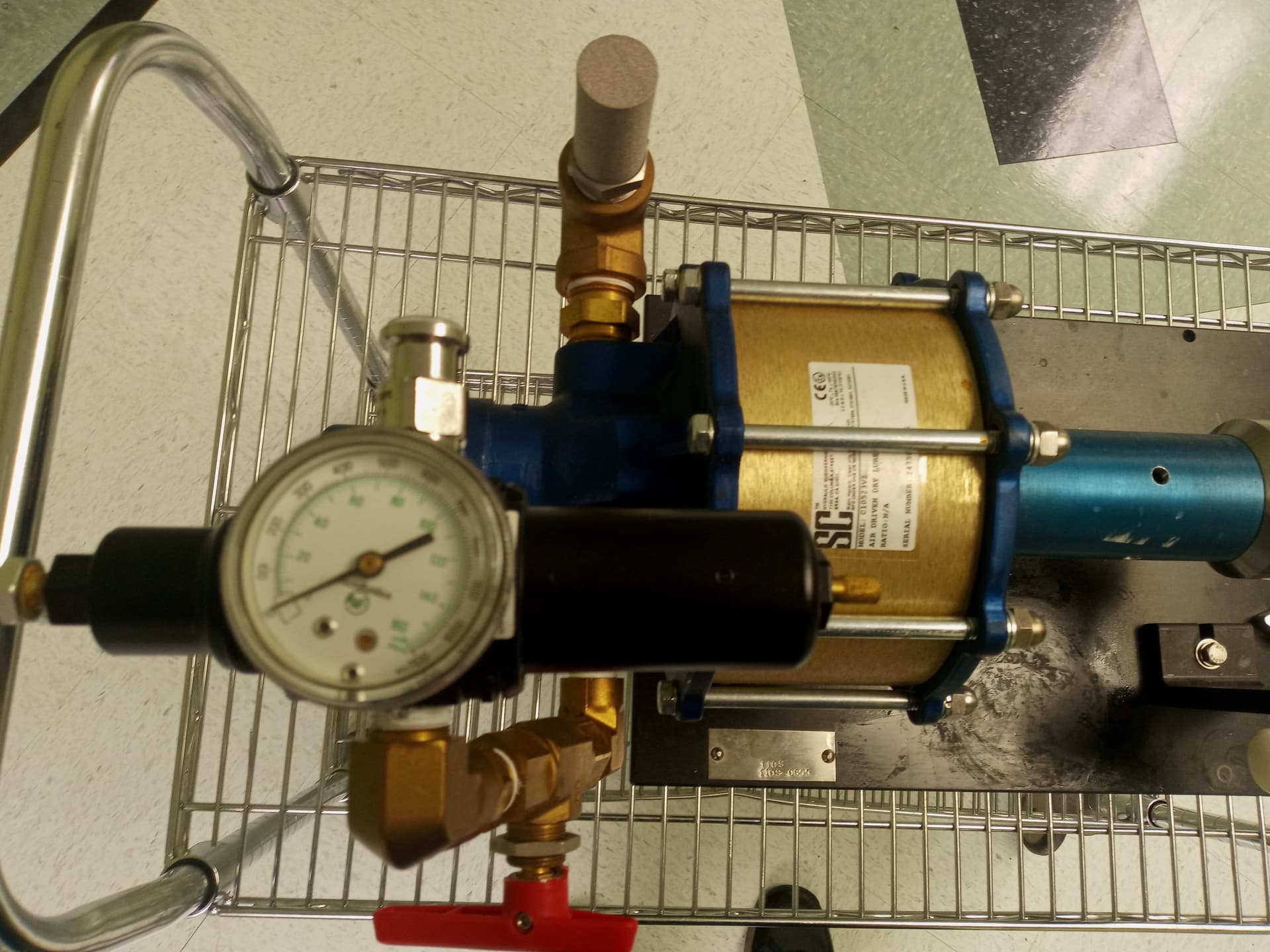
What was the pressure fluctuation threshold before you saw jumps that affected permeation? Trying to decide whether or not to pursue using this pneumatic microfluidizer pump for these purposes.
The ability to MacGyver household items has always been extremely impressive to me the fact that you guys can do this with analytical chemistry equipment blows my mind
I saw some interest expressed in the other thread about palladium-impregnated membranes for hydrogenation and dehydrogenation. I can’t offer particular guidance on how to implement this.
However, if someone does want to try it out. “Media and Process Company” is a good vendor who makes these sorts of catalytic membranes.
Yeah, folks could do that…how is it better than contacting Media And Processing Company (http://www.mediaandprocess.com/) and asking them for a quote?!?
Are inopor ceramics proven superior?
Suggesting that you personally dont have data on the relative efficiencies…
Edit: yeah “media and process company” sounds like a Chinese vendor. I believe @MagisterChemist was trying to point us at Media and Process Technology.