Well then that obviously means it’s true about your material then 
Here sweet heart I’ve already explained it once I know this is above your head but try to stay out of threads you can’t understand okay?
Wait you wrote those papers? Must have missed that part
Indeed you did
How’s that cbn sop going I gave you?
Still acting like you came up with it

Oh man that’s to funny
1 Like
Shall I bust out the dms?
I even got some from other uses who told me you claimed that sop was yours

1 Like
Go ahead
So you weren’t using sulphur before I gave you the palladium sop?
I remember specifically telling you I’d never use sulphur to make cbn and I had a way that had minimal clean up
Are you denying this?
Nope not denying any of it
1 Like
Ty just want credit where credit is due
You did do actually r and d on it
I didn’t have lab space
I still think adding a base will raise the yield
I know hhc is being made before the dehydrogenation starts
Dude you are a trip. That SOP was abandoned long ago.
You are correct tho… you were the first one to bring that paper to my attention
In the scheme of the world, you are also a no one.
Eat some more hallucinogens and lose the ego…
We are all just ants in/on an ant hill…
No hate in this post, you have always been cool to me and I enjoy bs’ing with you, just my 2cents
13 Likes
Im confused
I would assume thc would nog t be soluble in water when compared to octenol
Why is that a discovery?
Even immiscible solvent systems mix a little bit
(Think about water and heptane)
Thc is no exception, a tiny bit dissolves into water
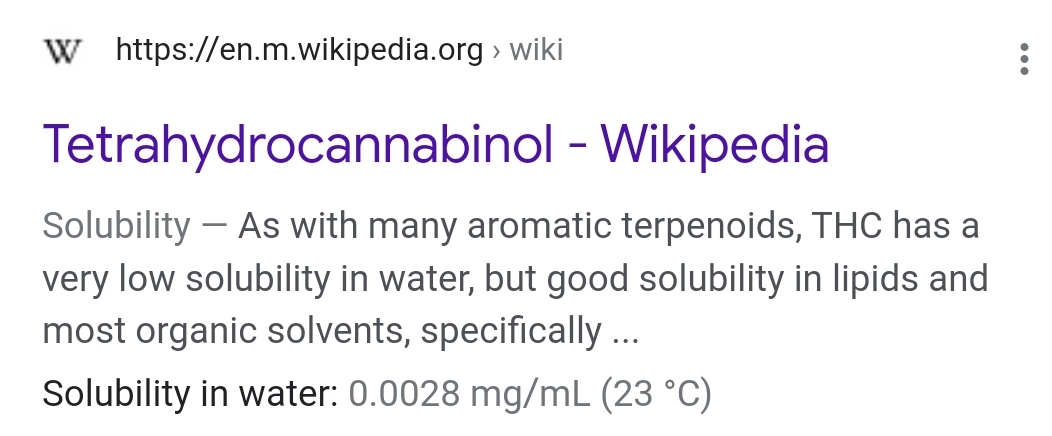
It’s not a discovery per se. I only added another reported calculated partitioned coefficient highlighting that the calculations can wary, and quite dramatically.
Not that it is the sole determining factor whether a molecule is orally bioavailability or not, but there’s a pretty good correlation.
In the case of THC, it is simply too lipophilic to be efficiently taken up in the gut. And it turns out that it is so damn lipophilic that acetylation doesn’t really change the overall character of the molecule much, at least not from a logP point of view.
Compare that with morphine and heroin (diacetylmorphine) where the logP goes from about 1.0 to 1.7 upon diacetylation.
1 Like
It’s enough my clients can feel the difference so
Whats the difference of 10^7.29 - 10^7.02?
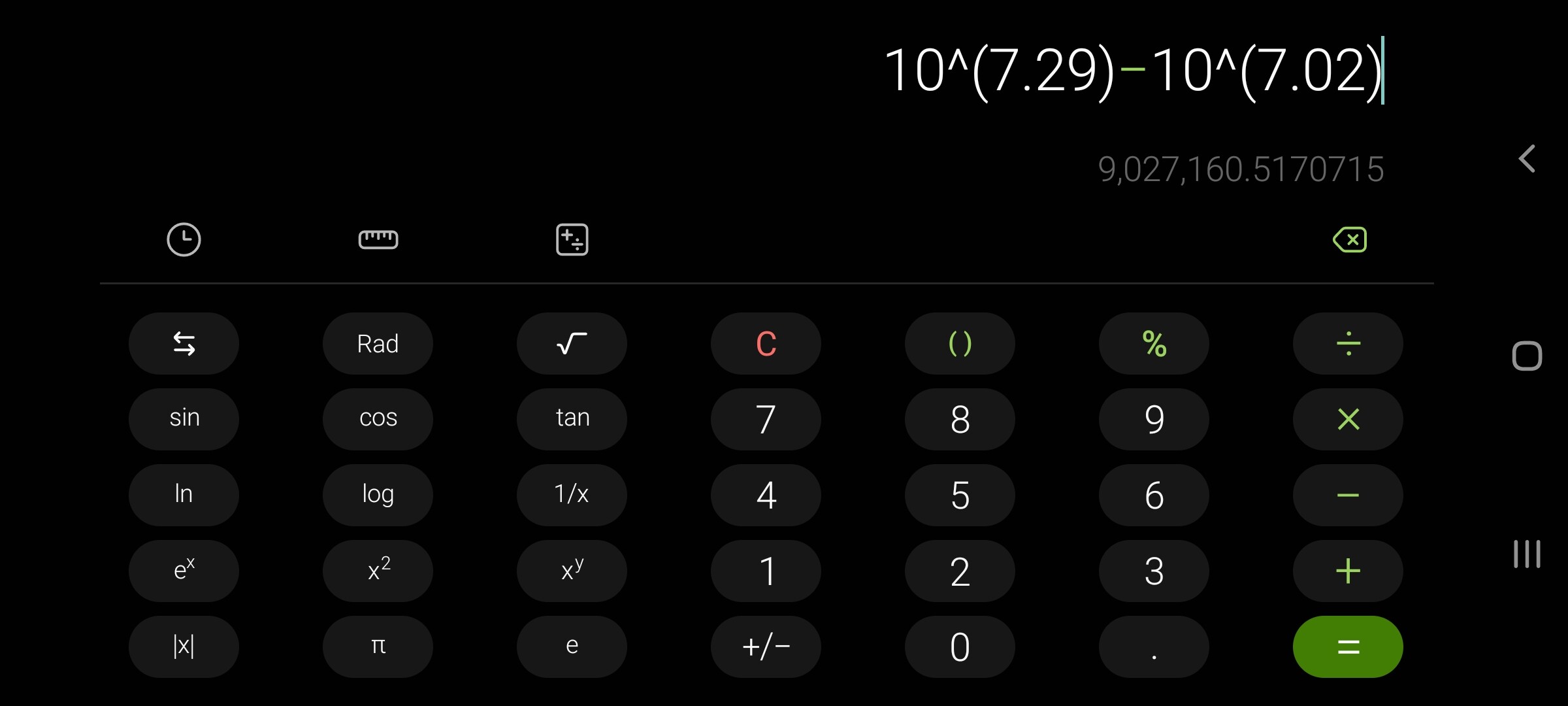
Seems to me that this implies a huge drop in lipophilicity
Wouldn’t this be a 9000% drop in lipophilicity?
When you compare two numbers in a case like this, you take the ratio of them.
For example, THCP was reported to be 33 times more active than THC since its reported Ki was 33 times lower than that of THC’s Ki.
Comparing lipophilicity between acetylTHC and THC gives 10^0.3 ~ 2 meaning that their lipophilicities differ by a factor of two as far as the calculated value is concerned, and calculations vary depending on method/software.
The point is that THC’s lipophilicity is already too high and likely a reason why its oral bioavailability is so low, but again, there are a bunch of factors that goes into uptake and different research groups at different pharmaceutical companies have developed their own ways at analyzing and predicting oral bioavailability.
The “Lipinski Rule of Five” was very much state of the art back when I had to decide what to make, what would look more appealing to my directors.
Another interesting set of guiding principles came out of Smith-Kline-French and are sometimes called “Veber’s Rule”.
And it’s not that I question user experience, I just want us all to be careful and contemplative when we rationalize observations/experiences. Is it due to mere change in lipophilicity or does it have something to do with delayed onset?
It serves us well to take it all into account and it’s not always easy, particularly when comparing different routes of administration, edible vs. vaping, for example.
4 Likes
Just a friendly reminder of who this guy really is people of 4200
caution has been advised…
9 Likes