I think that’s what my 1.5" SMS38 inner sight glass gaskets are made from, and they were $20 for each 1.5" gasket.
Tuffsteel?
I"m not a fan of how poorly it accepted torque. Seemed to deform as easily as PTFE. Have you seen envelope gaskets? PTFE wetted surfaces, FKM interior for spring and resistance to deformation.
2 Likes
No, the SMS gaskets are glyon, and they were crazy expensive. Interesting that you had issues with the Tuf-Steel, they were highly recommended when I saw them mentioned here. Are you doing the recommended 50 lbs?
I can get tuf-flex gaskets cheap
and ptfe enveloping viton
and a host of others rather cheap
What kind of psi can envelopes handle? DME has a pretty high vapor pressure, if I’m making crude it will be running ~130 psi. Normal recovery temperature will be 75-80°F, and that’s ~100 psi.
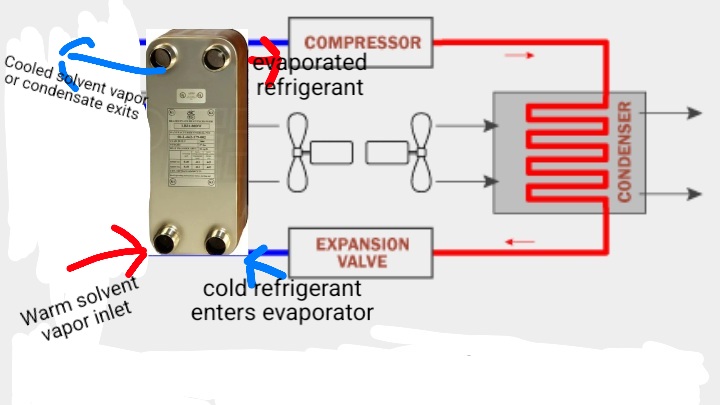
Direct refrigeration plate chillers are happening. 8k btu ACs that use r410a refrigerant will be modified into this.
6 Likes
Have your vapor enter through the top port of the plate. That gives you counter current exchange and also allows gravity to aid in draining the solvent once condensed. It also helps maintain maximum surface area available for condensing. Keep in mind that routing post condenser is huge unless using a pump, don’t want to create a P-Trap in the plate… So make sure you gravity drain into the take post plate.
5 Likes
I wonder if something Like this could work on a tube in shell…
Love the idea
1 Like
Ha, I didn’t even notice I put the solvent exit on the top when I made the drawing. Definitely wanted gravity to assist the solvent draining with counterflow for the refrigerant. The plan is good though? I’m a total novice when it comes to refrigeration, literally my first project with it ever.
1 Like
Just checking chemical compatibility, pressure and temp. Safety is everything, so lots of PRV’s. If ya got any questions during the way just DM, I’m glad to help!
Have built 100’s of closed loop machines but never a DME setup, always fun playing with new solvents.
1 Like
It definitely will, I just Googled “tube and shell r410a” and there was a whole page of products. I specifically looked for 410a because it runs at a higher pressure so the engineering would be more solid.
3 Likes
Looks like you need 400psi working pressure for 410A.
Most bonded plate exchangers run between 300-375psi.
A Tube-In-Shell would be the route I would recommend if you’re having a hard time sizing a plate. Tube-In-Shells are the goto exchanger for higher pressure systems and can provide plenty of surface area in a small footprint.
That potential 400psi is also only going to be exposed to the shell side unless you are going with direct refrigeration. Even direct refrigeration should not be generating that much pressure on the shell side. Your DME vapor will not be that damn hot lol.
4 Likes
I actually found a model of Alfa Laval exchanger that is 100% stainless and manufactured specifically for r410a (which is what my sacrificial AC runs) in terms of tube angles, connections, and tolerance. Apparently the inner tube configuration greatly affects efficiency for refrigerants, which is so cool IMO. Alfa Laval even makes a model that can run CO2 refrigerant at 1500psi+!
I plan on recovering at 75°, so it definitely won’t be that hot. Boiling point for DME at STP is -12F/-25C and I’m at 6k feet so I’m already at a reduced atmospheric pressure and will have a lower BP.
If I were to match the internal volume of the plate exchanger to the internal volume of the evaporator in my 8k BTU AC would that help?
3 Likes
I am sure the HX’R on your direct refrigeration will be oversized compared to your process HXR.
The load you are wanting the process HXR to handle is where I would start, work backwards from there to make sure your chilling circuit can handle that load.
2 Likes
We used AlfaLaval for all of our plate exchangers. 100% Stainless as well.
3 Likes
When I’m matching heat load I need input heat to be less than refrigeration capacity correct? Or does it need more complexity?
If (for an example different than my thermodynamics equations above) I’m running a 4,500 watt heater, that’s 15,340 BTU. So 2x 8,000 BTU exchangers should take it down to the condensation point of enthalpy, if not condensing outright.
Nova HP 27 is the exact model I was considering, it’s rated to 580 psi. I sincerely appreciate your help, I think my wife is going to strangle me I’m so excited lol.
Over torqued it once, I had an expensive paper weight that refused to seal. I don’t recommend it, and I never saw them catch on.
1 Like
The same pressure rating as the triclamp fitting it is placed in.
1 Like
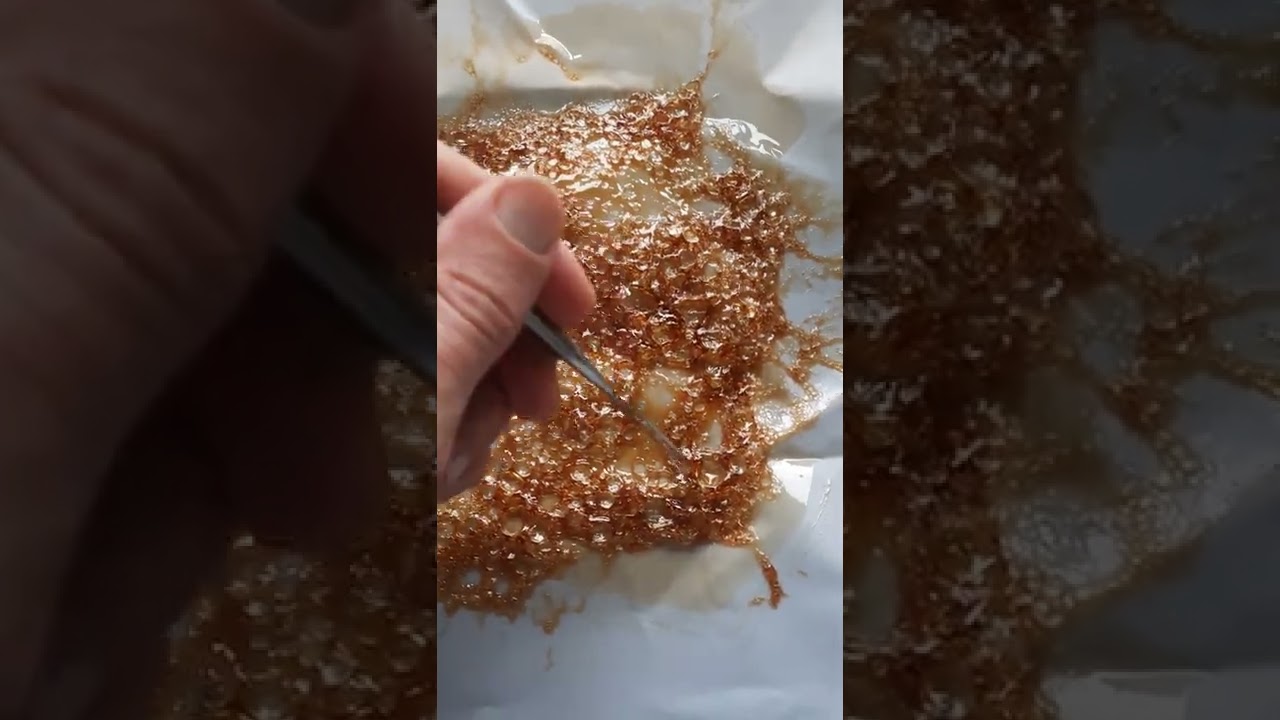
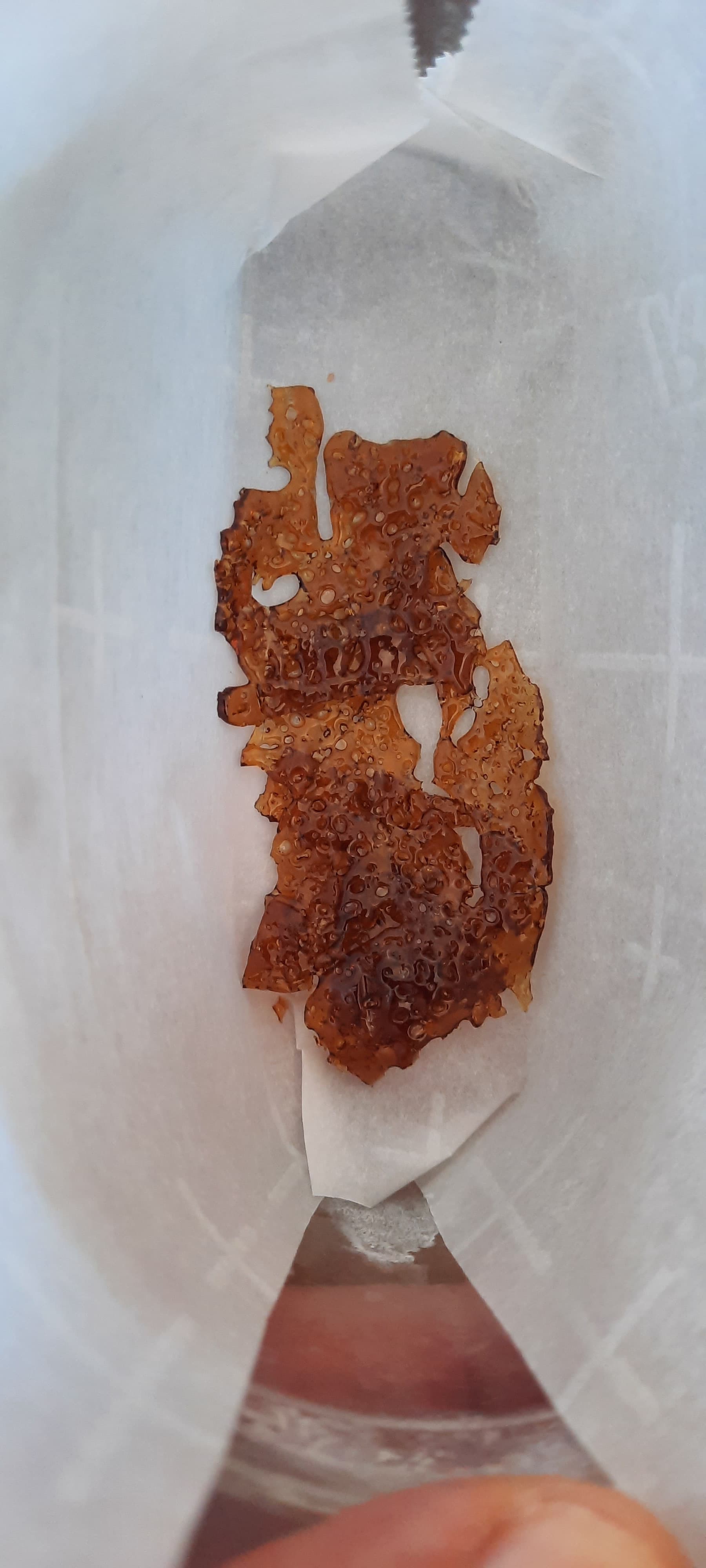
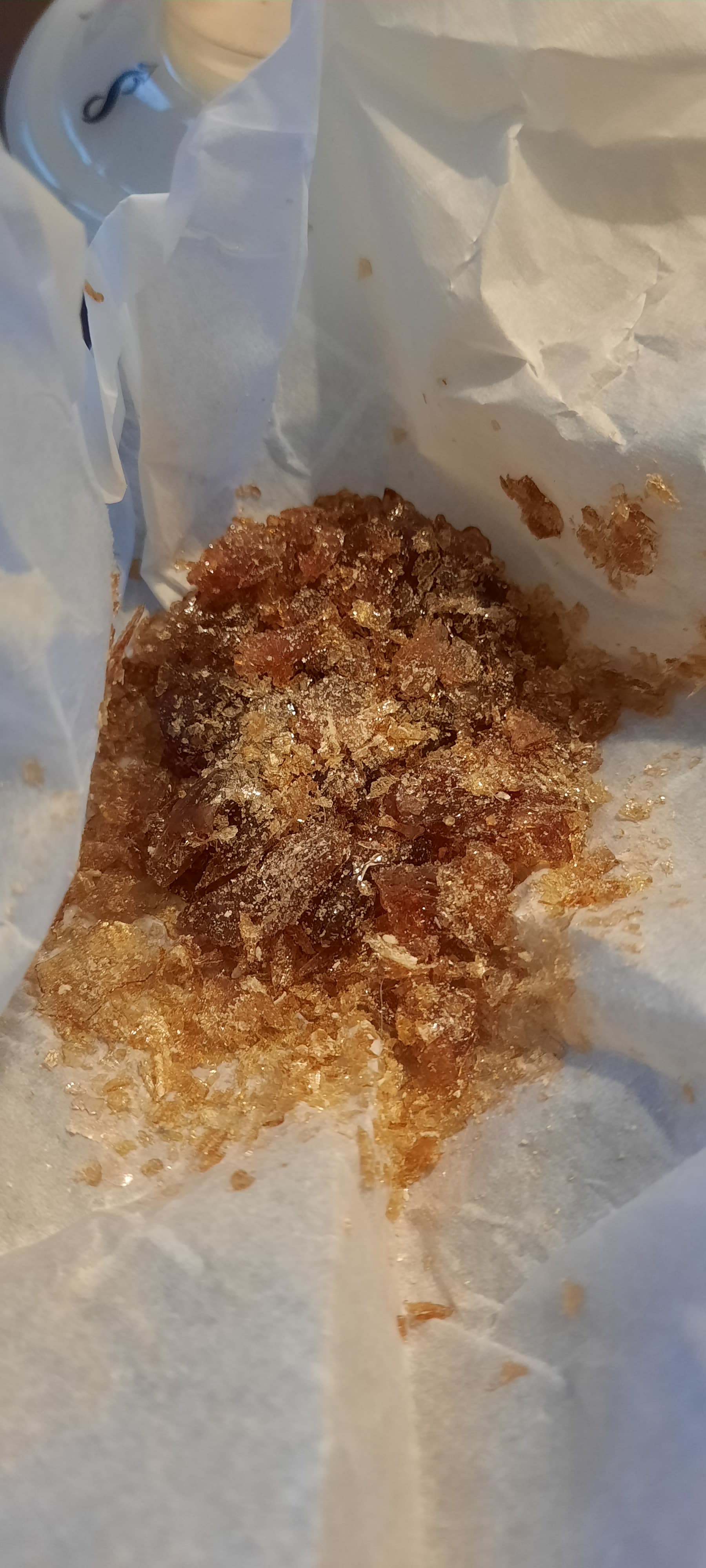
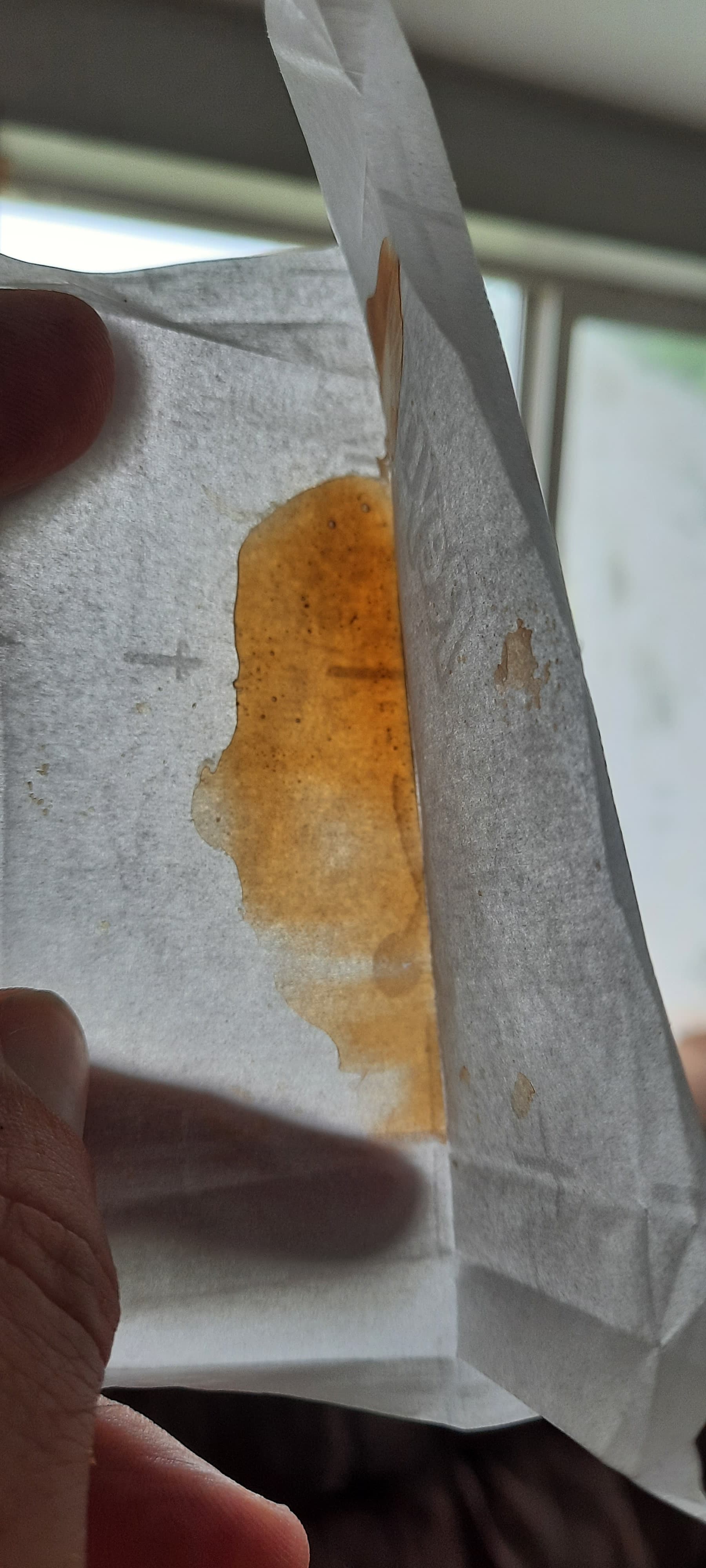
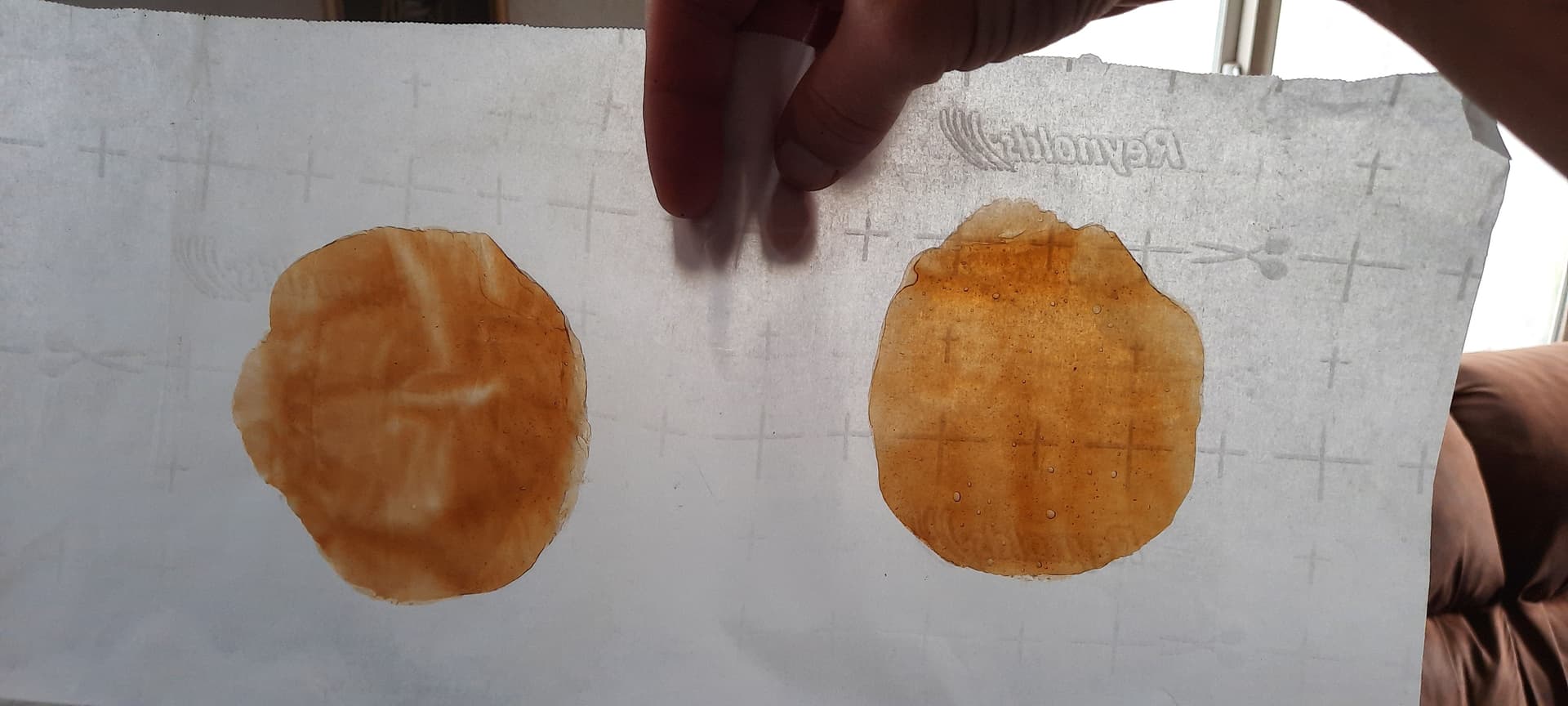
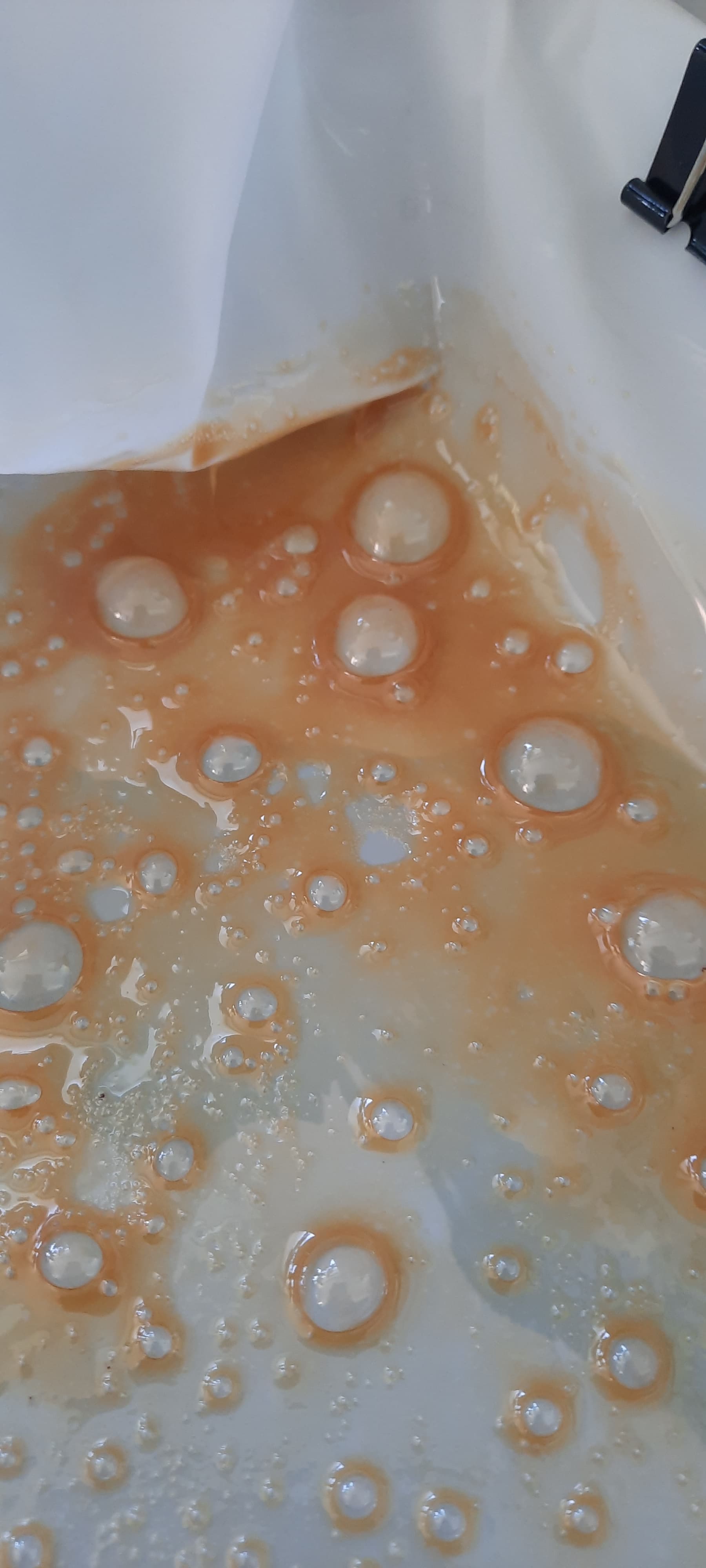
Any terpz?..
Looks like some of the concentrates from the early 2000’s ( like 2012, I’m not that old lol)
3 Likes