Thank you for your feedback!
One question doesn’t the 9-chloro-HHC have very similar molecular properties to THC, like polarity and boiling point?
Why would the 9-chloro-HHC separate from the cannabinoids with heat?
Thank you for your feedback!
One question doesn’t the 9-chloro-HHC have very similar molecular properties to THC, like polarity and boiling point?
Why would the 9-chloro-HHC separate from the cannabinoids with heat?
@Ozone , I don’t really know much about the properties of the chlorinated HHC, except that it is rather unstable, despite the fact that it has been isolated… It is actually a great example of what I originally learned a “stable intermediate” to be.
I was NOT saying that your heating it was separating the 9-Cl-HHC from THC! Rather, the heat & vacuum were causing the Cl to “break off”, turning the 9-Cl-HHC into THC… and probably mostly D9, since the temperature could only be as high as that of the solvent’s boiling point at the decreased pressure applied (at least until the solvent was mostly gone). As I remember from when I translated the German paper into English, the application of heat and/or vacuum is enough to denature the Cl-HHC back to THC isomer(s).
Anyone can send in and pay for a patent like this, and never will the patent administrator test the procedure, or in any way confirm that the procedure as such is valid. They only check to confirm that the patent is a new one. So all claims in any patent are not the same as they are true. For instance, there are many registered patents for free energy devices, as well as for perpetual machines. Does this mean that they are working? Of course not! And it’s the same here. Any person with a basic understanding of chemistry know that THC8 and THC9 can only be made from CBD by a process known as isomerization, which means that the molecule structure is rotated. And during such a process you don’t want to have oxygen present, as this will have some oxidizing effect. And this is also the reason why the process should be in an inert atmosphere (nitrogen or better argon (as this is heavier). Ozone is a very strong oxidant. Theoretically, it can be used to degrade cannabinoids, like degrade THC8 and THC9 to CBN. But it cannot and will not turn CBD to THC8/THC9.
I did a experiment with CBD isolate, phosphoric acid and 80% STROH rom
Get a air tight glass jar
Put 0.25 g CBD isolate, 4 ml of 80% stroh rom and 2 ml of 75% phosphoric acid (FOOD GRADE) in the jar.
Put on the lid and make a small gap and spray argon wine gas in 4-6 short burst to fill the jar with argon gas. Close the lid immediately afterwards!
Wrap the jar in aluminum foil except the bottom.
Put the jar on a mug warmer (https://www.amazon.com/mug-warmer/s?k=mug+warmer) and let it sit there for about 48 h
Let the jar cool down and add 200-300 ml of cold water.
Let the THC fasten on the sides.
Pour of the liquid and wash the THC in the jar a couple of times with water.
Now add 100 ml of boiling water to liquefy the THC again and to rinse out the last acid.
Let it cool again and pour off the water.
Now dissolve the THC in olive oil and eat your 100% “food grade” THC

LCMS/MS or a QTOF mass spec will tell you all peaks, mass and fragment masses. This is what they use for separating and characterizing pesticides.
Wuzzup!
I just have a question about CBD isomerization and pressur cooker.
We know the reaction can be made with citric acid + h2o in reflux, but it requires a nice glass setup, coolant liquid etc etc
What do you guys would happen if you put the h2o+citric acid and CBD and put it in a container. You then put the container with the chemicals in a pressure cooker and start heating and pressurize the cooker!
I read that reactions between gases Is more effectively under pressure but I should also work with liquids reagents.
What do you guys think will happen if I heat up the chemicals to 115-120 C (250F) and 15psi ?
It should happen abit faster right?
Merry xmas
It’s an exo thermal reaction. Don’t know that I would add more heat than the lowest heat requirement.
And pressurizing something like that in your home is just plain dumb
quick google came up with this " Increasing the pressure on a reaction involving reacting gases increases the rate of reaction. Changing the pressure on a reaction which involves only solids or liquids has no effect on the rate
to answer your question no it will not.
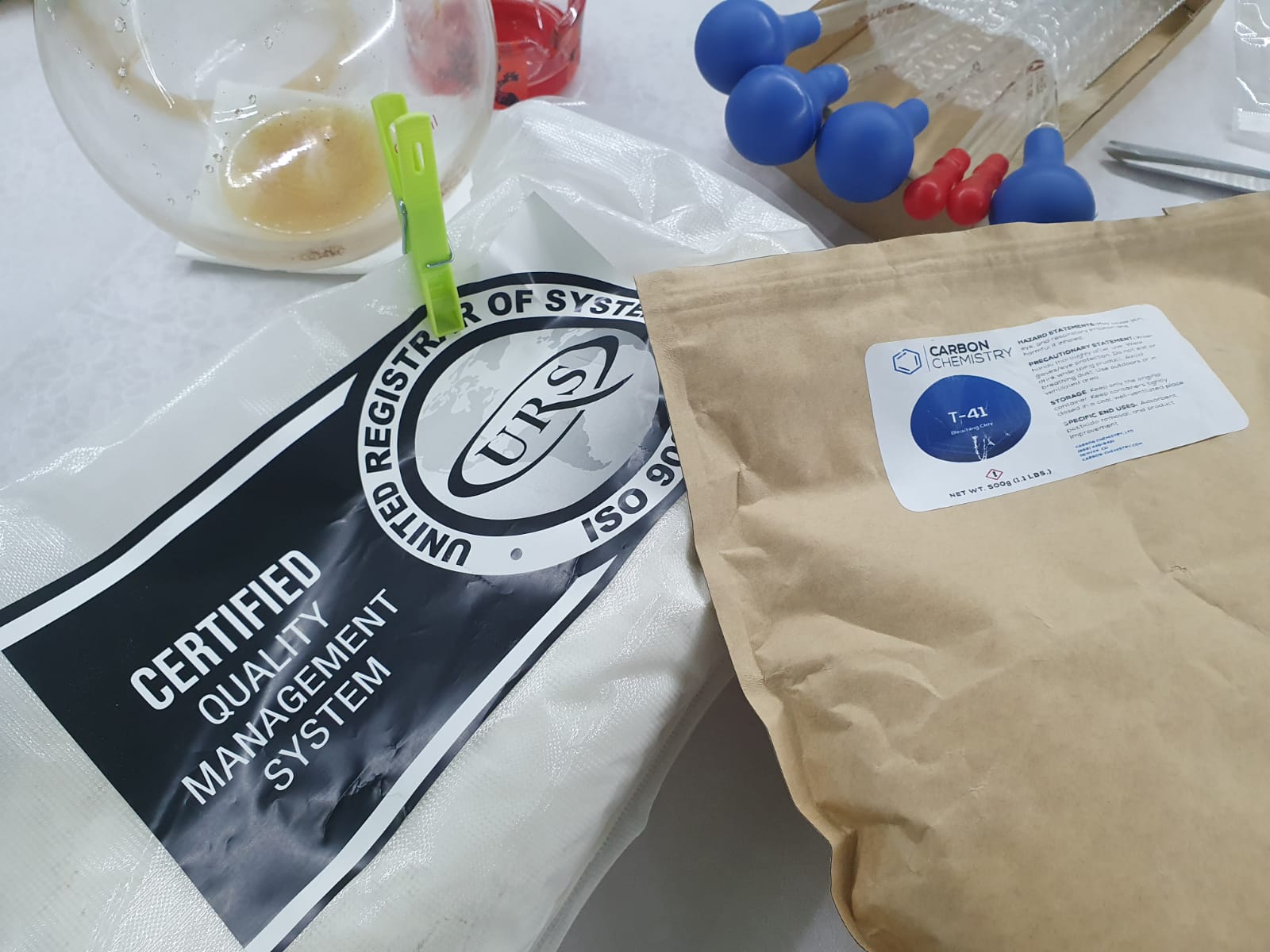
Hello everyone, I live in Spain and I am doing an experiment with delta 8, I am testing the isomerization method with sulfuric acid and glacial acetic acid and then petroleum ether for the extraction, and I have also bought the equipment to make the distillate method of short tour with AC T41, I am looking for someone who can give me some advice and also who can explain the quantities of each product to be added and everything else, we can reach a financial agreement if possible
check Dm, no money needed
Good morning friend , of course if you can help me it would be perfect, if you can send me your phone number so that I can contact you by telegram or signal it would be perfect, I will leave you my number because if you need it, greetings +34 665 54 61 67
A very rough conversion is 1kg of CBD powder = 1L of oil.
Alternatively, you can heat up your CBD isolate gently and it will melt into an oil and you can get a volume measurement that way. Bear in mind the melted oil will quickly recrystallize once you take it off heat.
Edit: melting temp of CBD is about 70C. Heat it up to there and it will melt
I don’t that any one has made clean D8 with t41 alone. The current thought is to do the bulk of the conversion with PTSA and finish off the reaction with an acid activated powder like t41 are carbon.
but the formula that I have seen on the internet says that if you need only the t41 and the cbd isolate
I don’t want this to sound mean, but I want to be clear. This is above your pay grade sir.
The internet is for porn not science.
Kindly use the search bar above. Type in something like “D8 SOP”. Pack a lunch and read it in it’s entirety. You will then have all you need to produce it. The instructions are there…the talent lies in your hands to make it safe.
I am currently trying to plan a small-scale isomerization in lab glassware using pTSA and heptane. Goal is maximizing total THC, so both D9 and D8, preferably more D9 in the ratio but almost complete use of my CBD isolate. I will be using argon atmosphere and MgSO4 to dry my separate solutions of pTSA and CBD before combining. My only question involves temperature and time. I have read from several pdfs and comments that cold temperatures will result in a higher D9:D8 ratio, so I was planning on running CBD:Heptane:pTSA at 1g:2mL:60mg at ~0C in an ice bath at 1000rpm for 8 hours. Should I be running this hotter and shorter instead or will this method work? Of course, I will modify SOP over the course of my runs, just need an approximation.
With ptsa to get a high D9 yield is a timing game
Dissolve your ptsa in a bit of dry ethanol
And dunk it dissolved in your alkane
Have stirring at max when dunking it in and
Run for 10-20 min max
Starting temp 40-50 C watch the exotherm
And make sure the condensor is oversized if the alkane bp is low (like hexane)
Quench the reaction with potasium hydroxide in methanol all as dry as possible