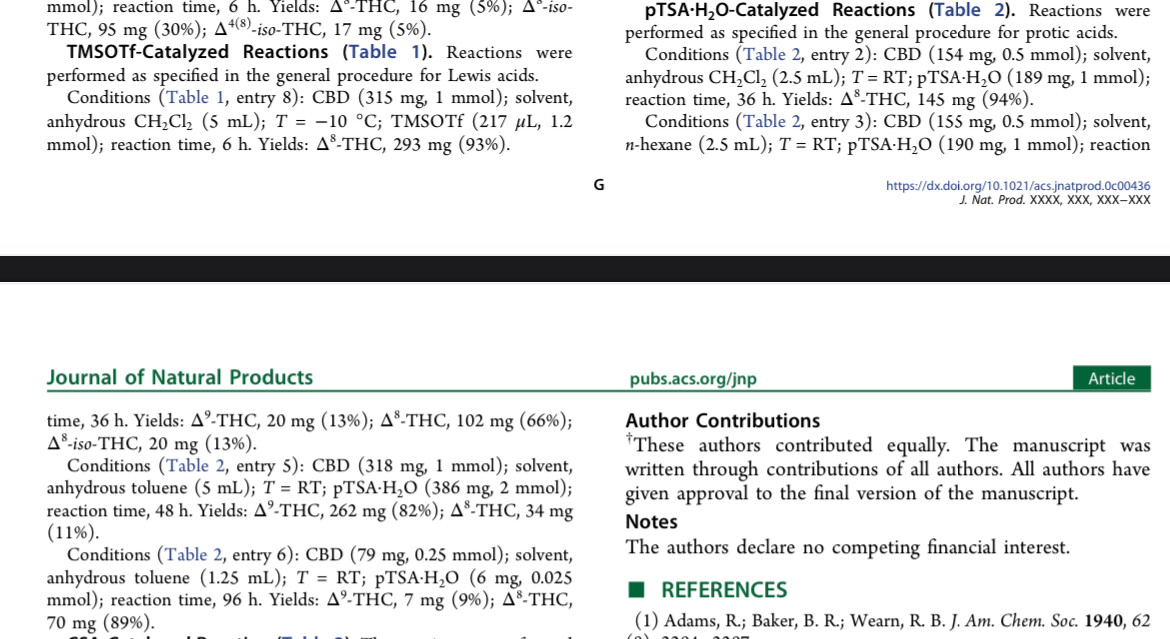
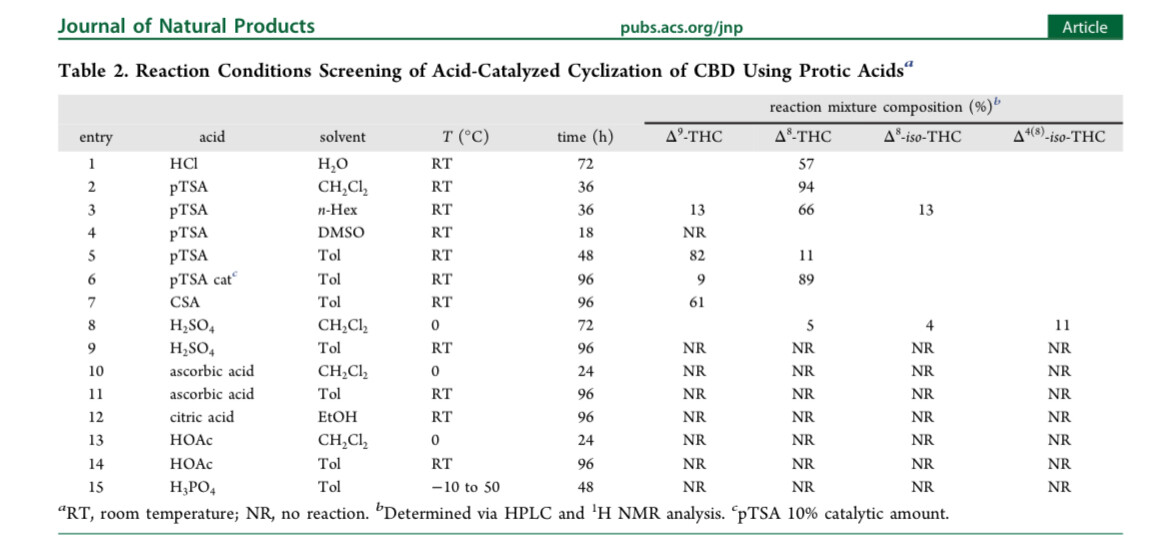
Cbd isomerization to d8 and d9 thc

I’m not sure. There are more and more studies coming out about this. There’s been some controversy if gastric juices can cyclize CBD, forming THC and making people fail drug tests. Have not seen papers claiming CBD to CBN without deliberate THC formation.

I tried once with a shitty SOP and nearly killed myself because I left my critical thinking at home.

You forgot the third bane of chemical stability, oxygen. Heat - Light - Air.

4 Likes

I’m probably misinterpreting this;

So if I’ve got a Lewis acid making d9:d8 from Cbd at 15:1, and it “gets stuck” at 65% d9, I should add more catalyst?

Great exchange btw :blush:

3 Likes

What’s the other 35%?

1 Like

If it’s ptsa and red it’s probably hu311.

2 Likes

CBD and iso cbd

1 Like

Since I’m questioning my whole understanding of chemistry at this point…I’d say there is an upper limit here.

At some point the effects of increased catalyst concentration must be mitigated by solvent effects—also with pTSA unless you’re using a solvent that will solubilize the catalyst, the catalytic mechanism is heterogenous and not homogenous—that means that your reaction rate is (to some extent) controlled by transport phenomena especially mass transfer.

Cramming an assload of pTSA into your reactor is only going to marginally increase the available interfacial area between pTSA and solvent/CBD mixture, at some point.

That being said, I haven’t tried to go above that mark.

Interestingly enough if you look at the paper that @ozone linked above, you’ll notice that when you switch from a “catalytic amount” of pTSA to a stoichiometric equivalent amount—the reaction shifts from producing D8 to D9


Also, as verified by @mitokid, the reaction from D9 to D8 is quite straight forward and the rate of reaction increases as the concentration of D9 increases.

All that information together suggests that the only way to really know how to accomplish a pTSA catalyzed reaction from CBD to D9 is to develop a very good kinetic model and quench the reaction at the appropriate time based on such a model.

At some point as d9 concentration increases, the formation of d8 is unavoidable.

5 Likes

So baiscially I stupid terms if it’s dissolved it has more chance of the bonds “scissoring” which allows for more d8 and the less chance it’s d9? What you are saying.

Ps I’m also hammered rn.

4 Likes

Ive seen the COA of phosphoric and heptane above 85% D9. It’s definitely possible. :man_shrugging: I never tried the kinetic end.

I assumed it would be favorable to have your catalyst fully dissolved, but I suppose that’s not evidenced.

I use phosphoric and isopropyl with extensive cleanup.

4 Likes

David and I accidentally got 98% d9 with phosphoric acid and heptane once. To this day we have no idea how we did.

We think it was something with the triple bond.

@AlexSiegel were you the on that hit me up about it trying to replicate it?

6 Likes

Lol, yes. Even hammered drunk you still got it dude

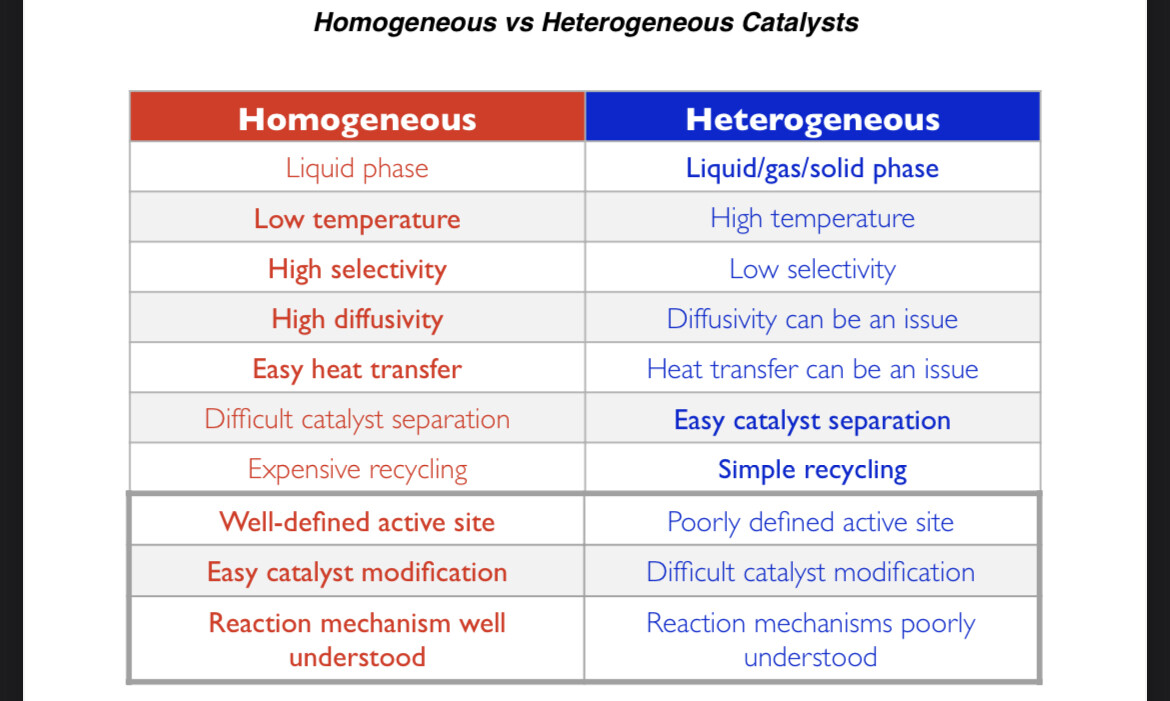
Pretty cool comparison list I just found on Google

5 Likes

Great chart.

I’d love to figure out this phosphoric acid tek. @AlexSiegel said that even when heated it wouldn’t convert to d8.

So weird. Idk how to explain it.

Alex, have you got any revelations recently?

1 Like

That was a separate project. We were trying to replicate some of the properties of a d8 oil that turns out was made by DavidB. For probably 3 months we worked on it, called the oil “holy oil” because it was the only oil we had that acted that way.

Finally we figured it out but it wasn’t a d9 project. Just some stuff related to d8

4 Likes

Mind sharing with me In private? Lost our whole chat log on signal. Thought I was something to do with d9 not isomerizin.

1 Like

For whatever difference it makes @tweedledew stated Lewis acid as opposed to a Brønsted-Lowry acid (protic acid) which is the class TsOH belongs to.

Using too much catalyst has other unintended effects such as difficulty controlling the exotherm. TsOH comes as the mono hydrate so more TsOH means more water in the reaction, oftentimes changing things up from what can be sketched on the back of an envelope.

Although straightforward on paper along the lines of: supply enough thermal energy and enough catalyst to provide acceptable kinetics, there will definitely be issues at larger scales. You want to avoid exceeding the point at which the d9 turns into d8. It seems pretty clear now that this is what operators want to accomplish.

The major issue I see is adequate temperature control and exactly how and in what order reagents are mixed. You cannot simply throw in all the catalyst at once and just hope the exotherm won’t be uncontrollable.

Temperature control is not only just getting the biggest Huber money can buy. Adequate mixing is just as important and setting the stirrer to maximum speed isn’t the obvious answer.

As to mode of addition, you can either add A to B or B to A. You can add it all at once or at a defined rate. You cannot have the reaction too mixture too cold. The reaction needs to occur while addition is done otherwise you’ll end up in a situation which is quite similar to adding it all at once and once the reaction takes off, “locally, microscopically”, it will still get too hot and d8 will result.

There’s a third way of doing the “addition”, and that is to add both components simultaneously, again at a defined rate.

At the core of it, @TheGratefulPhil is right, it is about kinetics; promoting cyclization while suppressing d9 to d8 isomerization.

Operators want to do this with 50 kg CBD in 150 liter of solvent, not with 5 mg in a 5 mm NMR tube with 0.5 mL of solvent. Everyone can see the scaling factor for themselves and it immediately becomes apparent that it’s not surprising that the Italian paper doesn’t apply to the 10,000,000 times bigger scale.

Always wear your critical thinking cap when seeing something that you think may work. At scale, cost of reagent and reward vs. risk is obvious.

I could go on and on and on about aspects of pilot plant scale and beyond, suffice to say that without understanding the underlying chemistry, synthetic and physical organic alike, it don’t matter how well the engineering aspects are mastered. Chemistry is powerful, you are breaking and making bonds, unleashing exothermic behavior.

As with most everything science and chemistry, I highly recommend an Occam’s Razor kind of approach. Strive for economy, green chemistry, and above all, don’t flush your aqueous layer down the toilet.

13 Likes

^^^^ facts.

5 Likes

Few more thing; there are obvious reasons why a serious approach to scale-up is best done in several steps. Each and every increase in batch size will reveal nuances that a skilled operator must and will pick up on. If not, why even scale in discrete steps?

But scaling often means changing equipment and/or reactor type at one or more point during the process. It is challenging, it can be scary, and it is costly. And the answers to your scale-up questions doesn’t always appear in clear. Scale-up and chemical engineering is an art as much as a science. It requires tremendous experience to do it right, a lot of guts to go straight from 100 g to 10 kg substrate while decreasing solvent by a factor of four or whatever the limit of available equipment dictates.

7 Likes

@FicklePickle ^^^ everything I talked about.

4 Likes

Just wanted to say thank you to @mitokid and @TheGratefulPhil. This exchange over the last few hours reminds me of the old days here and rekindled my hope that the forum won’t forever be plagued with nothing but bickering and drama. This is what I have loved most about my time spent here on the forum, conversations that push all of our understanding of the science behind what we do (so we can do it better next time).

I really appreciate it, gentlemen. I learned a lot from you both.

@TheGratefulPhil, don’t let this conversation bother you too much. The cannabis industry would be at a loss without you still in it!

18 Likes

Honestly man, a good nut punch to the ego every once in a while is what everyone needs and homeboy provided it in spades.

My fundamental misunderstandings in this exchange would have only kept me back from furthering my knowledge—and after all, what’s right is more important than me being right.

Science is the shit and I should listen when I have the opportunity.

12 Likes

If you didn’t believe what you did and say what you said, we would not have had this great conversation. Do not underestimate the power of being wrong (providing one is willing to recognize that they are wrong when presented with information that confirms otherwise).

We learn more from our mistakes than our successes. The lessons tend to stick better, too. Haha.

5 Likes