https://www.washingtonpost.com/business/2025/12/11/trump-marijuana-reclassification-executive-order/
2 Likes
If the hemp ban is Pearl Harbor, Schedule III is Hiroshima.
Without major FDA rule changes, this would prevent anyone who has experience in cannabis in state regulated markets from participating. If you’ve trafficked a schedule III, you can’t get a license to manufacturer schedule I.
Of course, if it was thoughtfully executed it might work, but not likely.
1 Like
But that same rule also applies to schedule one drugs and the states just ignore it. Why would they change their tune because the level got lowered?
State regulated markets operate outside of FDA/DEA enforcement. There is no legal schedule I manufacturing for sale. There are some very niche licenses for research chemicals, law enforcement and test standards.
Schedule iii substances require cGMP manufacturing, a doctor’s prescription and pharmacy dispensing. Seeds might even get sucked in. Imagine the FDA is responsible for the future of genetics. Forget about homegrown.
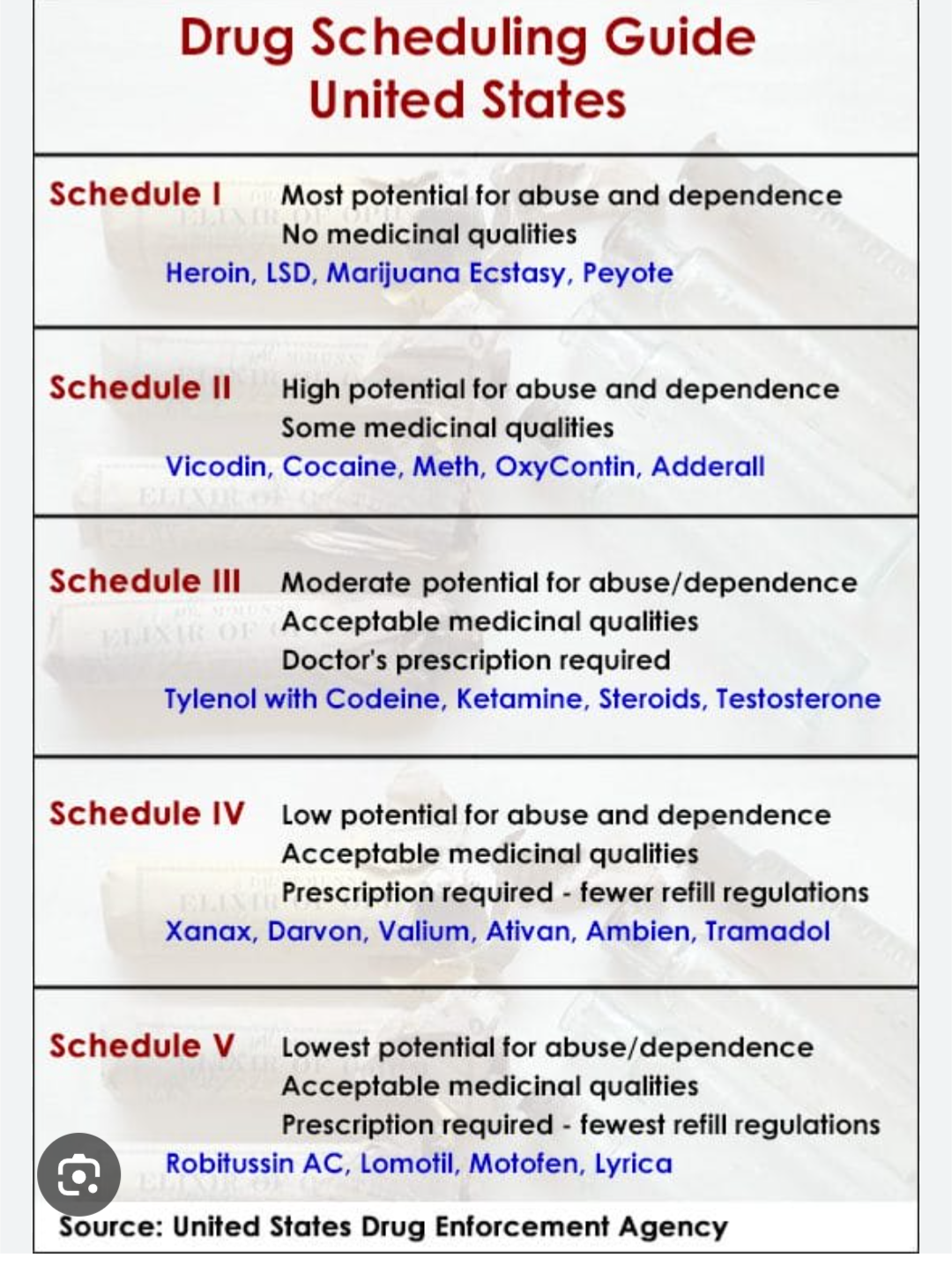
Let’s say, best case scenario, state operators get to keep their markets. They still can’t use banks, deduct expenses, ship across state lines etc. Only pharmaceutical companies registered with the FDA can do that. Their competition with hemp just became competition with Pfeizer Mids.
That’s best case. Rohrabacher-Farr gave state markets some protection. That’s already lifted signaling the desire to leave the door open to enforcement on state operators.
I could even see Hemp operators trying it on the basis that they never engaged on federally illegal activity. But that’s thin at best and even the really good ones have a steep match up the hill of compliance with the feds. I would classify the top 10% of the very best hemp operators as GMP-lite at this point. 90% are not even in the conversation.
From a patient perspective, assuming there develops a proper supply chain, prescribers and pharmacies, maybe it’s a win. That’s not a small thing. If this results in more people having more access to good cannabis, I’ll drink my bong water.
Lots of ifs and nothing has happened yet. We live to fight another day.
4 Likes
schedule 3 should open it up for compounding pharmacies and the like? If they can make boner pill and ketamine gummies, THC seems like a logical next step/branch
2 Likes
Very good point, there are lots of smaller pharma companies that could have access. It also opens things up to international markets. We get lots of prescriptions from other countries.
I met w the cannabis research team at Ole Miss. they have all the licenses. and are trying to get operators in the state involved. Waiting on a MOU now from them. They lost federal funding shut down the grow and are trying to find ways to provide meds to the ppl they were providing them for. among other goals. Got to have lunch w the doctor who’s been growin it in MS since 69’ lol
3 Likes
I dont like Pfeizer mids that would not be good naitonwide but at least states could still have their markets
but I do like that people on probation or have some constraints that require drug testing would mean the agencies that monitor the user or the testing lab would not longer have to treat THC as something that can be penalized because they are “bound by federal law” - I have a neighbor whos grown weed his whole life legally in CA - gets popped as a mule in an illegal state, is back in CA on supervised probation in CA and although his PO wants him to be able to use his medical marijuana for seizures and chronic pain he is still technically under the “custody” of the other illegal state while “supervised” by california, his PO here in CA literally uses marijuana and told him sorry bro we thought you could use your script we would love that for you but since your charges were out of state we have to follow that states rules and also “federal law”. So if he comes up hot on a test for THC from even just harvesting not even consuming he will go to prison. If it was federally rescheduled im pretty sure he could tell the judge in the other state to kick rocks and most states laws default to federal CSA guidelines unless they implement their own state based legal MMJ/rec program.
Also this could mean people could start using marijuana alongside MAT (suboxone etc etc) because of federal guidelines instead of only if they live in a lucky state and not be kicked out of a medically assisted treatment program and probably have a higher chance of cessation of suboxone altogether because of no longer facing rejection for testing positive for THC while using suboxone, this is the case in VA at least and many other states. You can be prescribed synthetic opioids to kick heroin but test positive for THC?? rejected from the program. Also in VA you still cant use MMJ while on probation because the probation offices will state they they only “follow federal law” even though you can be prescribed MMJ in the damn state.
And weirdly enough substance abuse counselors can do their job while prescribed suboxone themselves and even ketamine and can still be supervisors of drug treatment programs. If THC was prescriptible as schedule III federally this means these people could also still have their job and use THC as their prescribed drug and still deliver care to others.
again fuck pfeizer mids that will suck, but it would be tight that the whole “we follow federal laws only” bullshit excuse in certain bureaucracies where they are rejecting certain peoples usage or imposing constraints on people instead of just letting them use their state prescribed script would no longer be an issue.
tldr; people on probation / criminal justice exposure / job / medical treatment constraints could have a bulletproof prescription for marijuana instead of coping with the stress by using worse drugs that leave their system in 3-5 days or using RC’s / kratom / 7-OH instead of the risk of the terribly long time it takes to metabolize THC out even though its the least harmful drug of all of them
That’s a path for sure. It’s going to be really interesting.
If there’s any reasonable criminal justice component, I’ll be so pleasantly surprised. That spoonful of sugar would help the medicine go down.
1 Like
Am I crazy to think that marijuana should clearly be BELOW compounds that cause a physical dependence in which withdrawal can result in death.
ie benzos like Xanax(Schedule IV) or even alcohol(none).
7 Likes
Nobody knows exactly what will happen, but the best opinion I’ve seen has been from Eric Berlin at Denton’s (link here):
1. Misconception: Rescheduling to III would legalize state activities.
Response: The recommendation to reschedule cannabis (“marihuana” in the Controlled Substances Act (“CSA”)) from schedule I to schedule III is significant because the federal government is acknowledging, after decades of denial, that cannabis has medical value and less potential for abuse than certain other controlled substances. If the DEA does reschedule cannabis to schedule III, cannabis will remain a controlled substance and be subject to the CSA’s requirements for registration with the Drug Enforcement Administration (“DEA”), manufacture and distribution. The state law programs to regulate and tax cannabis would still exist outside of the federal system, and there is no immediate way for current state actors to enter federal legal channels for the distribution of controlled substances; – for example, even when DEA allowed for additional bulk manufacturers for cannabis research, it suggested that state growers would not be selected on the basis of their federally illegal cannabis activities. Instead, we expect that the state programs would continue as they have been, outside of federal legality but “protected” by current federal nonenforcement. Perhaps over time states would amend laws to seek to harmonize with federal law.
2. Misconception: Rescheduling to III will eliminate the state programs.
Response: Currently, state-legal programs operate outside of federally legal channels for controlled substances. Rescheduling cannabis to schedule III would not change that. We do agree that in the long term, if cannabis-based drugs are ultimately approved through traditional pharmaceutical channels, medical cannabis programs may become smaller or even potentially fade away (especially if cannabis flower could be prescribed and reimbursed). We would still expect adult use markets to continue in the near term in some manner outside of the CSA pathway, though the precise mechanism for how that will occur in the longer term is unclear. The most likely way would be a congressional act descheduling all or a subset of cannabis products and regulating this subset in a manner similar to tobacco or alcohol or other consumer goods intended for inhalation or ingestion. While acknowledging that increased federal enforcement is possible, we find that scenario unlikely given the state legal cannabis markets’ history and size.
3. Misconception: Rescheduling to III will eliminate state medical cannabis.
Response: Rescheduling to III is an acknowledgement of the success of the state-based medical programs. While, we do acknowledge that state medical cannabis programs could be diminished or even cease to exist in the long run, that is not certain or inevitable. If cannabis-based drugs are ultimately approved through traditional pharmaceutical channels, a process that will take years, medical cannabis programs may become smaller or even potentially fade away (especially if cannabis flower could be prescribed and reimbursed). If flower cannot be prescribed or reimbursed under federal law, we could imagine a scenario where medical programs would continue, at least as discounts in the state adult-use markets.
4. Misconception: 280E will still apply to state cannabis-related activities.
Response: This is simply incorrect. 280E states that:
No deduction or credit shall be allowed for any amount paid or incurred during the taxable year in carrying on any trade or business if such trade or business (or the activities which comprise such trade or business) consists of trafficking in controlled substances (within the meaning of schedule I and II of the Controlled Substances Act) which is prohibited by Federal law or the law of any State in which such trade or business is conducted.
If cannabis is moved to schedule III, 280E by its plain language will not apply to cannabis. The contention that moving cannabis to schedule III does not eliminate 280E for recreational cannabis is incorrect. That confusion likely arises from the separate point that moving cannabis to schedule III does not make recreational cannabis “legal.” That is correct, but incomplete; the real point is that rescheduling does not make any current state program, medical or recreational, legal under federal law.
5. Misconception: Rescheduling to III “hands the entire industry to Big Pharma.”
Response: While a rescheduling would not make the state programs legal, we expect state programs to continue, at least for recreational/adult-use cannabis. The change would open the window for pharmaceutical companies to compete with state-legal cannabis medical products using the traditional schedule III drug pathways (note, cannabis drugs could be researched and developed even with cannabis in schedule I, but schedule I substances have significant higher barriers, and such developments have been rare). These pathways still take time (years), and particular drugs will have to be developed for particular uses (e.g., MS, Crohns).
6. Misconception: FDA is rescheduling medical cannabis, but it cannot reschedule recreational cannabis.
Response: This is incorrect. Rescheduling or descheduling impacts the cannabis plant, not the intended use. It is true that a move to schedule III would not make adult-use legal because it would still be a controlled substance sold inconsistent with federal law. Medical use would not be immediately legal, and it is not apparent how, whether, or when doctors would be legally able to prescribe cannabis or cannabis derived products (currently, doctors do not “prescribe” cannabis under state laws; generally they issue “certifications” that a person is a bona fide patient with one of the enumerated ailment for which the state or the doctor believes cannabis may provide some relief or benefit).
7. Misconception: Moving cannabis to schedule III will relax other regulatory burdens like quotas and security requirements.
Response: While schedule III drugs traditionally do not have such measures, to move cannabis to schedule III and comply with the requirements under the Single Convention, the DEA would have to add regulations specific to cannabis, including quota requirements and certain security regulations (consistent with what the DEA did with Marinol® and Epidiolex®).
8. Misconception: Rescheduling will help/hurt congressional reform efforts
Response: Maybe yes, maybe no. While rescheduling would bolster arguments that cannabis has therapeutic value, which could move politicians on the fence, it also could remove some of the urgency with certain politicians seeing rescheduling as “good enough.” It is too soon to tell what impact this would have on legalization efforts, but SAFE Banking is still necessary, and adult-use cannabis would need to be descheduled or state programs otherwise legalized for the industry to continue to succeed long term.
9. Misconception: If DEA chooses to reschedule cannabis, it must use “Notice and Comment” rulemaking to do so
Response: While this is the likely route, the DEA has espoused in the past that it can forego notice and comment if issuing rules to comply with treaty obligations (see 21 USC 811(d)(1), which allows DEA to take actions to comply with international treaties). Therefore, the DEA could instead issue a final order without notice and comment. It has done this at least once with Epidiolex® rescheduling (although not with Marinol® or the new bulk manufacturing regulations). We do still suspect that proceeding with notice and comment is more likely given the public and political interest in the topic and the historic importance and implications of rescheduling, although politics could impact the decision and timing.
10. Misconception: Rescheduling will allow significant new investment/property owners to lease to cannabis companies/cannabis companies to file for bankruptcy
Response: The challenges related to investing in, leasing to and bankruptcy protection for cannabis companies are based on the federal illegality of the activity, not necessarily the substance. Whether cannabis is schedule I or schedule III, the state programs as they exist today still operate outside of federally legality. As such, the impact rescheduling will have in these matters will come down to whether banks, landlords and bankruptcy judges in their own discretion determine that federal illegality is no longer a bar to such activities.
2 Likes
Analog act doesnt apply to schedule 3 either so allllllllll those unscheduled analogs will have to be scheduled including d8 ( as its scheduled only as an optical isomer of d9 under the AA)
1 Like
This is very good info. I have been incorrect about 280e and banking. That is somewhat encouraging.
Thursday now, apparently. Until he changes his mind again I guess