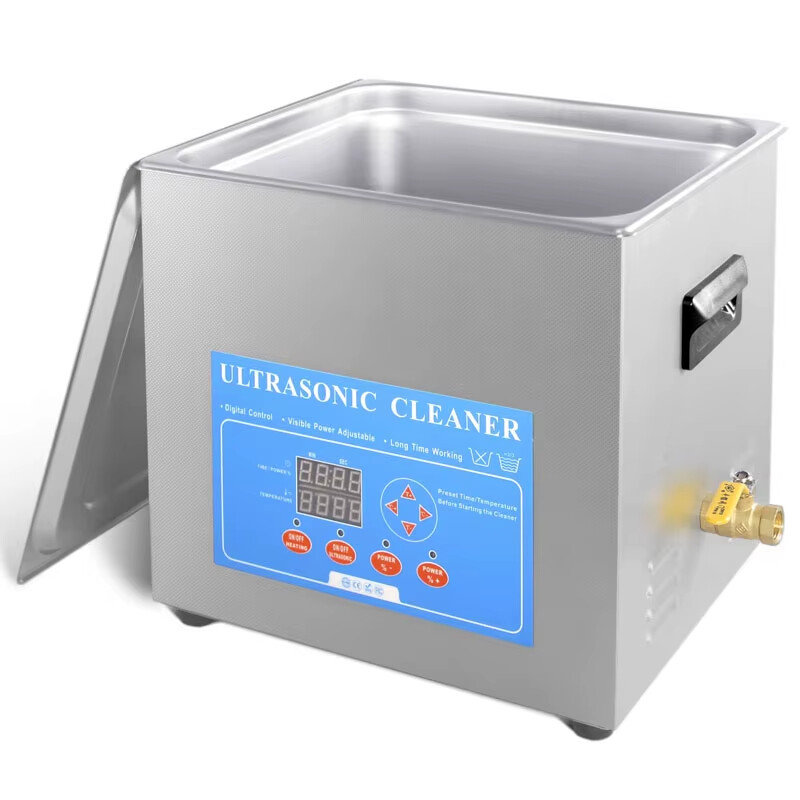
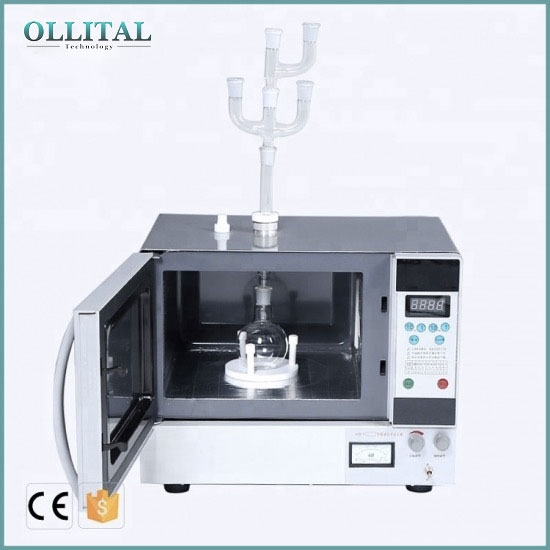
Sonicator for reactions, ultra-sonic conversion idea

I have seen, sometimes, that people tend to use sonicator in some reactions like here with PTSA (https://bbgate.com/en/threads/thc-synthesis-from-cbd-using-ultrasonic-bath.14423/) for “faster” reaction.
(Also don’t try that reaction, and don’t try this at home)


Now i think - how good idea is it?
To maybe use it in phosphoric acid/pentoxide, HCL, maybe even AlCl3 or any other reaction.

How much people tried to experiment with sonicator, and what are your thoughts on this?

1 Like

Could help, could also really mess up your horn. Ultrasound itself already erodes horns as is, with acids present, it seems like you’d be going through horns quickly. Qsonica makes replaceable tips, so that could be good, but I also wonder about cations from the metal contaminating the reaction.

1 Like

The only reagent that might make sense is phosforic all other mentioned reagents get Isomerize before you know
I mean ptsa 17 min
Alcl3 20 min
Hcl as fast as you can disperse the gas in solution +5 min
Pretty sure that on a molecular level there are heat spots due to sonication taking the molecule to D8 at least some
Borontriflouride might work in time reduction
As does Triisobutyl aluminium or any of it s cousins tiba,dibal, etc etc

3 Likes

Sounds like someone needs to engineer a sonic probe into a wiper instead of the pre existing shaft…

1 Like

That highly depends on scale, there are sonicators that can hold up to 5L flask (you submerge it in liquid).

Also, would it be safe to use PTFE overhead-stirrer with sonicator? Who knows (ok it turn’s out it give’s micro-plactic, so - NO)

A microwave reactor would be the best thing for cannabis chemistry IMHO

I do not think an ultrasonic cleaner would be worth it…

Daaamn wth is that. First time seen such apparatus. What reactions would be good in it? Phos right? and hcl maybe

Microwave in a lot of ways is under-studied in so far as it’s maybe a little esoteric and poorly understood despite how useful is might actually be. But a lot of the suspected applications for microwave are for reactions that are otherwise limited by a high temperature/energy barrier. Like if you have a reaction that otherwise only works at like 250C, you might consider trying a microwave in order to breach such an energy barrier and POSSIBLY at a lower temp. Imo it’s worth trying microwave for any process that requires some amount of heating and long duration, it might be the magic bullet.

It’s been a long time since I took theoretical physics (also referred to as quantum in some curriculums) and it’s late/this isn’t my dissertation so excuse what may be a somewhere inaccurate description…when you heat a substance (add energy, raise the temperature) that energy is expressed as an increase in the rotational, vibrational, and translational speed/frequency/length of the chemical bonds…atoms rotate, vibrate, stretch and bend along their bond axes…in addition to the entire molecules themselves getting energized and moving around faster. The way there are published bond angles and lengths for many known molecules…those numbers are perhaps averages or otherwise mathematically determined, in actuality some sp2 bond isn’t exactly 120 degrees 100% of the time…there is motion going on along those bonds at all times, and that motion tends to increase with the application of different types of energy (thermal, IR, microwave).

When you heat something (apply thermal energy) that energy is imparted/divided on the molecule as rotational, vibrational and translational energy…but microwaves are different, they only induce rotational energy specifically. 30 seconds in a microwave at 100C might cause the atoms in a molecule (or the molecules altogether) to rotate at speeds that are only otherwise accessible at 250C via conventional thermal heating…which might be just enough to overcome some energy barrier and allow a reaction to proceed under more accessible conditions.

Don’t take all of this as gospel, I’m not an expert on this topic and it’s been a long time since learning this stuff…but this might serve as a jumping off point for someone else’s Google searches…

5 Likes

Unless you can find 400L volume units

Knowing that D8 formed at temps over 3C i doubt there is any use for this

I can find it, if someone is willing to afford it.:joy:

1 Like

Doesn’t really make sense to scale microwave chemistry in batch mode, it’s far more reasonable via flow reactor.

1 Like

I’Ve decarbed THCa in a microwave before, it works fantastic. Works best if you melt the THCa on a hotplate beforehand.

1 Like

I have been thinking a lot about the iodide catalyzed photo-chemical reaction that can turn crude hemp extract into CBN

I think a photo flow reactor would be amazing for that

I can’t begin to comment on the role UV would play or if it’s successful, but certainly Iodine on its own does the job. I’m under the impression I2 doesn’t like UV light, I’ve always seen it in amber bottles and stored dark.

1 Like

Hemp as in cbd/cbd-a extract will need an isomerization step to work but yes it can

UV on it s own is not a great reagent for it only makes a 60% yield at best

There is a beautifull write up on this forum by I think @Chemphox but I am not sure if that is the right tag it s been a while

Chemphox

Dec '19
Greetings Roguelab:

I have an interest in UV in my lab. And I have an interest in producing CBN from other cannabinoids. I have some information that will DEFINITELY help you with your search for the right light, and with application of the UV once you get the lamp, with a photocatalyst that works great and is unreactive and is easily filtered out when you are done! And I am going to share the part that cost me 100s of hours of frustration until I figured out what screws everybody up who tries this. So, first things first, your source of 242nm UV light. Here goes: When you are searching, try searching for “UVC lamp”, because the UVC band is 100nm to 280nm. And fluorescent mercury vapor UVC lamps center at 253.7um, they emit 80+% of their light at 253.7um, though they are not that efficient! So at 11nm longer than ideal, they are as close as you will get to the ideal wavelength for what you are wanting the lamp for. And I can tell you from experience that these lamps work for CBN production! I use the 25 watt model. It took me forever to figure this out, but these lamps are only 25% efficient creating light 253.7nm, so, if you buy a UVC lamp that consumes 25 watts of electrical energy, you will only get 5 watts of useful UVC optical power out of it… These “UVC fluorescent lamps” also emit at 180nm, but the quartz envelope does not pass this shorter wavelength, its all coming over at 253.7um. FYI, these are just mercury vapor fluorescent lamps without any rare earth phosphor coated on the inside of the tube, so they emit true at 253.7um from day 1 until they die. So if you search for “UVC lamp” on eBay, you will find a bunch at 253.7nm, very cheap, even pretty powerful, as in 25 watts powerful, lamps. The least expensive tend to 5 watts for less than $4USD, which put out less than 1 watt of useful UVC, up to $21USD for the 25 Watt lamps that put out just shy of 5 watts of useful UVC. UVC LEDs tend to be too high in frequency for our use, with a center of 275nm, though some less honest sellers list these as 265nm, because if you pump them properly, in theory, they emit down to 265nm. I have ordered several LEDs that were supposed to be 265nm, which ALL turned out to be 275nm, and none were powerful enough to produce any reactive oxygen species! REGARDING SAFETY - THIS IS NO JOKE, SERIOUSLY, THE CHINESE SOURCES FOR THE LAMPS ARE GREAT AND RELIABLE and INEXPENSIVE AND DO EMIT RIGHT AT 253.7, BUT THEIR SAFETY GLASSES ARE ABSOLUTELY NO GOOD, AND ARE NOT TO BE TRUSTED, EVER! Sorry to yell, but you may feel like that you are OK without eye protection. You will be mistaken if you assume that. Check out “styropyro” on You tube if you want verification. He does proper testing of Chinese protective glasses for various wavelengths, including UVC, with SCARY results. BUY AND USE GOOD AMERICAN OR EUROPEAN MADE UVC GLASSES, SERIOUSLY! OK, more advice for you and this will save you a BUNCH OF TIME and FRUSTRATION - Regular glass and Nitride glass ABSORB UVC at most of the wavelengths are useful for creating CBN! It took me forever to figure this out! I am embarrassed to tell you that I had to check myself several times before I figured out that the glass was absorbing the UV in the useful range! Now, with that out of the way, my next bit of advice: Titanium Dioxide. TiO2 in situ is a photocatalyst, and on its surface, which is where reactive oxygen species do their thing, and carry out redox reactions in situ.! Yes indeed, this is what you want to do! The TiO2 is opaque and thus can easily be filtered out. TiO2 is pretty much insoluble in anything we here in the forum are generally interested in, solvent wise. Next bit of advice: A QUARTZ JACKETED reactor vessel is the shiznet and BECAUSE GLASS ABSORBS UVC, IT IS THE ONLY MATERIAL YOU WANT TO USE FOR THE REACTION! The quartz passes UVC at 253.7um without power loss. So you put your UVC lamp in the part of the reactor where you would normally put the chemicals you are working on. And you use a cheap Bronze Gear pump, $24USD on theBay, because it handles very viscous fluids easily and without much of any corrosion etc. And you get a variable 12VDC power supply of the sort used for the new style RC vehicles, because the motor on these pumps is the same high tech type used on RC vehicles. And you put the cannabinoid solution, in a bucket mixed with the TiO2 and set it up so that your solution of cannabinoids ‘n’ TiO2 just cycles around and around and around the reaction chamber of your quartz vessel where you put your UVC lamp`, over and over until you have the CBN at the max level. I hope that I have saved you a bunch of time. If I did please let me know! If I can give you more info, just let me know and I will do my best to assist you. But you seem to be among the more capable in this forum, so I think you will discover some new things, and if you do, please do share those with me, as I am always wanting to up my game in terms of efficiency! Cheers from Santa Barbara, CA USA! :slight_smile:

1 Like

I found a paper that did it in one step with no acid - just refluxing a CBD dab in toluene with a lil bit of I2 crystal added:

https://diverdi.colostate.edu/C442/references/processing/conversion/j_nat_prod_2018_v81_p630.pdf

I am not in any position to try this reaction out ATM but it is very interesting from a natural products chemistry POV

I think doing this reaction with UV added would help increase the yield since I2 photofragments into radicals that are very oxidizing

@Roguelab @eyeworm

1 Like

Btw - if we use sonicator in AlCl3 reaction SOP, how good it might be?

Talking about THC-CL chloride bond that maked D8 during distill.

Hypothesis - that sonicator and ultrasonic might break chloride bond - to fully get rid of chloride and “neutralize it”.

It would make some D8 on itself coz of sonicator and ultrasonic cavitation

The problem is that sonication produces heat the implosion at a molecular scale creates immense heat >150C this with the Knowlidge that the chlorine gets released at approx 90C

And forms HCL will deffenatly not work well

Darnit how many hints and lines off thought must i give for you to understand what’s needs to be done arggg

1 Like

:sob: sry im dumb,
but thought it “might” be good at it too

1 Like