Place some crude under high pressure and compare the decarb rate next to an open atmosphere vessel  @eyeworm it dosen’t stop it be it does considerably change the reaction rate
That’s dope. The company I worked for is the earliest one which start enzymatic here in China , but mainly focus on pharmaceutical or nutritional molecules ,I had the chance to communicate or work with the best team in USA like Professor Arnold before she won noble prize ,the bill catalysis team from those BIG pharmaceutical companies . Our R&D team was trying to develop enzymes for cannabinol but probably no progress since everything related to cannabinol are banned. While we did hear companies in USA did great job already
that’s just because you haven’t gotten your solvent out yet…
in order to do that experiment “correctly” we would need to measure the amount of work being done (heat energy applied). from here it seems above my pay grade.
I was asking for the logic. because I don’t understand how it would work.
I also don’t understand how to accurately measure/control the bits what seem to need measured/controlled to actually test your hypothesis.
Edit: mind you, I’m trying to catch up on my homework, and am a couple of hrs deep in Organoleptics: In House QC?
3 Likes
Sure. At any rate (get it? RATE??) La Chatlier’s principal, if followed to the T, would mean if you put enough CO2 pressure above it that you’ll recarboxylate. You and I both know that is not the case. Decarboxylation is not considered isentropic aka adiabatic reversible in the canonical sense that La Chatlier’s kind of relies upon.
Reaction dynamics are not simple, and perhaps your observation is valid. I don’t think you’re outright incorrect or lacking in understanding of the subject. But either way, I don’t think we’re going to fully define the subject we’re discussing here and now. It would take quite a rigorous kinetic study that ultimately isnt really worth anyone’s time unless we’re trying to publish.
4 Likes
the vacuum part surprises me more than the pressure tbh.
I stand corrected.
1 Like
Vacuum will more quickly rid of your residual solvent and any low boilers that are absorbing collisions that could otherwise provide the required oomf for the molecular discombobulation we refer to as decarboxylation.
Least that’s my take on what the chemists and physicists haz tried to teach me 
…but if enzymes only lower the barrier, and this rxn works in high pressure CO2…
1 Like
I’m ready to be proven wrong, I just want to acknowledge the complexity of a true kinetic study of what we’re describing here. I think we’re all thinking of/saying similar things just slightly differently, we’re splitting hairs a little and ultimately this work needs to be done empirically in lieu of a kinetic study (i.e. run a bunch of conditions and just be happy with what conditions work best even though the mechanism is obfuscated).
3 Likes
Being proven wrong in science means you get new science (or learn new science). I love that shit.
4 Likes
~starts tying off arm~
“I’m here for the 20 CCs of ‘science’ please!”
3 Likes
I wonder what happened to op? Not much for answering questions I guess 
1 Like
He’s swimming around in his Scrooge McDuckian vault of doubloons.
8 Likes
We were seriously interested in this and before we could talk any numbers and ROI details he was on a plane to sell it for a significant amount to someone else and that we needed to jump on it asap which wasn’t happenimg without the details and proof, then shot us some emails asking if we were still interested a day or so later…
4 Likes
I’m still very interested in the process and science and I’m not easily taken away by people’s sense of urgency.
However, I do understand the desire to capture opportunities and am patient to see this tech further grow.
If you wanna buy it I won’t stop you bro, just saying I’m not going to throw any money at it personally since
1.I’m confident I could recreate a working SOP before the end of summer
2. I’m not confident in what production costs and time are compared to our current costs/time which are INSANELY low already
3.haven’t seen any proof or details from The OP that I would trust sending them anything
3 Likes
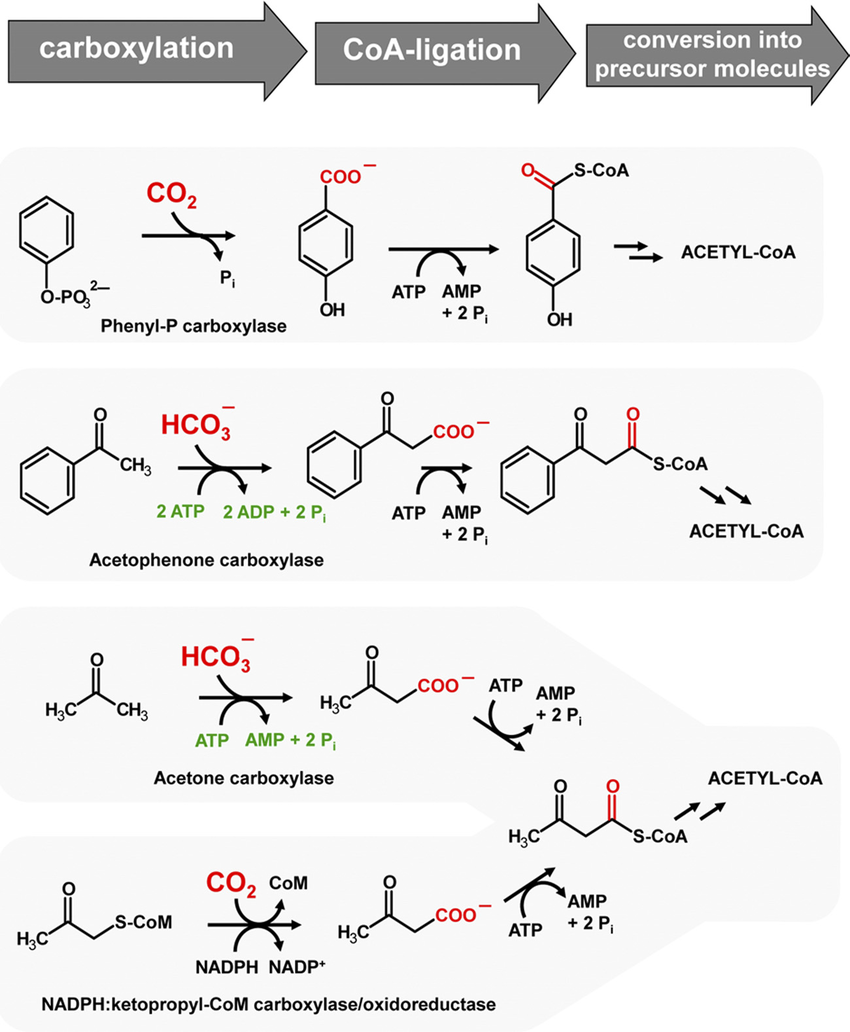
Redesign the protein to fit your compound of choice. Make sure it fits in the correct orientation of the active site. Custom Order a plasmid vector with the protein, Make and purify protein. Then test it. If it works expand your culture and start making protein.
8 Likes
I appreciate your ability to hunt and smarts
1 Like
That is
Step 1 enzyme discovery- selection and design , enzyme screening , this step aims to find the best working enzyme
Step 2 enzyme engineering/ evolution , usually to creat mutations which makes the enzyme work times faster.
Many people can reach step 1 , while Step two is usually the hardest part.
5 Likes
Step two is where clever selection schemes beat the hell out of screening.
Raise your hand (say; turn blue or glow) if you can do what I want vs drop dead if you can’t.
Going from “not quite dead” to “thriving” is then mostly about time and mutagenesis.
It is certainly possible for the determined & talented to model much of the way there these days…
4 Likes
Exactly, and AI helps a lot on protein engineering too nowadays, my former workmates are able to complete various projects in a much shorter period
1 Like