East side of the state?
1 Like
what if they are designed to turn you to a spider after a certain input. Like in metal gear solid they can give you a heart attack when signalled. Like 6g
1 Like
Genesee county
1 Like
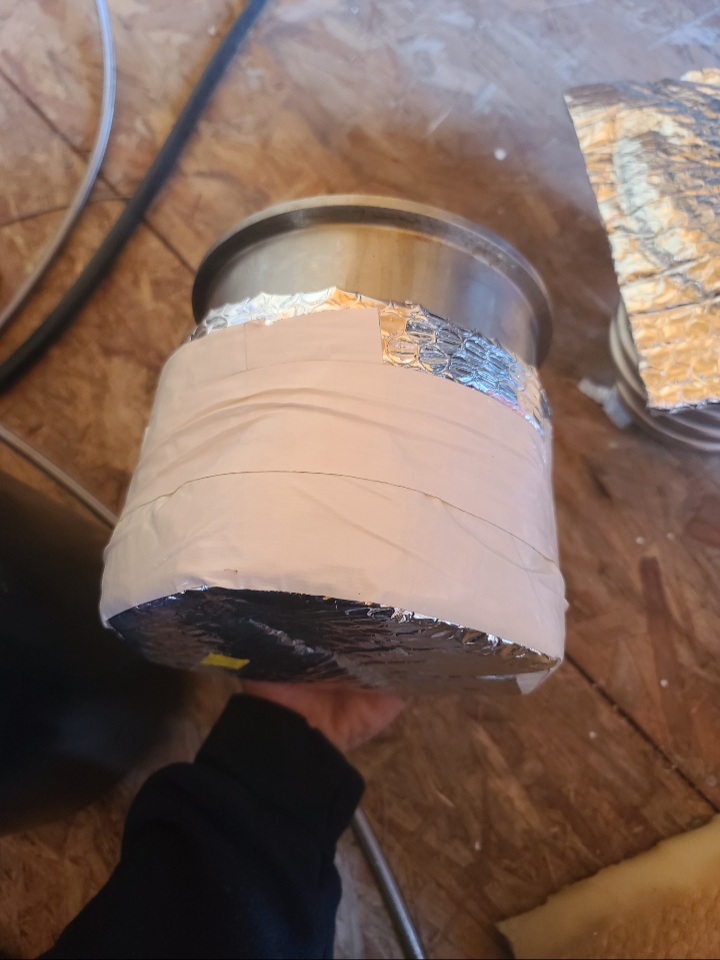
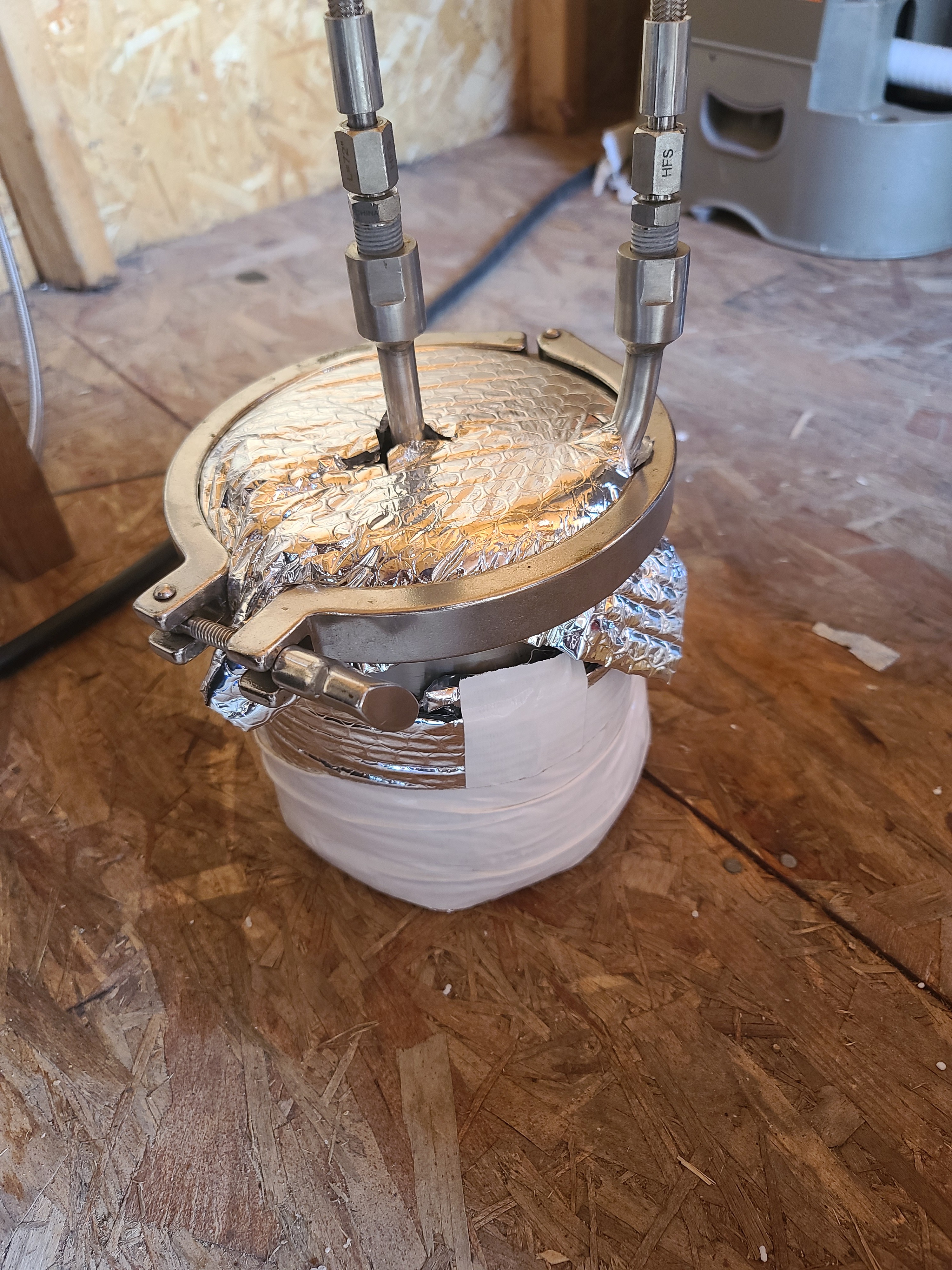
This is what I keep my LCO2/acetone in. A 6" welded base triclamp spool. I insulated with some foil bubble wrap that i had laying around and made the lid with the same material. Poked holes for the inlet and outlet of an injection coil that fits nicely inside the spool.
8 Likes
What ratio do you mix the acetone & lco2? Why not straight lco2?
1 Like
HMU let’s knock out some edits to your site so you can share it.
1 Like
Idk, I never tried it before. I dont see why it wouldn’t work.
1 Like
Forgot to mention that using a cheap lid like the one in the picture keeps atmospheric water from condensing inside the acetone due to the pressure from the CO2 escaping out the small holes. Helps me to reuse the same acetone.
2 Likes
I was reading this paper about ultrasonic quenching steel to selectively induce the formation of austenite over martensite. The authors explained how quenching in a water bath exposed to ultrasound provides a totally uniform quenching of the steel. The mechanism for why this works is due to the way ultrasound eliminates the vapor barrier that gets produced around a hot piece of metal when its submerged in a quenching solution.
This got me thinking, when an injection coil is submerged in a chilling fluid like LCO2 a similar phenomenon must occur. A vapor barrier must be produced when a warmer fluid is sent through that coil.
I think the rate of heat transfer can be increased by fixing an ultrasonic transducer to the container that holds your injection coil, but obviously any excess energy being added to the fluid will cause faster evaporation of the LCO2.
@Hansel I use about 70% LCO2 30% acetone but I don’t actually measure.
5 Likes
Thanks a ton for this answer. Really appreciate it. Thinking about trying liquid co2 and acetone on my coils.
They are what eat up dry ice for the most part.
3 Likes
I’m just gonna ask because I’m ignorant.
How are you keeping it liquid? I’m awfully confused how your set up works.
I assume a PRV is used, but I don’t see one. Leaving me baffled
4 Likes
 thank you. Because I’m over here like how the fuck
4 Likes
I think he said liquid co2 with a vent. It don’t look sealed to me either
2 Likes
I see it now. There’s absolutely no lid. Just the insulation.
So it lasts only a few minutes I imagine
What would we need to use lco2 in a counter flow coil? PRV set to what??
2 Likes
Acetone probably extends that quite a biy
Eh, I would think the opposite. Lco2 hits atmosphere and turns to a solid then the acetone just makes the bath. The acetone is incredibly aggressive and probably eats through it super quick
Lco super chills the acetone preventing evaporation but @ScoobyDoobie gonna correct us.
4 Likes
Lol your asking how to make a bomb brother. This low tech solution is not meant to be adapted by smarter folks with better equipment. 
I’m ignorant too but the reason why I think it works is the same way that nitrogen can exist at atmospheric pressure as a liquid, its due to the insulation. As the CO2 evaporates the effect of evaporative cooling keeps it cold.
Liquid co2 coming is coming out at like -110. I do get formation of some dry ice, but I use acetone for the reason @Killa12345 mentions. Keeps it liquid and acts as a medium to transfer heat out of the solution.
7 Likes
You can use ln2 in a counter flow coil with a PRV, why would the lco2 be any different
1 Like
I didn’t know that you could do that but if you can why even use lco2 if nitrogen gets colder?