We’ve been dealing with an issue in our LPG recovery line. Every 6 runs or so, we are seeing extract in our molecular sieve stack that eventually clogs our screen gasket and stalls our recovery rate. We assumed extract was entering the molecular sieve stack from miscella splashing while filling our collection vessel via nitrogen assist, but the problem didn’t go away when we added an 8” extension on the collection vessel. The clog always occurs at the micron filter gasket that we keep on the bottom of the molecular sieve stack (i.e after drying).
Could this be oil entrainment in due to wet solvent? Has anyone added an oil mist eliminator upstream of the sieve stack? We are changing our molecular sieves about once per week. Notably this issue only began when we started to double our fresh frozen output. Thank you for any insight you may have.
Can you share a picture of the setup? whats the reason for a mesh screen? if you are swapping out the sieves regularly it would probably be fine to get a larger mesh to allow more contamination before plugging the screen.
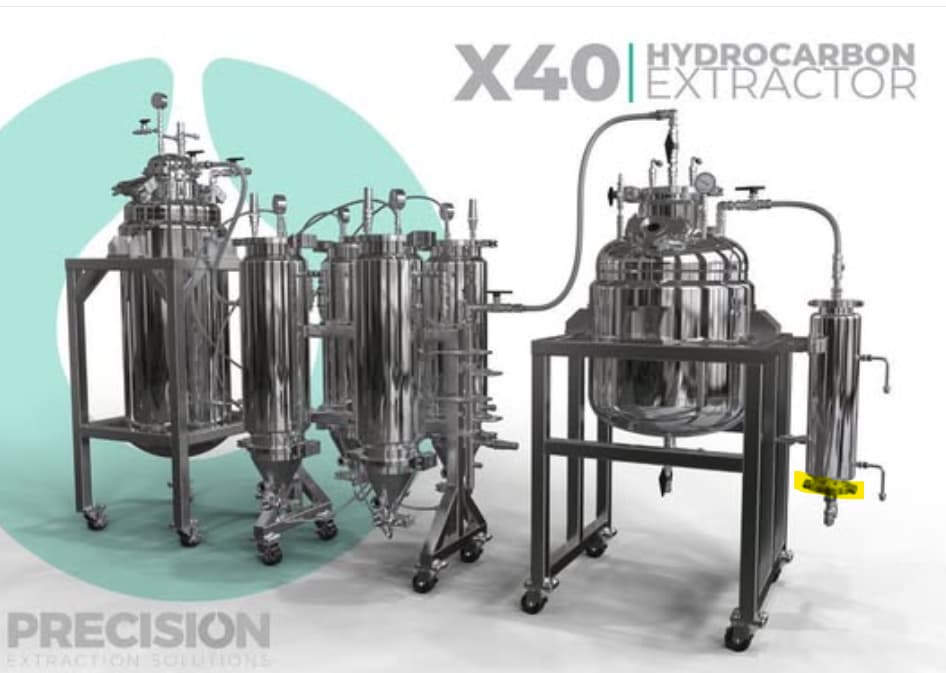
It’s a precision X40 system. Clog is the highlighted section below. Downstream of that is a hose to the GC. Originally we put a mesh screen there to hold up the sieves but now its other important function is to prevent dried extract from entering the GC - for this reason I am hesitant to swap it out for something less fine.
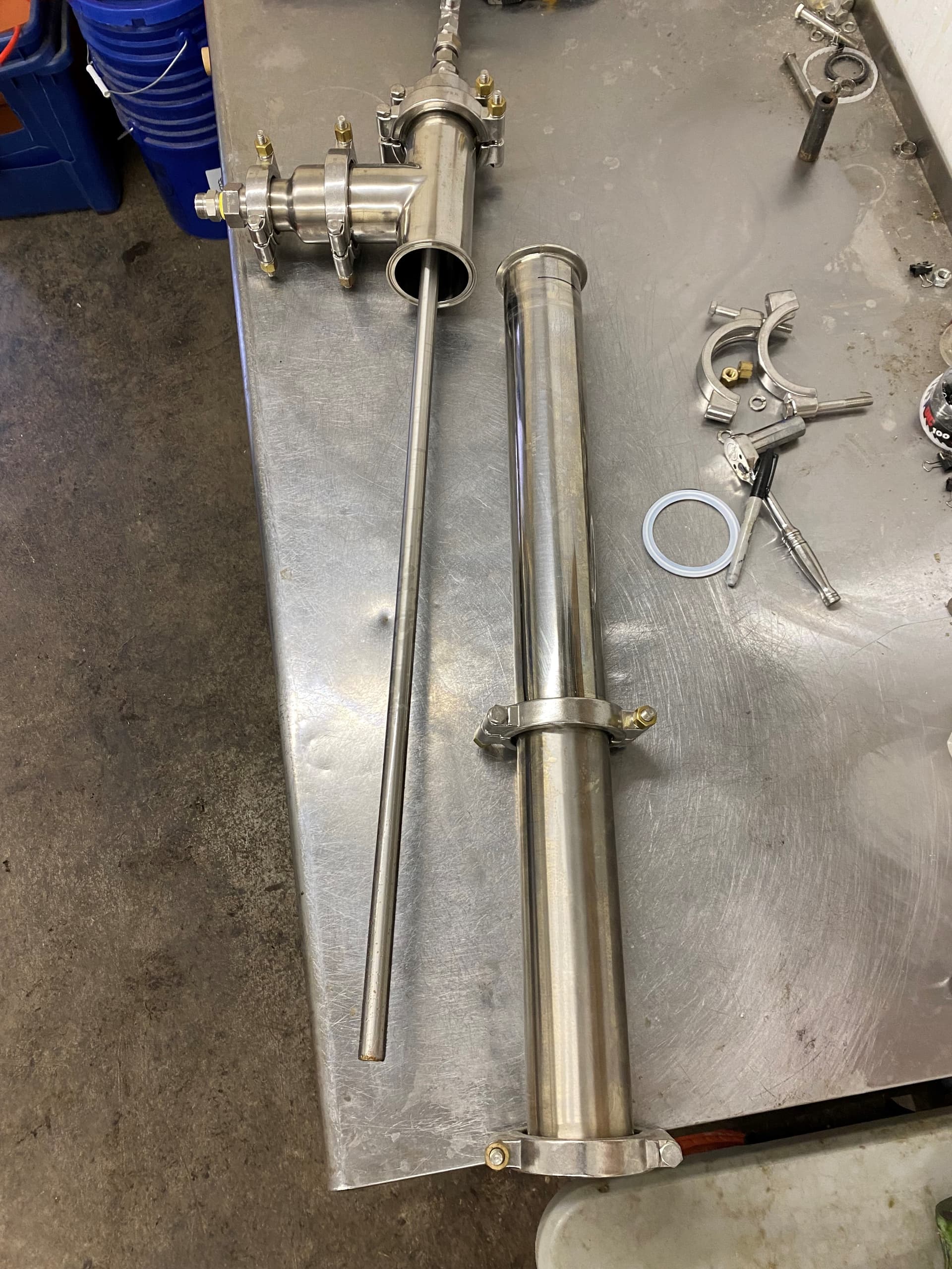
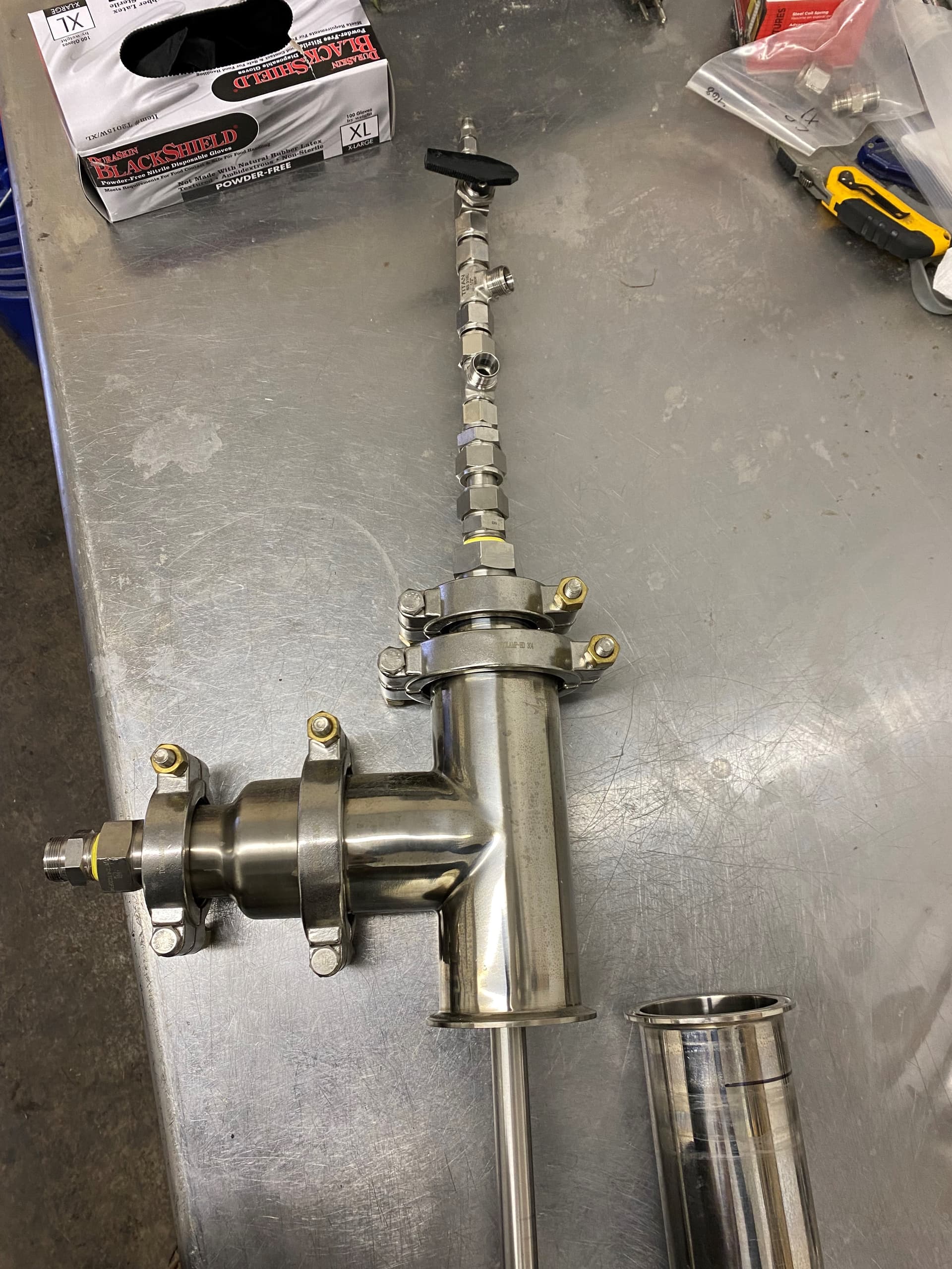
I always recommend having a vapor/oil separator prior to your sieve setup. Add a 3”x24” jacketed column that enters on a dip tube and leaves through the cap. That will reduce velocity in the vapor path and allow any oil to drop out of the stream. The way it is currently configured I can see why that would accumulate oil mist and clog things up.
Yup, I did the same on our Luna systems before the pump, probably will add one before the passive side this summer. We swap and recharge molesieve cartridges daily and while the active loop is cleaner, the passive loop is still picking up oil. We bent the diptube in a similar fashion to the OG cyclone filter originally built by Graywolf et al so we get some centrifugal action out of it.
I’d love to switch from actual beads to the solid elements, those are soooo much easier to work with, but I haven’t gone down the right rabbit hole to find those element assemblies we need.
Second this. I also (correct me if this is wrong) have my input line for recovery coming from the bottom of the mol sieve stack, that way if anything ever makes it past your liquid trap you have a slightly longer buffer to catch your error before it hits your pumps
ive been running one of these x40s the last 5 years. we put a honey trap in between the recovery pot and the desiccant column. just used an 8xin in vessel
My crude version of this was using a 4”x 24 “ spool with a 3 port top cap. One for a tee with prv and gauge, the center port being the inlet from solvent tank with a dip tube as you decribed, that protruded about 1.5” past the end of the spool. With the last port being the outlet to pump.
I used a regular gasket on top and a perforated (not mesh) stainless steel gasket on bottom. And I drilled the center of the gasket out to fit the diptube in the center such that there was a little bit of filtration provided by the stainless mesh gasket to catch and condense oil from the vapor.
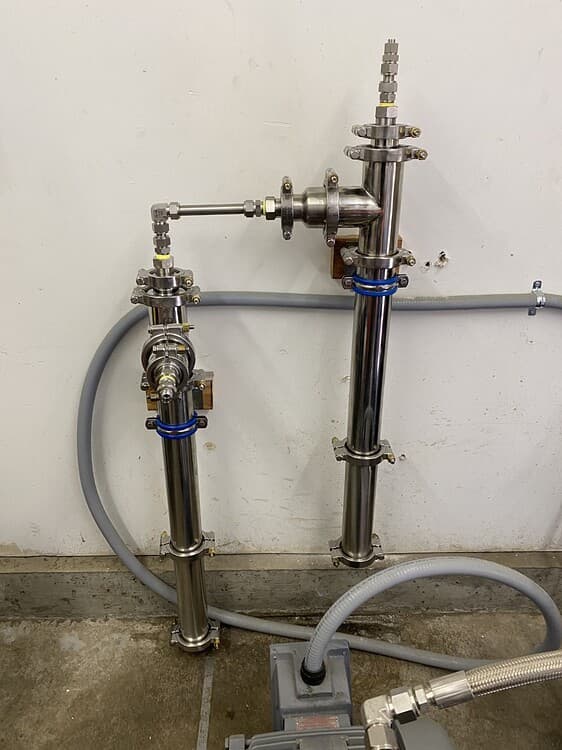
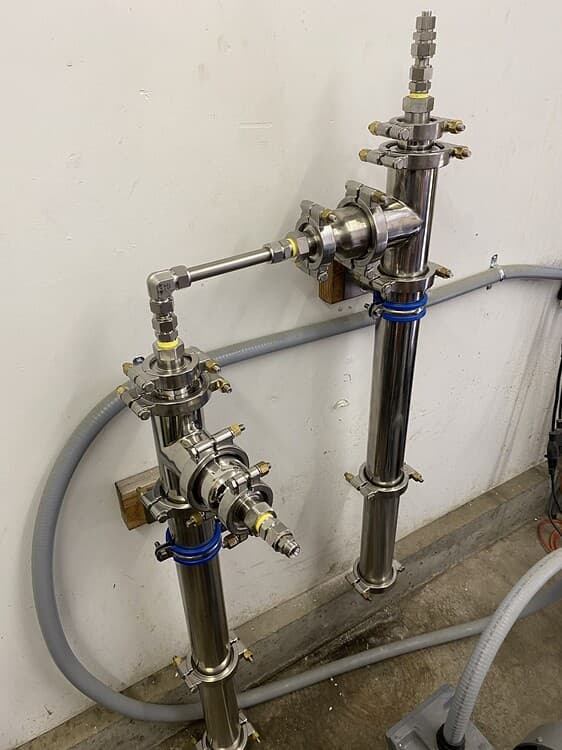
Here’s a liquid/vapor separator I used ahead of my Corken with great success.
The vapor from the collection pot/columns enters the trap in the upper right, goes down the diptube then up and out to the left, then down the second diptube and back up and out to the compressor.
In addition to the trap I make sure to never fill my collection pot above 50-60% to avoid unnecessary flinging of oil droplets into the vapor stream as much as possible.
Thank you! I have not turned a valve on an extractor since 2020 but I have been browsing around here the last few weeks learning a bit about what I’ve missed out in the past few years.