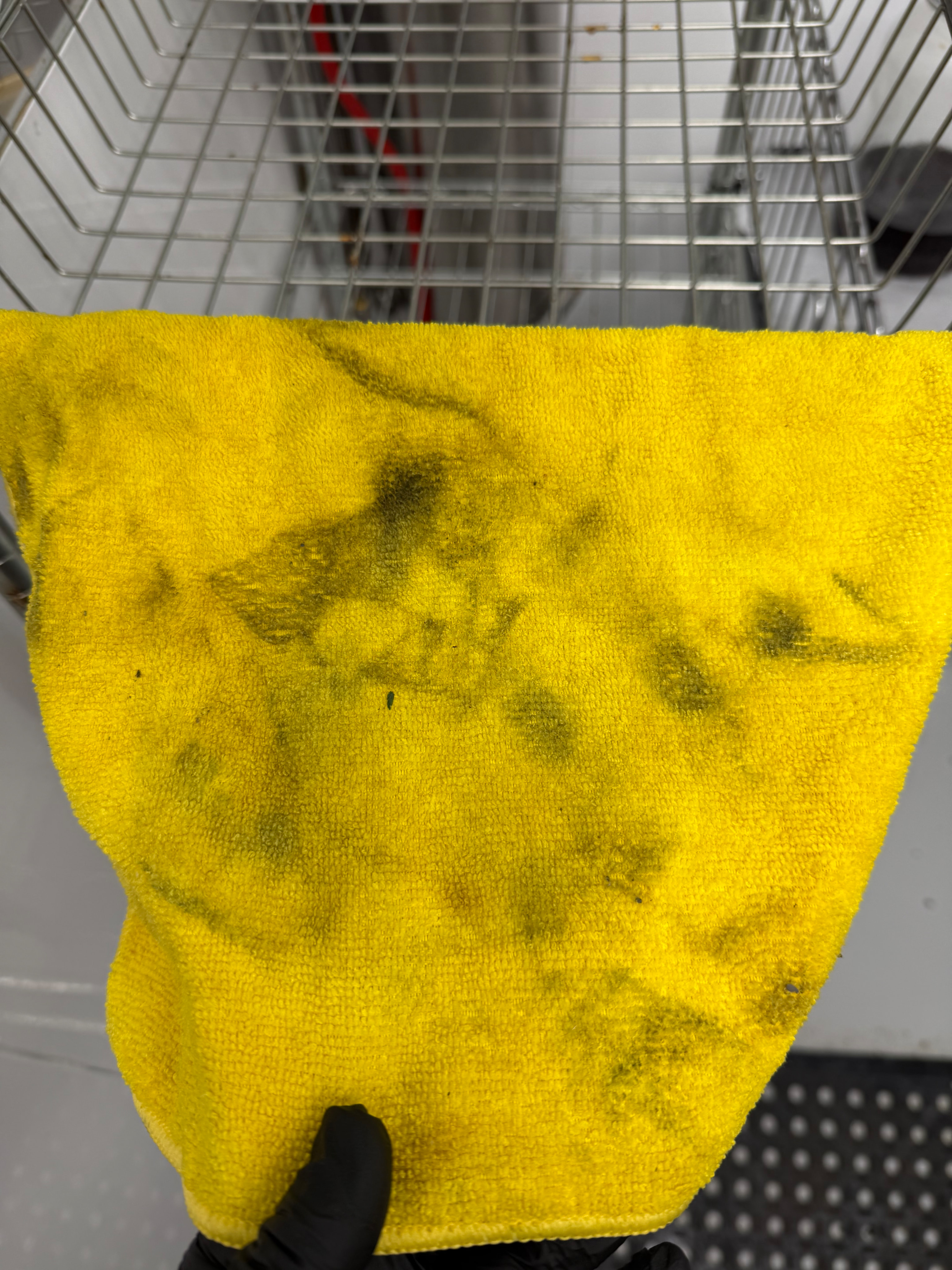
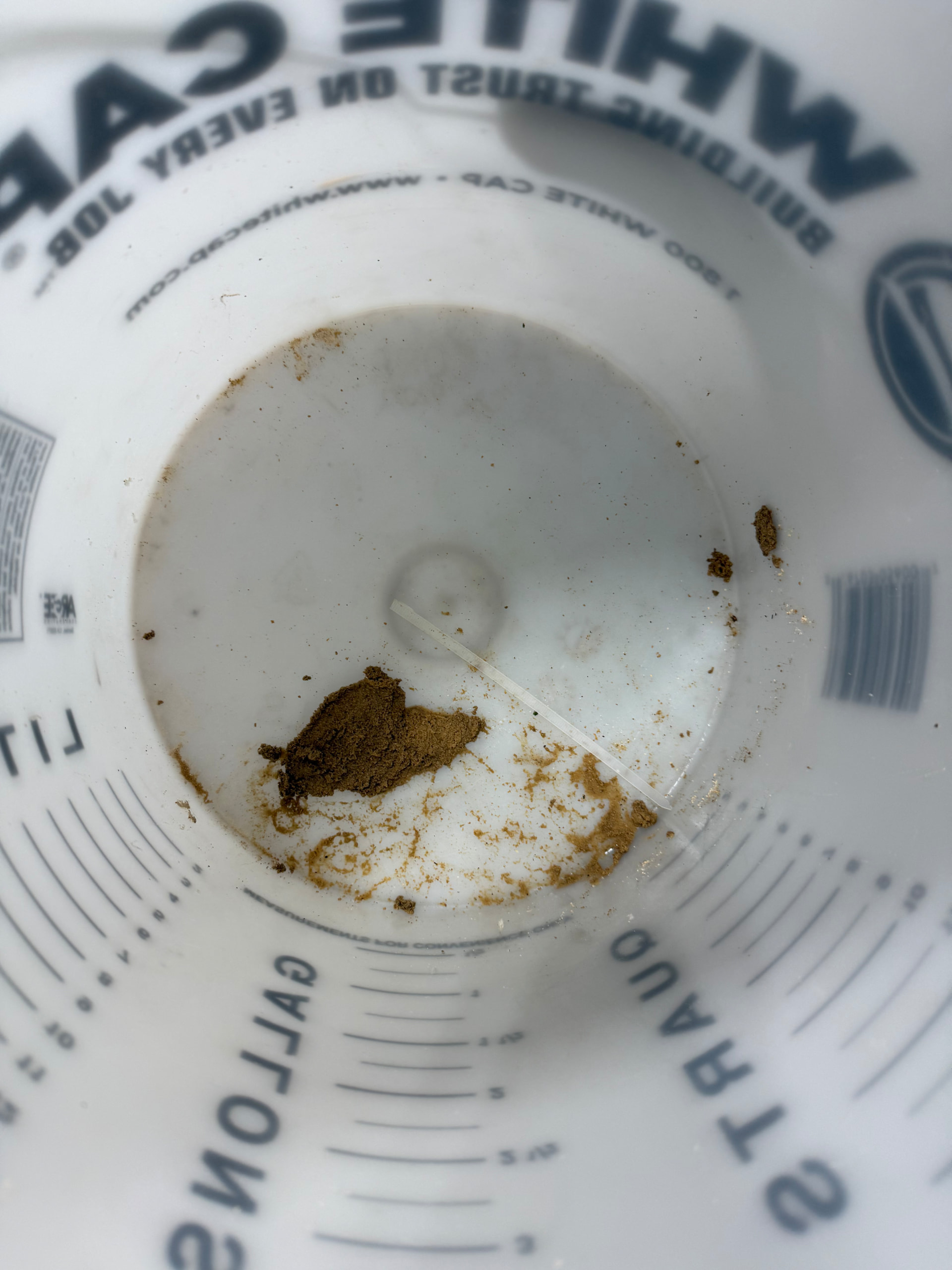
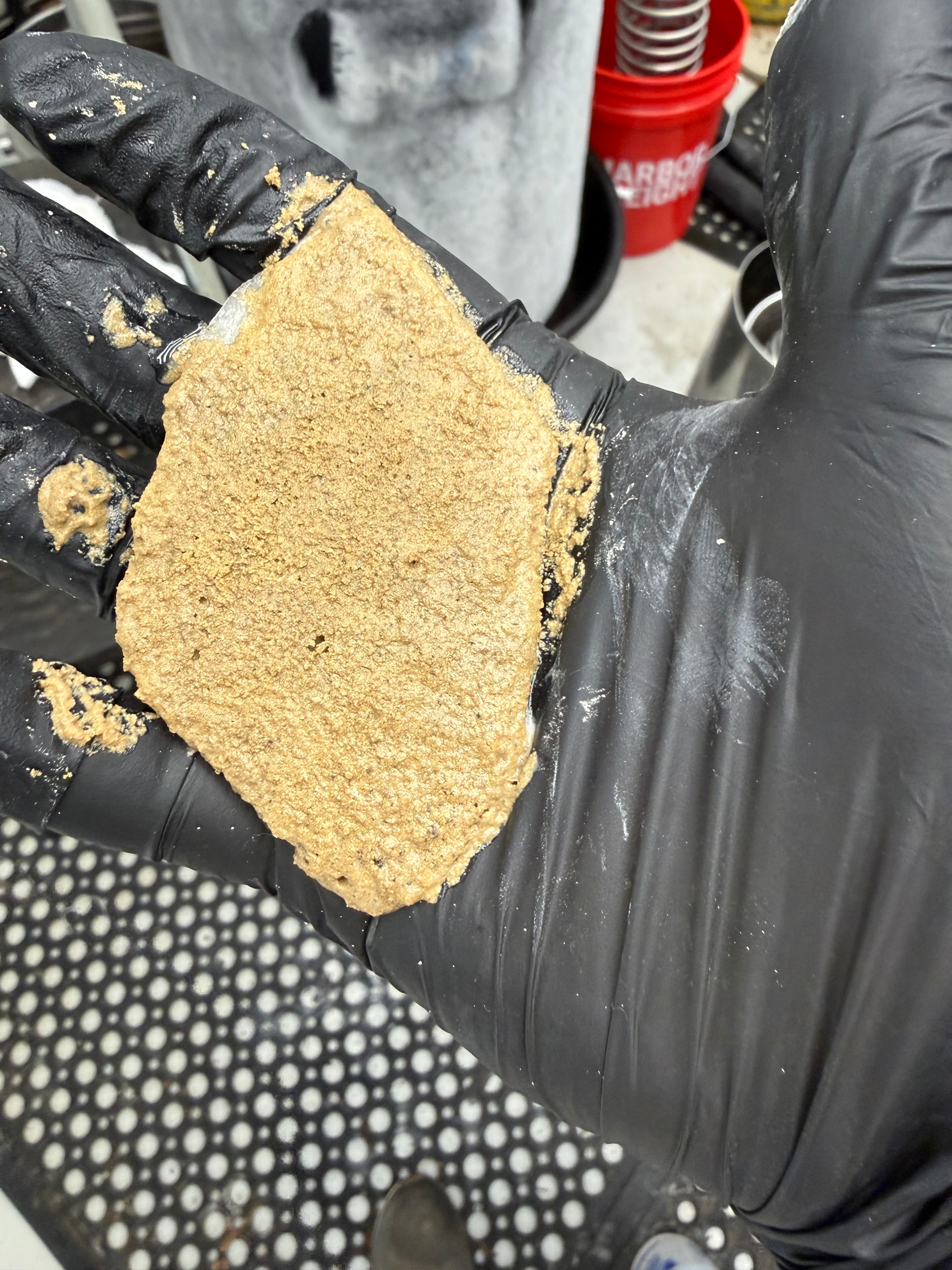
So I’ve been having problems since I started In this lab with weird tastes in the extract. The whole system hasn’t been cleaned in a long time from what I’ve been told, I cleaned some crazy looking shit out of the injection tank that definitely helped the taste. I’ll post a picture because I’m not sure what the fuck it was. Only guess is pump grease that leached in plus heavy ends and fats. The other day I completely evacuated the holding tank and injection tank. I had the idea of putting an inline filter between the holding tank and injection tank. I’m gonna be using 13x mol sieve for the liquid side. 4a for evaporative side. Can anyone think of any problems going from liquid through 13x mol sieve into the injection tank. Basically just a CRC column that’s between tanks but for cleaning butane

distill your solvent.
CIP has run its course, you need to disassemble that thing and scrub every surface like your life depends on it.
Also what @cyclopath said
Hmm, I wonder what all the brown goop actually is?
What kind of pump or compressor is being used and is there any oil-lubricated equipment in the recovery path?
I wouldn’t use 13X molecular sieve as a general purpose filter for this. 13X has larger pores and can adsorb a broader range of compounds but that doesn’t really make it useful for removing grease or heavy residue. It’ll probably just foul.
4A makes more sense if the specific goal is drying the butane and removing water. Separate issue from removing the visible brown contamination.
Personally, I’d distill the solvent into a known clean tank first. That should leave most nonvolatile residues and other heavy material behind. Then I’d open up and clean as much of the wetted system as possible.
If you only want to transfer the liquid from the dirty tank to a clean tank, a proper pressure-rated stainless liquid filter housing with staged micron filtration would probably make more sense than 13X.
Just keep in mind that micron filtration will only catch particles and globs. If the contamination is chemically dissolved in the liquid butane, it can pass right through the micron filter. Distillation is the more reliable way to separate that.
If you have the capacity to distil new tanks of solvent, I’d recommend that. No telling what exact compounds/debris are floating in new tanks, and I’ve gotten oil/films on products where new butane tanks were hooked straight to the machine.
That brown crud is pretty gnarly though… never quite that bad.
All the solvent that goes into the system is distilled
It is distilled
Ya that’s the plan for this week. I’ve cleaned the whole thing in phases. But now it needs to be done all at once. Everything was evacuated on Friday and so tomorrow when I go in it’s disassembly time
we can explore that as well…
However, I would argue that it is a more correct response than FILTERING here.
has it ALWAYS been distilled into the system?
Just since you got there?
if you think this is an ongoing contamination of the system from parts internal to your system, then figuring out where it is coming from and actually solving the problem will serve you better.
Ya I have no idea. I just got into this lab very recently and everything tasted suuuper weird at first so just started tearing shit apart and cleaning and finding weird goo/clumps. We use two Anion Goliath pumps for distilling. Other than that we run passive during runs
Yes it’s always been distilled as far as I’ve been told. But I did talk to a guy who used to work in the lab and he said nothing had been torn apart and cleaned in years.
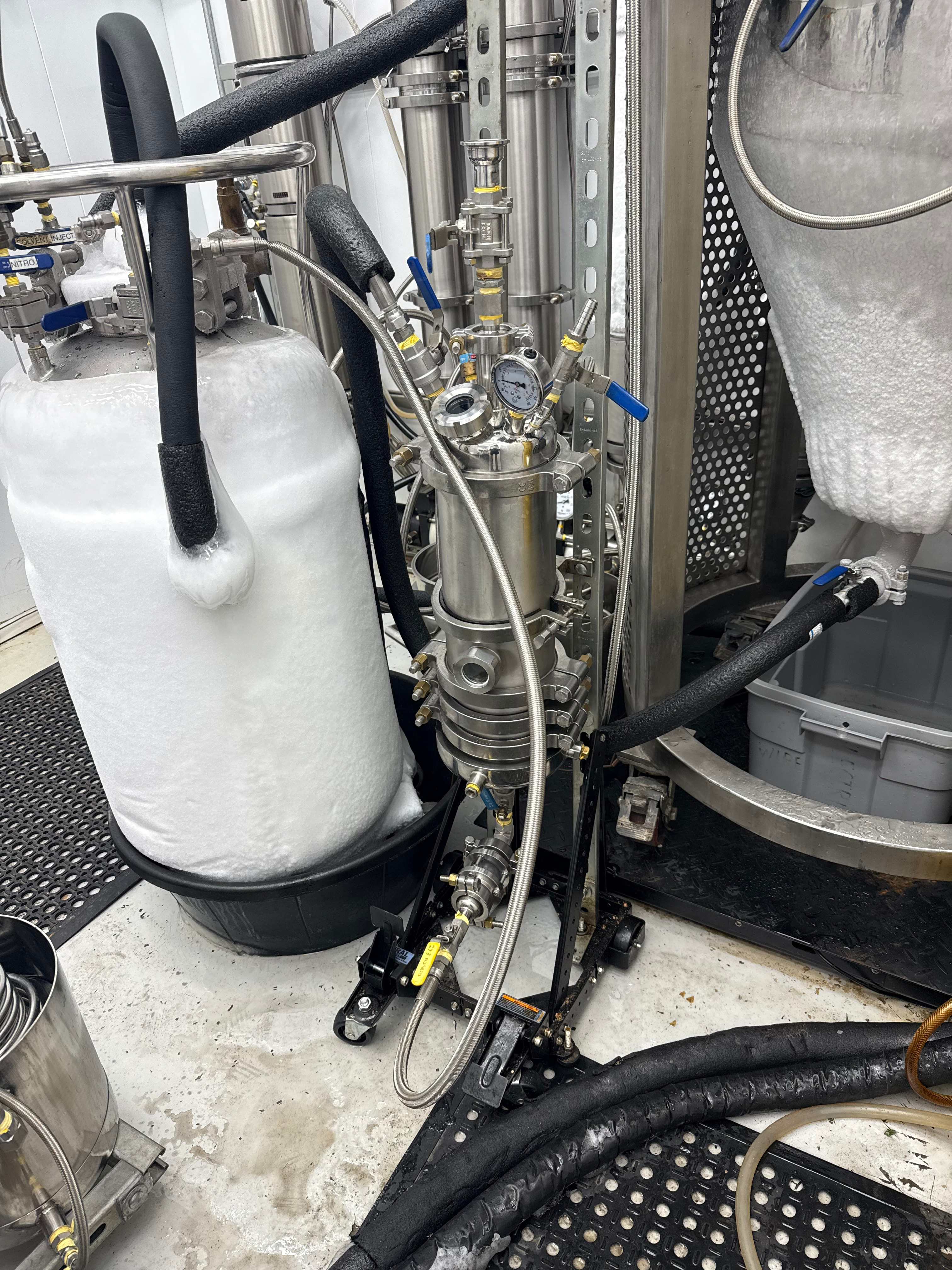
The column on the far left is the distillation column. Everything is distilled into there than through 4a mol sieve columns and into the tank
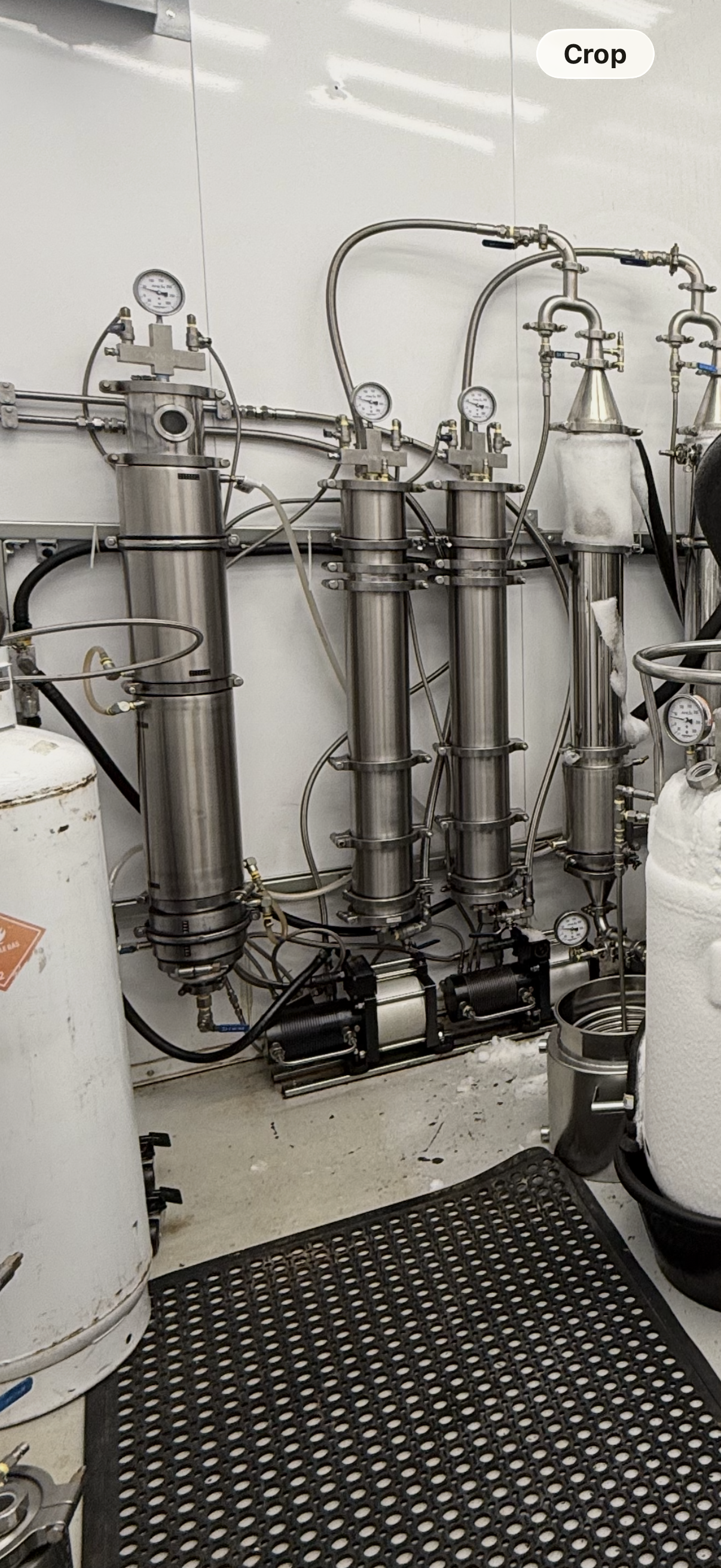
using TWO pumps to distill incoming solvent?
IMO this could potentially make the incoming solvent WORSE…
- by actively pulling vapor, you’re lowering the distillation temp of any contaminants. If you’re also heating well past your solvent(s) boiling point(s), you can simply distill (some) contaminants over.
- pumps are notoriously dirty (no experience with the anions), and many have been documented getting trash in the hash.
if you’re trying to distill for purification, you go slowly, with only the bare minimum of heat required to get your desired fraction(s) over.
Going balls-to-the-wall using two pumps suggests that whoever set this up knew more of “solvent recovery”, than “solvent purification”. Or at least that’s how it seems from over here.
Interesting never thought about that being an issue but makes sense.
Just to make sure I understand the workflow: are you passively recovering from the collection pot into the holding tank, then using a nitrogen pressure head to transfer the liquid from the holding tank through the 4A columns back into the injection tank?
Or do you just physically swap the tanks without a liquid transfer?
Since you’re passive and using pneumatic pumps for distillation I would be surprised if this was pump grease/oil.
As of right now I’m passively recovering from collection tanks-4a mol sieve columns- recovery tank-then head pressure to push into injection tank.
I haven’t used this pre filter yet. I just had this idea on Friday and had the parts lying around.
From what I was reading since I’m using 4a in the gas phase the 13x would be better for liquid since it would help with moisture and possible contaminate. Should I just stick with 4a through vapor and liquid?
That’s totally true. The guy that built this knows HVAC super well but probably didn’t take into account that you don’t always want the fastest speed for distillation
They did actually change from active to passive in the past year…so now that I’m thinking about it I wonder if it was pump grease from when they were running active. And it’s just been sitting in there since the tanks were never cleaned. That would probably make the most sense
I would stick with 4A rather than changing to 13X. The 4A makes sense for drying the butane. I don’t think 13X is going to be a better general filter for that brown material, it may just foul and retain additional solvent.
The 4A bed removes molecular water but it isn’t designed to reliably stop fine oil droplets or particulate carried over from the collection pot. If the brown material is entrained extract or other heavy residue, a proper micron filter during the liquid transfer would make more sense to me. Honestly, I think more people should have injection-side liquid micron filtration in place as SOP.
You could also use another 4A bed on the liquid-transfer side for final drying but I would put particulate filtration ahead of it and only add it if you actually have a continuing moisture issue. Running both vapor-side and liquid-side 4A may be unnecessary otherwise.
But again, keep in mind that micron filtration will only remove suspended particles or discrete droplets. Anything actually dissolved in the liquid butane could still pass through the filter. That can seem counterintuitive at first since the contaminant may be much heavier than butane.
Were the same Goliaths previously being used for active recovery? If so, they would definitely be worth opening and inspecting. That said, since they are pneumatically driven, I would be a little surprised if that much material was simply pump lubricant coming through while the pumps continued operating normally and had no recent seal or rebuild issues. It could just as easily be old extract mist or other residue that accumulated inside the pumps and downstream plumbing during years of active recovery.
Ya I wasn’t planning on changing the 4a on the vapor side. That’s staying the same way it is. The liquid filter I was gonna use the 13x in I may just use 4a instead. So have 4a for vapor before it collects into the tank. And 4a for the liquid going from the main solvent tank to the injection tank. I was under the impression I could filter out some unwanted particles and moisture with the 13x. Also I kinda treated the liquid pre filter like a CRC. I have a 100 micron screen gasket on top. Another 100 micron below the sieve, filter paper, then a 5 micron sintered disk. So I’ll definitely be catching any particles that aren’t being dissolved. If there even are any. I feel like the filter stack alone will catch what I’m going after but figured it couldn’t hurt to put mol sieve in there as well