New to posting here, but have read a lot of good information here on extraction processes. I just started running a butane extraction maching that I built from scratch.
The plan was to be able to extract continously without doing it in batches. After a year and half of testing and making modifications I finally have it consistently running at 200 pounds an hour of biomass input. The maximum possible is roughly 300 pounds an hour.
I’m currently running it with 100% n-butane after having issues with 70/30 not being azeotropic with was not expected. With the power currently available I can make 5.5 gallons of new solvent per minute witch gives me an average of 8:1 solvent to biomass. I’m extracting at 35°F to avoid freezing in the condensers wich I know gives me more undesirables, but the goal is high capacity. The current soak time is 10 minutes and the oil solvent mixture is filtered down to 5 microns. Distillation of the butane is done at 80°F and the purging is at 90°F.
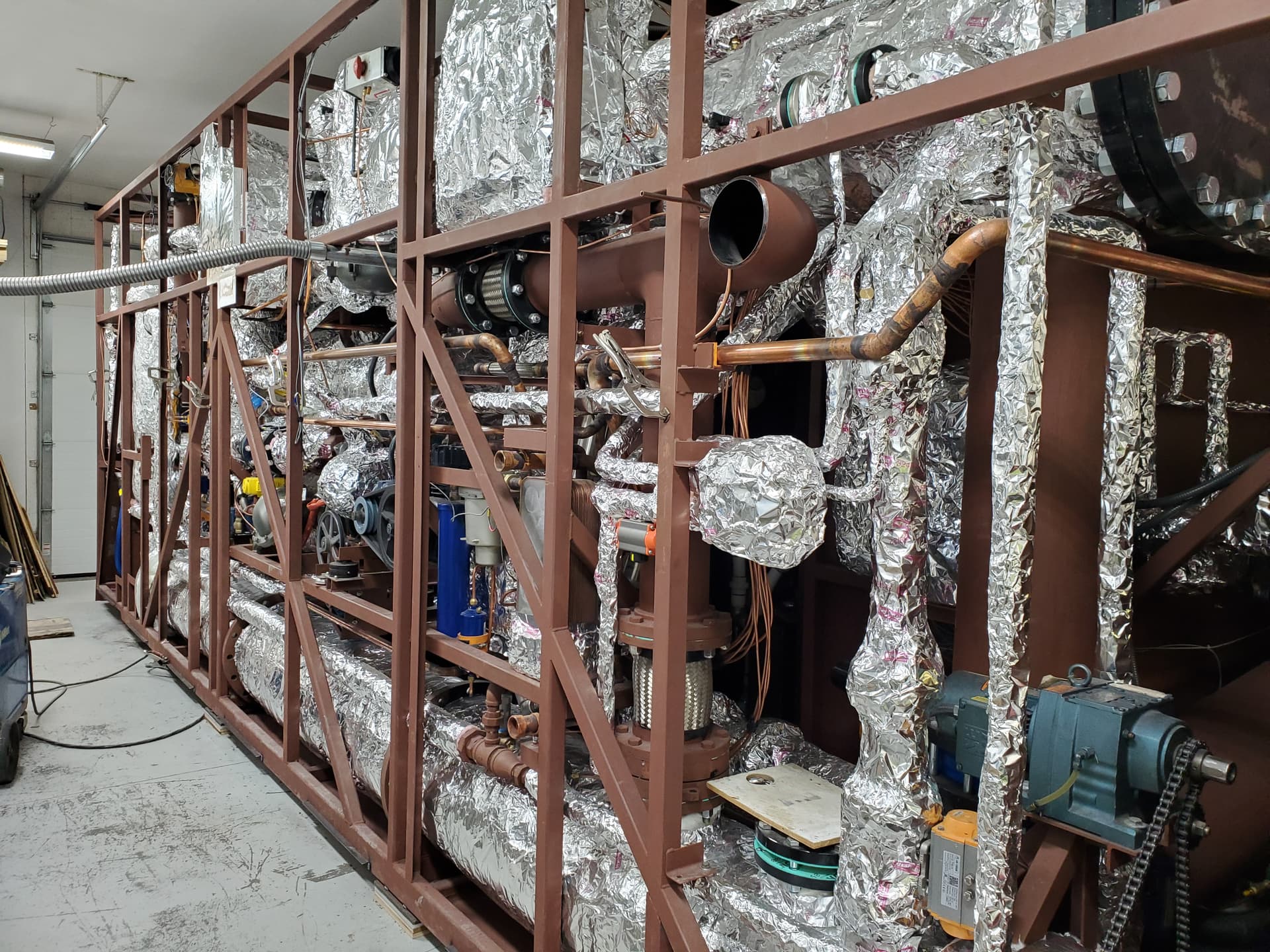
Without going into a ton of detail the size of the machine is 28’ x 8’ x 10’ and it is its own containment structure with negitive pressure in the butane components side of the machine. All I do to run it is put material in a hopper and change a collection bag outside once it is full.
Looking for general input/criticism on the process or anyone else setup as far as getting higher capacity butane extraction.
What I mean about not going into a lot of detail is all the individual components and sub processes going on. It would take up too much space and would read like a owner’s manual.
My goal is to make crude oil. Sorry I wasn’t more clear about that. Since we are talking about this I’m running some biomass that is pre process testing at 10.5% total cbd and after process testing at 1.91% total cbd.
I have tried soak times from 5 minutes to 20 minutes and solvent ratios from 5:1 to 20:1 with minimal change like .1%.
The biomass does have a rinse cycle that washes it after the soak with clean solvent for about 30 seconds. Is the efficiency what you would consider reasonable?
The moister issue is a bit difficult given the flow rate and continues nature of the process. I have a water trap that I get about a half gallon of water out every 600 lbs of biomass ran. The biomass has 6% moisture in it. I drain the trap while it is running.
I thought about using a sieve, but there is not a good way the changing it while running. The crude oil has no detectable moisture in it.
No media or powders being ran. I’m currently getting setup to dewax using propane. I would like to sell winterized crude if all goes as planned.
The distillation is done in two steps. The first is the distillation drum that uses steam drying principles. The gas temp is at 100°F and the liquid temp hovers between 38-42°F. There is a probe in the liquid.
The second stage is done using a heat exchanger and pump. The heating fluid is at 95°F. There is a temperature sensor on the inlet and outlet of the heat exchanger in the butane. The outlet temp hovers between 72-80°F. The distillation pressure is at 5 psig.
As far as the 70/30 mix all the information I could find says it behaves like a azeotrope with maybe a small temperature glide. What I experienced is the vapor pressure in the distillation drum was what you would see with 40/60. I’m not certain what was going on there. Going to 100% n-butane fixed the issue.
I am curious, you mention cbd as if you are extracting cbd? Is your biomass preheated and decarbed ? Or are you extracting CBDA. I think you should get this straight in your mind. Your crude if you have high CBDA is probably worth more if you advertise it that way. If you are USA and certified hemp, I am interested in you “crude” if it is indeed a CBDA extract. With a minimum of CBD.
DM me if you need any advice about CBDA.
The biomass is not decarbed. I havd no plans on decarbing given that would defeat the low temp solvent distillation. The crude oil I have is between 10% to 18% cbda and 33% to 44% cbd. I’m currently working on my dewaxing setup which will also have a maximum temperature of 80 to 90°F. I will DM you shortly.
This is how I currently do it. I have two points in the system that are low turbulent liquid. I have a sump in each spot for the water to seperate. My issue with freezing is the gas coming from the distilling drum to the condensers. The freezing occurs in the condensers themselves. I would have to have a desiccant in the gas stream that could be regenerated while running. It’s no feasible at this time.
I have two condensing heat exchanger that each have a 14 ton txv feeding them. I thought about using one at a time until it freezes and the switching to the other. This would require a hot gas feed to each to defrost them and a diverter valve setup to drain them. Plus I would lose 50% of my condensing capacity.
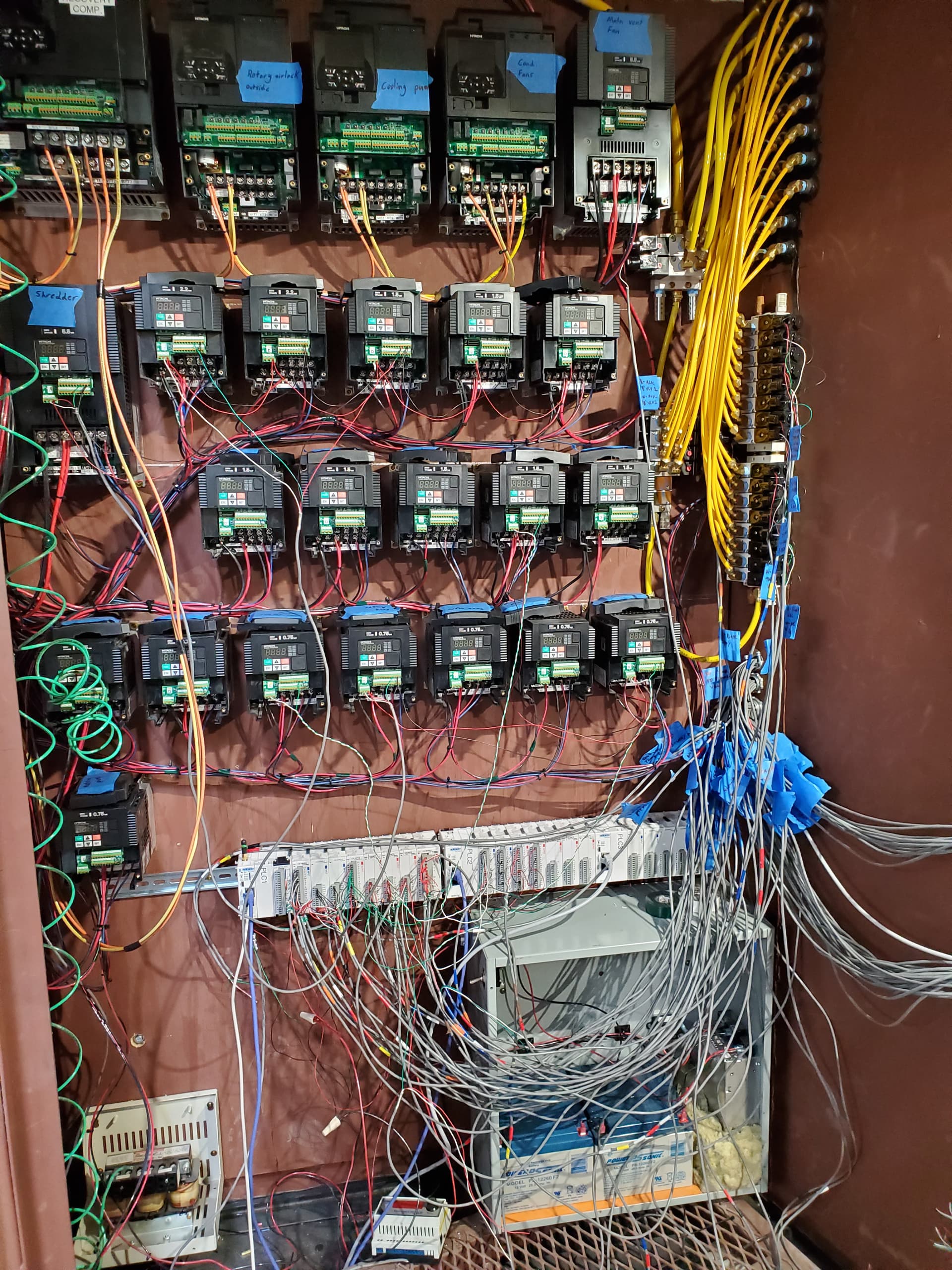
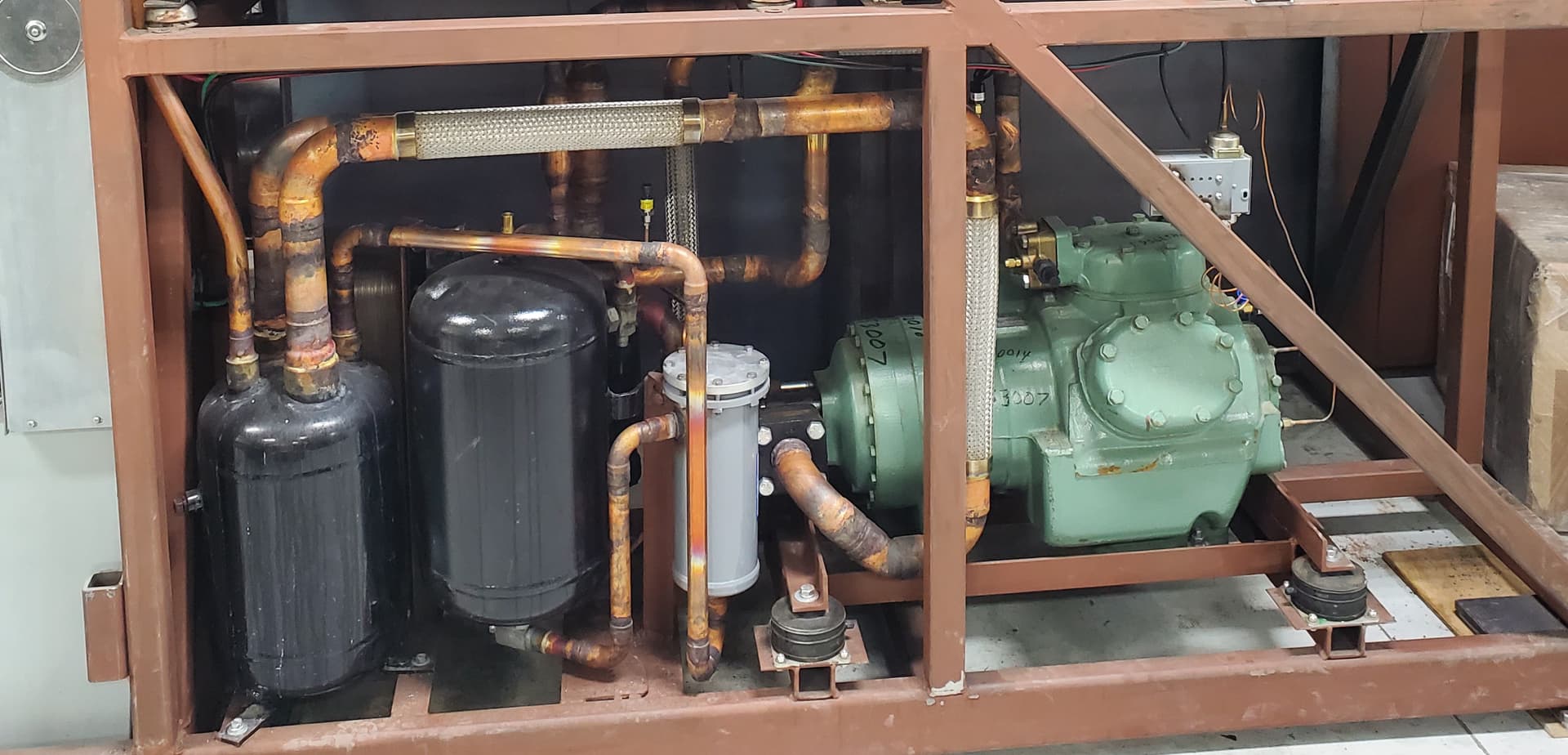
The other issue with doing this is only about 25% of the gas flow in the machine runs into the condensers. The other 75% go to producing drying gas and conveying material. I use a 30 hp centrifugal compressor to move gas through the machine. The discharge gas is approximately 22 psi @ 700 scfm. As I said earlier the machine has it’s own containment structure. All of the equipment that has butane in it is a 28’ x 4’ x 10" housing. In this side of the machine all if the motors are vapor tight and all the valves are air operated. The other half of the machine contains the vfds, plc, air solenoid, refrigeration equipment, vacuum equipment, material sizing equipment and screening plant.
As far as the inline desiccant goes I did look into this. Between trying to find a place to put it and having to recover the butane before regeneration and the equipment to regenerate it it made more sense to stay above freezing.
My question to would be with butane is it better to extract at low temps or be able to clean up the oil with a good dewaxing process? Remember the goal is to be able to extract large volumes of biomass with butane.
Did you look into the COAs of your 70/30 blend at all? What material are the actual diptubes? What is the water content, is it under 5 ppm? More than happy to set up a call with our extraction tech to brainstorm
Here is some more detail. The biomass is ran through a series of twin shaft shredders to size it. Fortunately the shredders only cut up a small amount of the stems as they tend to align themselves parallel to the cutting teeth as they pass through. Then the biomass is ran over a screen deck to separate out 1" and longer stems. After that the biomass enters the butane process part of the machine.
The biomass starts in the soak chamber. It starts at one end of the chamber and migrates to the other. This is how I control the soak time. The soak chamber is getting new solven at approximately 24 pounds a minute. Once it hits the end of the soak chamber it moves on to the next.
In this chamber a few things happen. First the biomass and saturated solvent are seperated. The solvent heads to the distilling process and the biomass continues on. Next the biomass gets rines off with clean solvent for approximately 30 seconds to wash off any residual oil residue. After that the biomass gets heated to 120°F for approximately 10 minutes to help remove residual solvent.
The last step for the biomass is it get a 20" hg vacuum pulled on it for 2 minutes to recover as much butane as possible. After that the material is dicharged from the machine into a collection bag.
When you say migrates to the other end of the chamber what do you mean? Is it driven by a screw like a decanter centrifuge? A picture of this beast would be cool if you are willing to post one.
As for dewaxing in-line, you would almost definitely need to use filter media even if you use a lower temperature solvent if you want it completely done in a single step.
It uses a auger.
I have done some dewaxing. I did a small batch with propane and at 4:1 ratio and even at -20°F the mixture poured like water. I plan on building a machine to continually dewax at -112°F. I think I can mix it at 3:1 with no issues. From what I can remember propane is something like 1/12th the viscosity of ethonal at this temperature. I ran it through a 1 micron filter. All the solidified material was at the bottom of the liquid before I poured it. Most likely because of propanes low density.