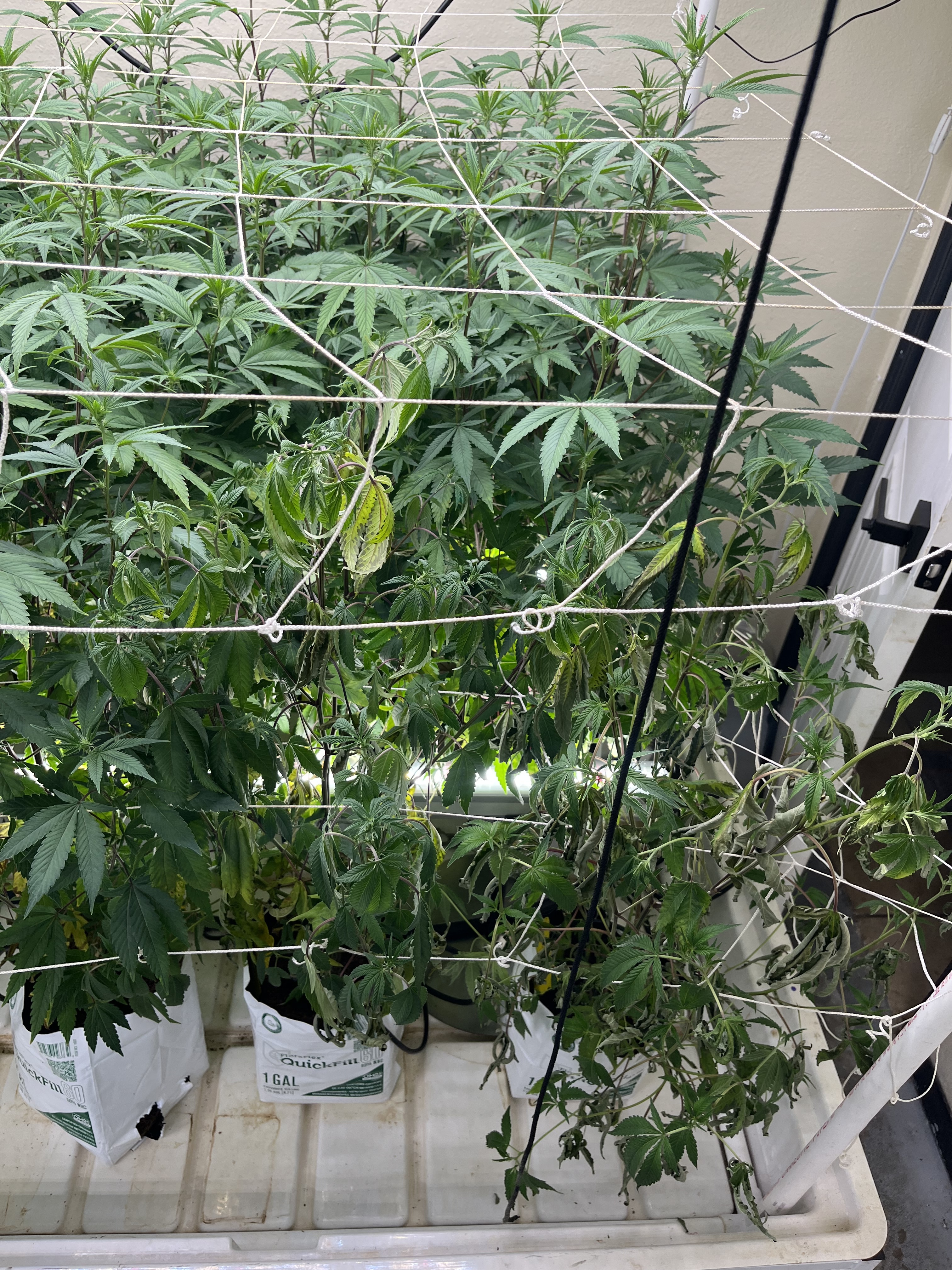
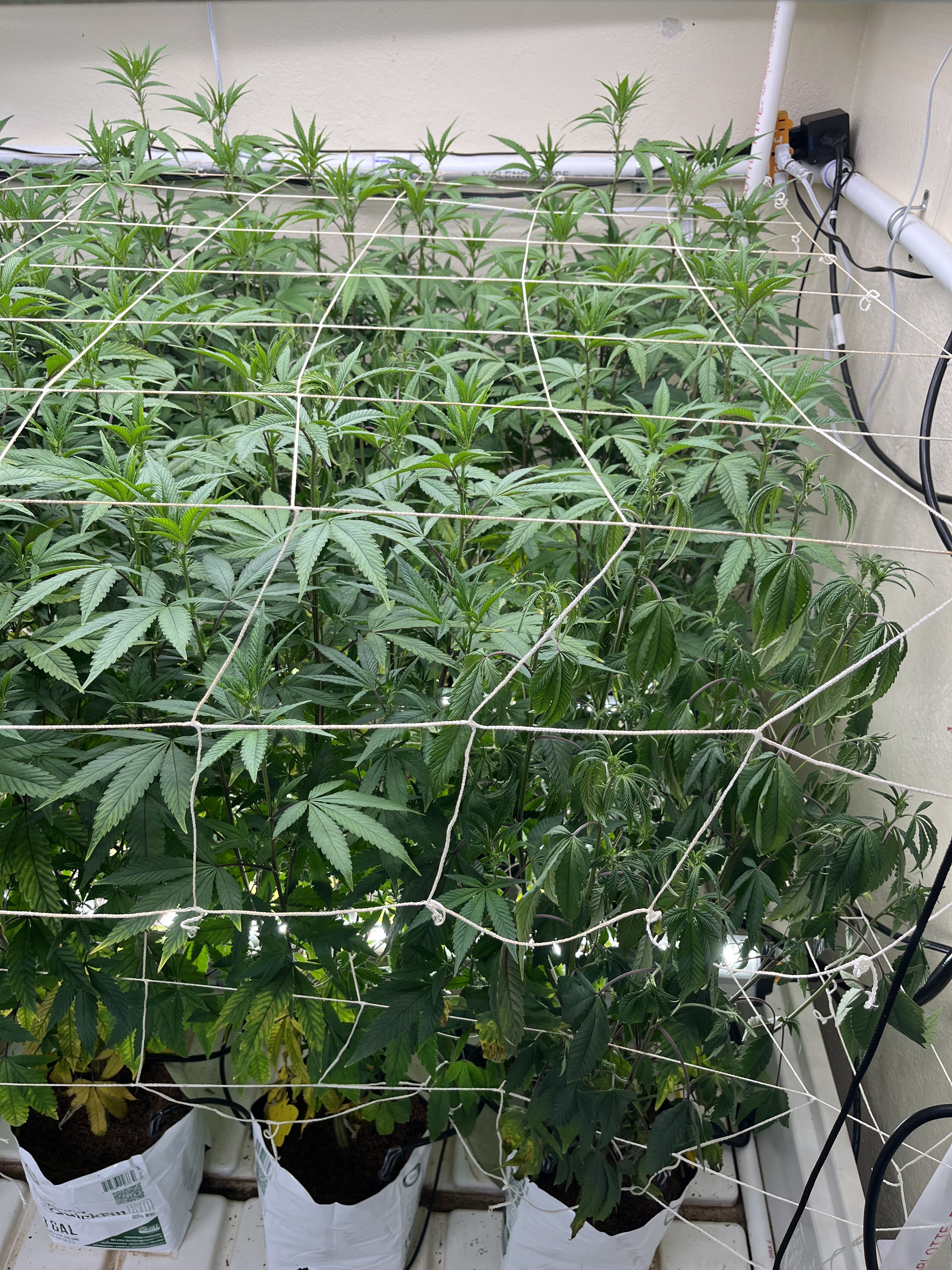
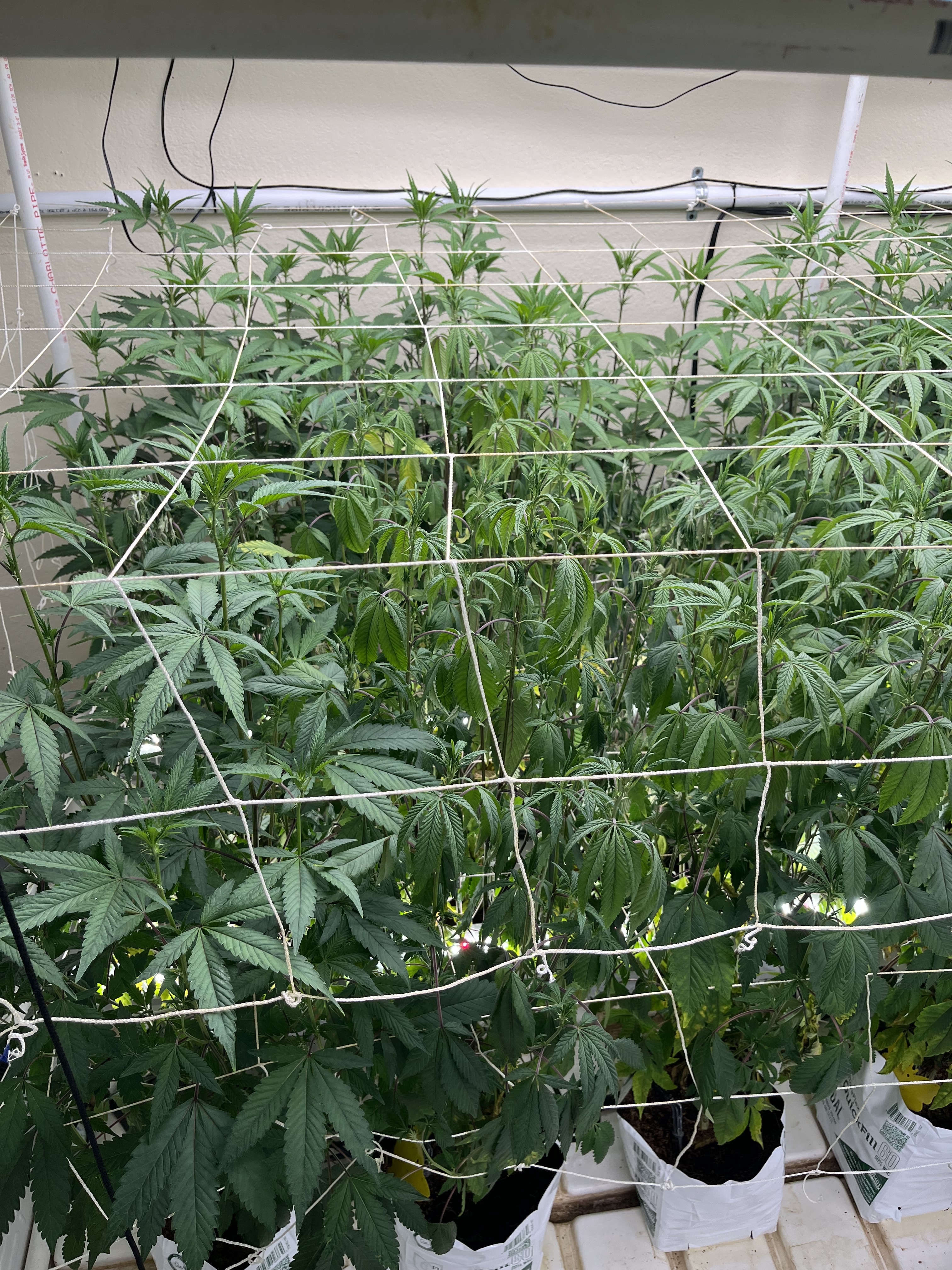
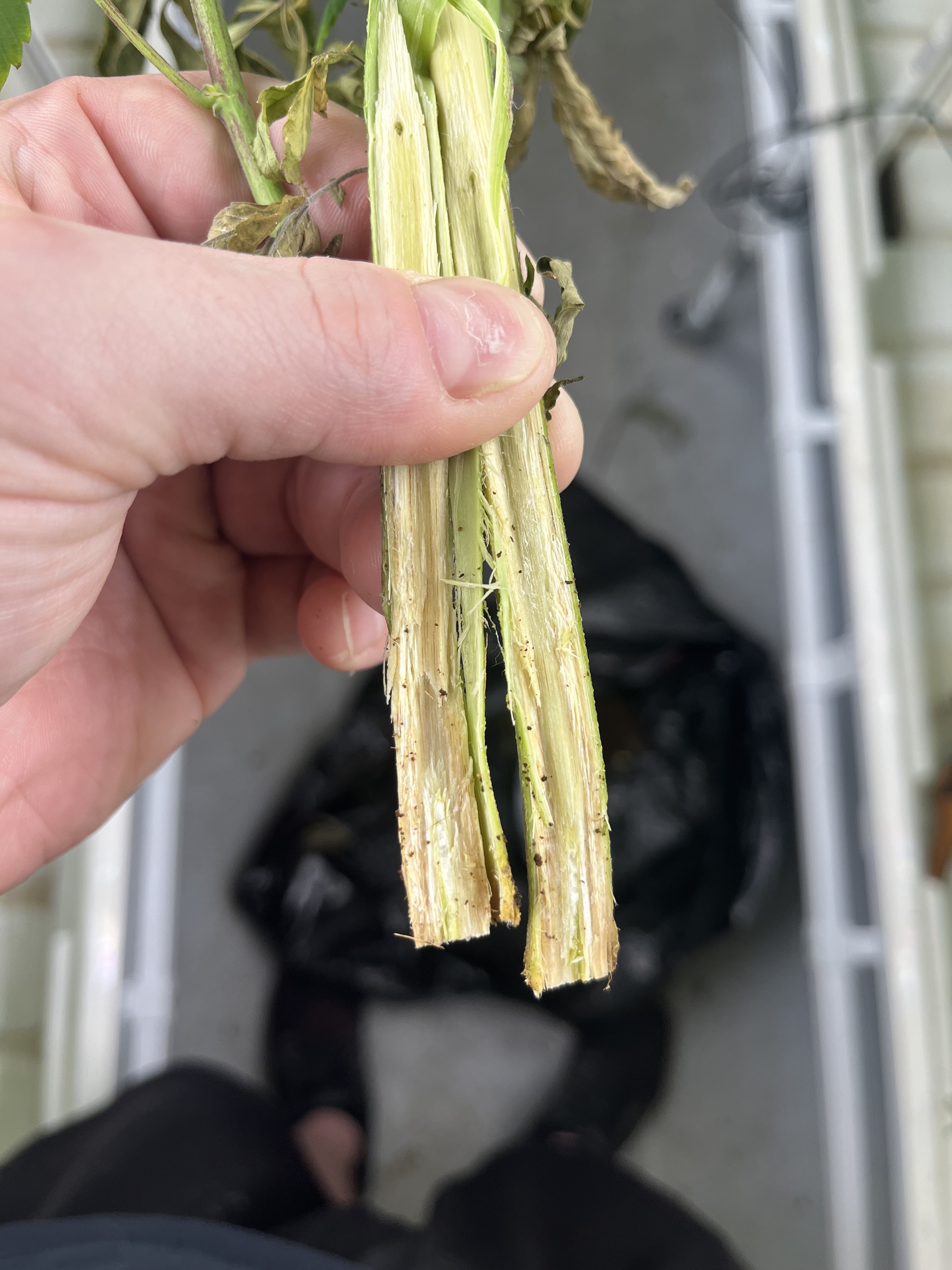
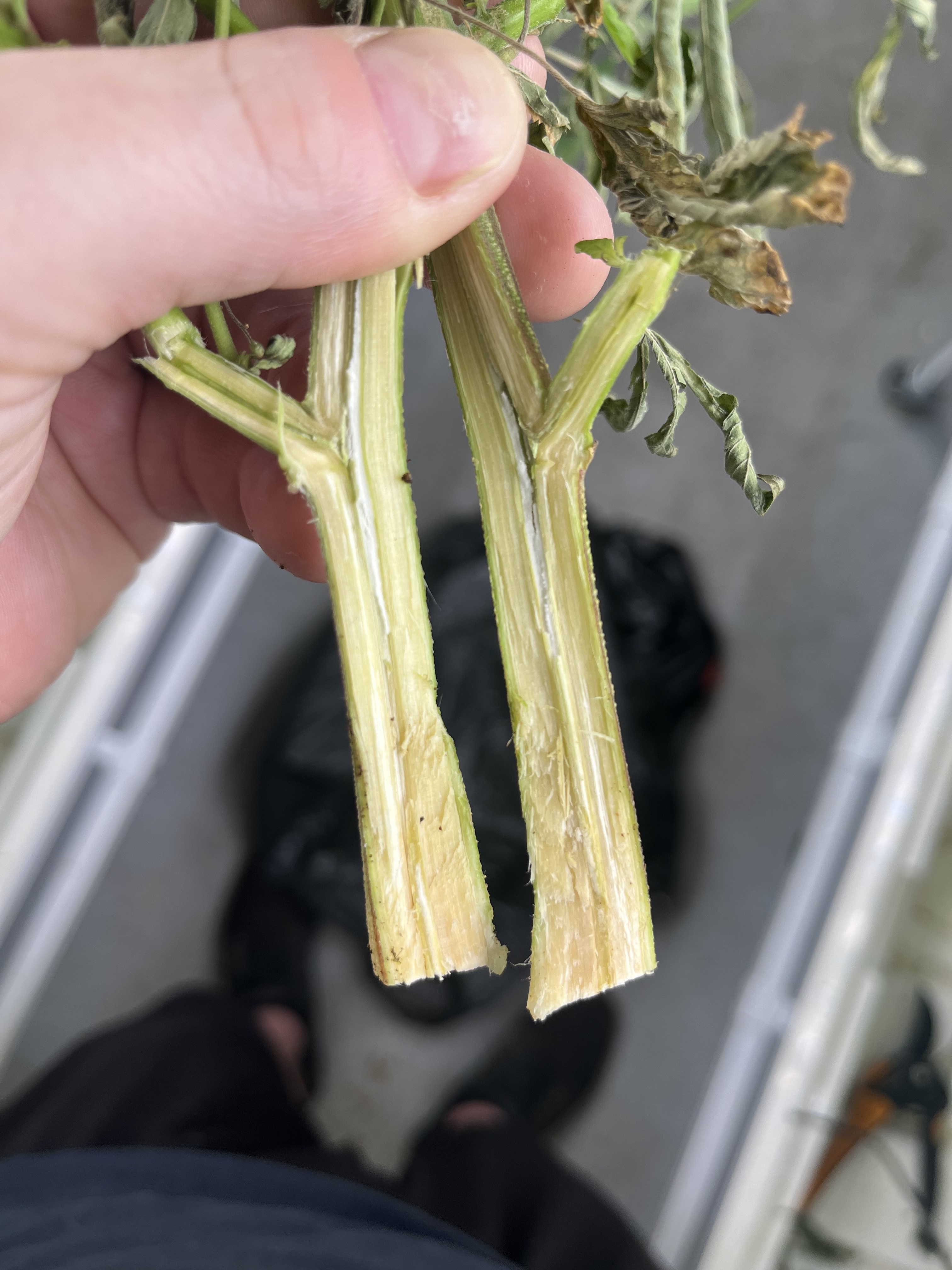
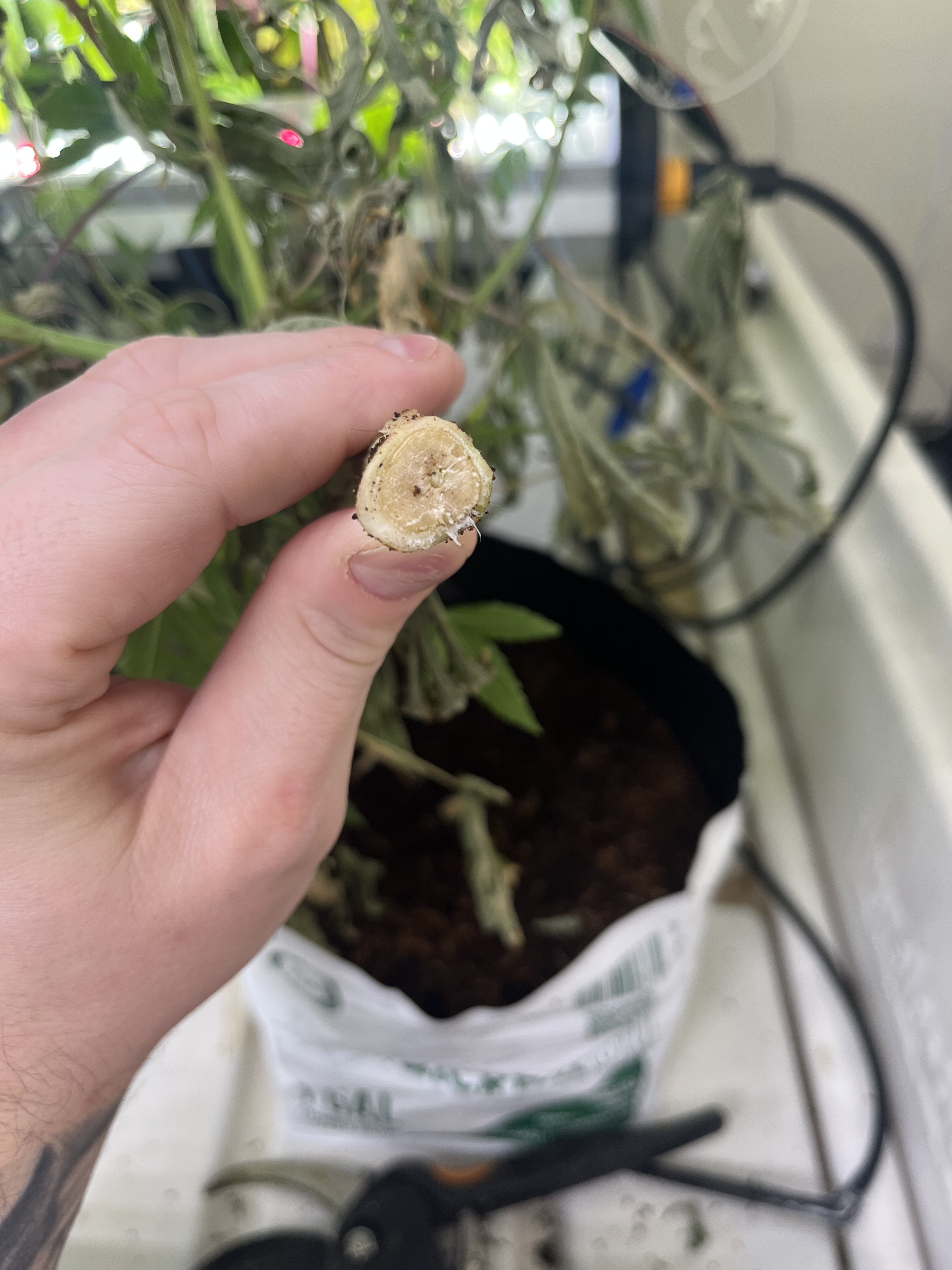
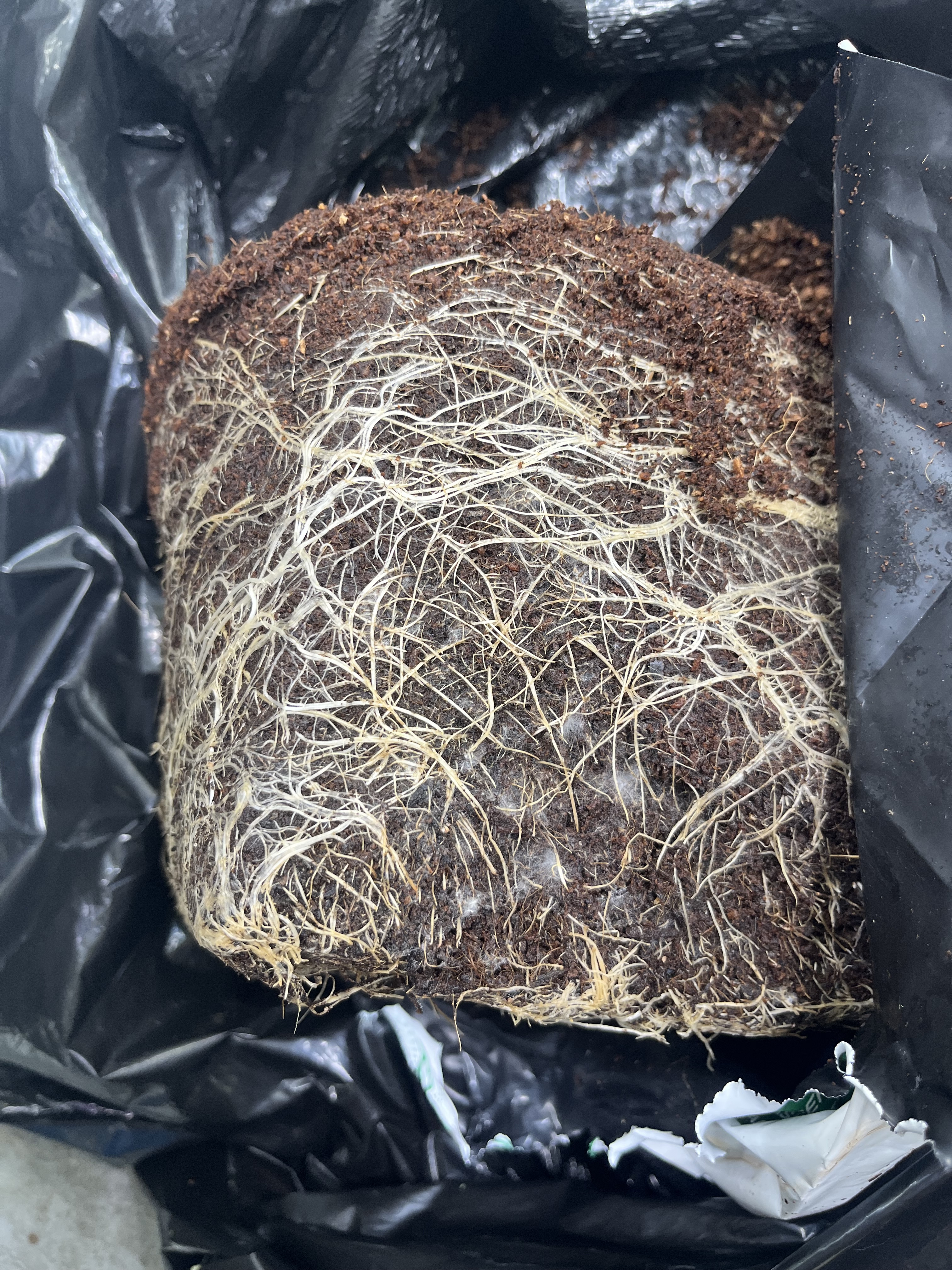
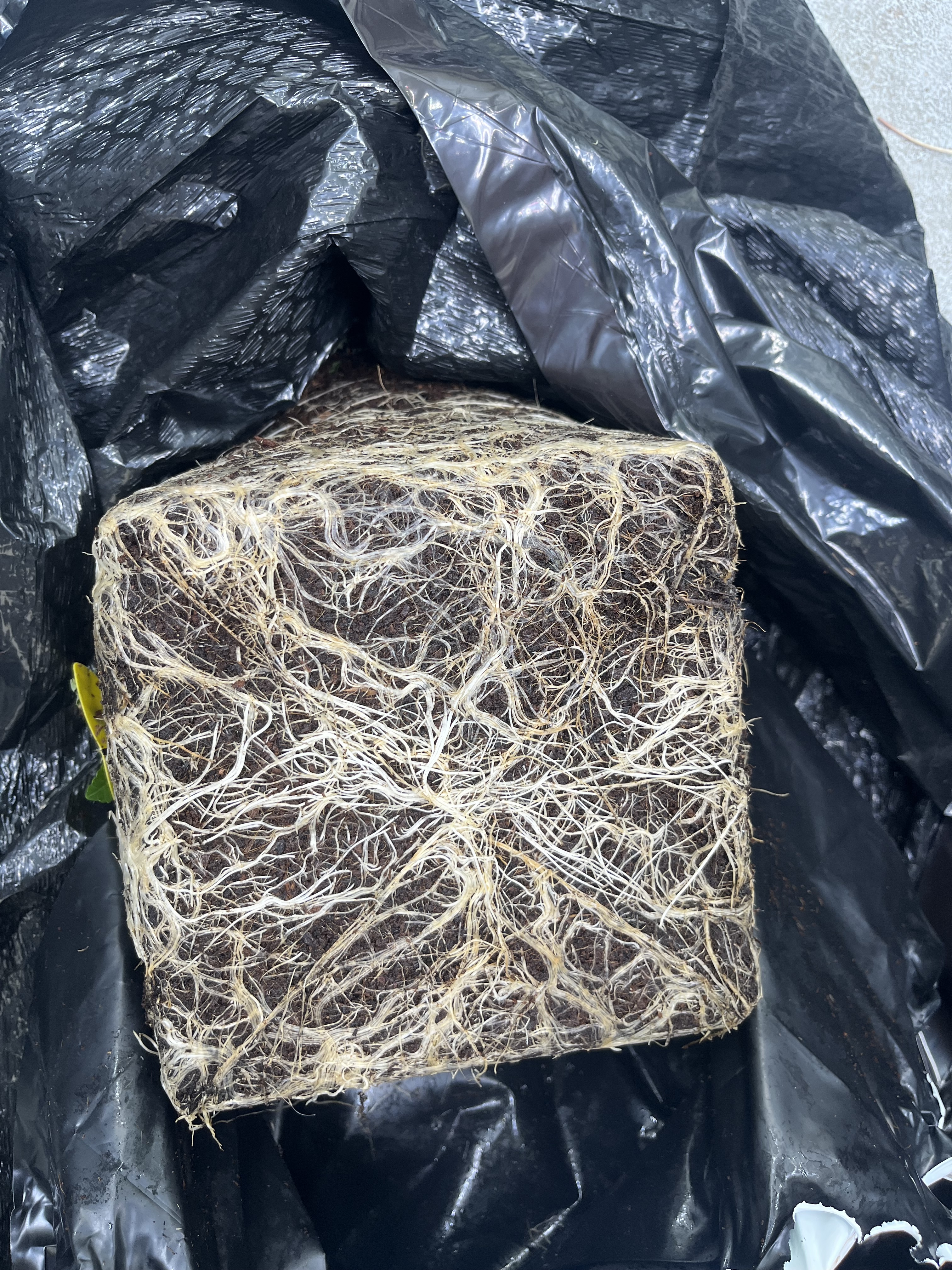
Unfortunately looks like I had a fusarium contamination in my small indoor room, pics below. Started with root aphids that I was able to beat, following few days plants began rapidly dying. Every morning since it’s more and more fusarium wilt. I’ve decided I’m cutting the room down throwing everything away and sterilizing not only the entire irrigation system and grow room/ equipment etc. but I’m going to nuke my whole house to hopefully avoid any cross contamination moving forward. I’m hoping for any and everyone’s advice they’re willing to offer from having personally experienced dealing with fusarium or other fungal/ pathogens death sentences for their grow and their successes they’ve had treating these issues.
Current plan is to remove all plants and coco pots and trash them. Going to spray room with zerotol hc and hypochlorous acid and then drop a fungicide and insecticide bomb foggers in the room. Going to run the same treatment through my irrigation system. Then going to come back in and treat my tables with Athena’s reset and treat my irrigation with Athena’s renew follow by their reset. Probably do all of this 3 times just to be safe. I’m also going to vacate my home for 24 hrs and fog the entire house with the same fungicide and insecticide bomb foggers just to take the precaution in case my house plants or any surfaces outside of the grow room I have cross contaminated. I don’t want it to come back because of negligence in my cleaning and have to do all of this over again. The room is only 4 lights but nonetheless I want to keep growing and learning indoor cultivation so if I can’t beat it I’ll be forced to shut the room down. Moving out of the house or growing elsewhere isn’t an option. I’d love to expand to a warehouse and take it to the next level from hobbyist grower and kick rocks on this little room but that’s not an option so I’m dealing with what I have to my availability. Thanks everyone in advance for any advice they’re willing to offer.
If you can get your trellis stands out of the gutter of your trays that will help And for such a small system I would replace all irrigation lines especially if you reuse water. I don’t think the Athena route is the best option. I’m not sure if that is a bedroom or a closet but maybe having the house steam cleaned could be a more efficient option.
And it’s a bedroom, like 12x12 room with 2 4x8 trays. Drain to waste, hard plumbed pvc to soft 5/8” lines with irrigation stakes etc. typical irrigation setup for drain to waste
Ozone generators are good for sterilizing empty rooms. Obviously dont breathe it.
There’s only a few different wilts. I honestly cant tell the difference between fusarium and pythium. Damage to the roots from the insects is how it happened.
Look into running some beneficial bacterial . A quick google got me here . Look into running something like actinovate . I’m pretty sure that would do it . Just bleach everything thoroughly and next round hit the plants with a bunch of beneficial bacteria . Replace all your irrigation or thoroughly clean it . It’s better to create an environment where something can’t live rather than try to fight it .
“Pseudomonas spp.[32,33], Streptomyces spp.[34,35], and Trichoderma spp. [36,37] have been highly effective in the management of pathogens causing soil-borne diseases such as Fusarium spp., Rhizoctonia solani, Phytophthora spp., and the Pythium genera.”
Beneficial microorganisms such as trichoderma do work, but start as soon as you can. Maybe even “innoculate” the soil before you transplant.
A good nitrogen/carbon ratio is also important to keep the good microorganisms in shape so they can outnumber fusarium.
One thing I found interesting is that autoflowers usually finish before the root pathogens such as fusarium/verticilum/pythium develop enough to kill the plant. Even if planted in infected soil.
Actinovate is good. Certis Double Nickel is Bacillus amyloliquefaciens strain D747, which I have personally used for pythium and fusarium. Regalia as a root drench is an awesome biostimulant and fights these dieases as well.
If u know how to do petri dishes, u can take a sample from the inside of a stalk and place it on agar.
If the plate grows a pink/purplish “mold looking” substance, then uve got fusarium
As someone who has successfully dealt with this issue. Here’s my sop
Preventative measures for fusarium
Tossing every single plant that has fusarium as you cannot save it only treat soil or area it was exposed to the fungus and spores.
Clean all surfaces any soil has touched and remove all plastic inserts to be soaked in solution of rootshield. Keep in mind spores can become airborne as well so a deep cleaning is needed for all ancillary equipment and constant equipment (a/c, dehu, humidifier, tables, tanks, fans, the whole setup).
Do not reuse anything that has a porous painted surface as you will only be reintroducing it to other parts of the grow.
Rinse away solution then drench in sanitate and rinse after 15-20 minutes.
This has to be done to just about every surface that has plastic/ metal. Including rinsing down the walls.
Scrubbing only allows spores to become airborne so they need to be drenched to cover and cease growth the. rinsed/washed away. And vacuumed up. If we had a floor drain/in ground sump drain this would be much easier of course.
Starting fresh with either strictly rockwool with automation or feed 2x a day with hand water or sterilized coco/soil medium with a neutral ph.
Only cut with sterilized and cleaned tools!!!
Keep drenching 1” away from main stems! Do not soak the stem it will overtime become susceptible to rot if continuously stays moist
Inoculate with mycorrhiza EVERY transplanting or up potting to ensure the roots do not lag and you are feeding microorganisms and beneficial bacteria’s/ hormones to the plant which will ensure it has a strong immune system and growth start through each stage of life. (Myco deters and eats the fusarium fungus spores)
Feed with worm casting/microbe tea once per life cycle change to keep beneficial organisms fed and protecting the root systems for prime uptaking of micro and macro nutrients.
Foliar 4-5 days a week with 90-120ml per gal ipm and .5-.75ml per gal fulvic acid, humid acid to garuntee high growth rates and strong healthy plants that thrive with the beneficial bacteria that naturally deters bad bacteria & fungus. (Can be done all the way up to week 4/5 of flowers).
Rootshield plus can be used to treat areas at a rate of 5oz per gal (142g of powder)