I’m looking for advice on diagnosing my vacuum ethanol recovery setup before I start buying upgrades.
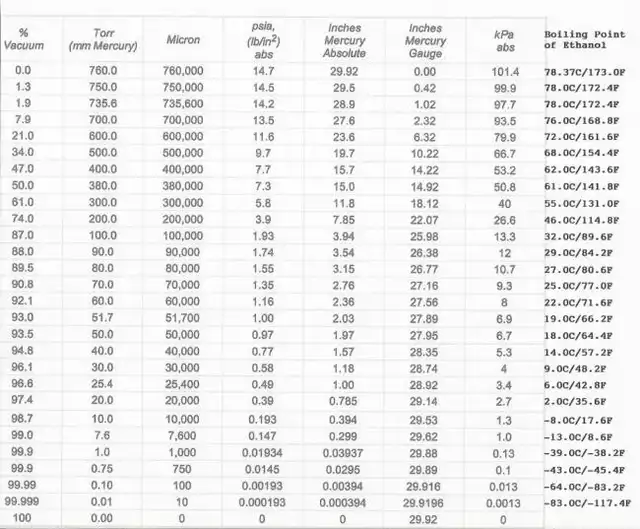
My goal is to recover ethanol from QWET/FECO at around 30–40°C instead of 50–55°C. At 50–55°C the system works acceptably, but at 30–40°C the recovery rate becomes extremely slow.
Current performance:
Recovery rate: ~0.7–0.9 L/hour at 50–55°C
Target: 1–4 L/hour at 30–40°C
Batch size: ~15 L / 4 gallons per run
Current setup:
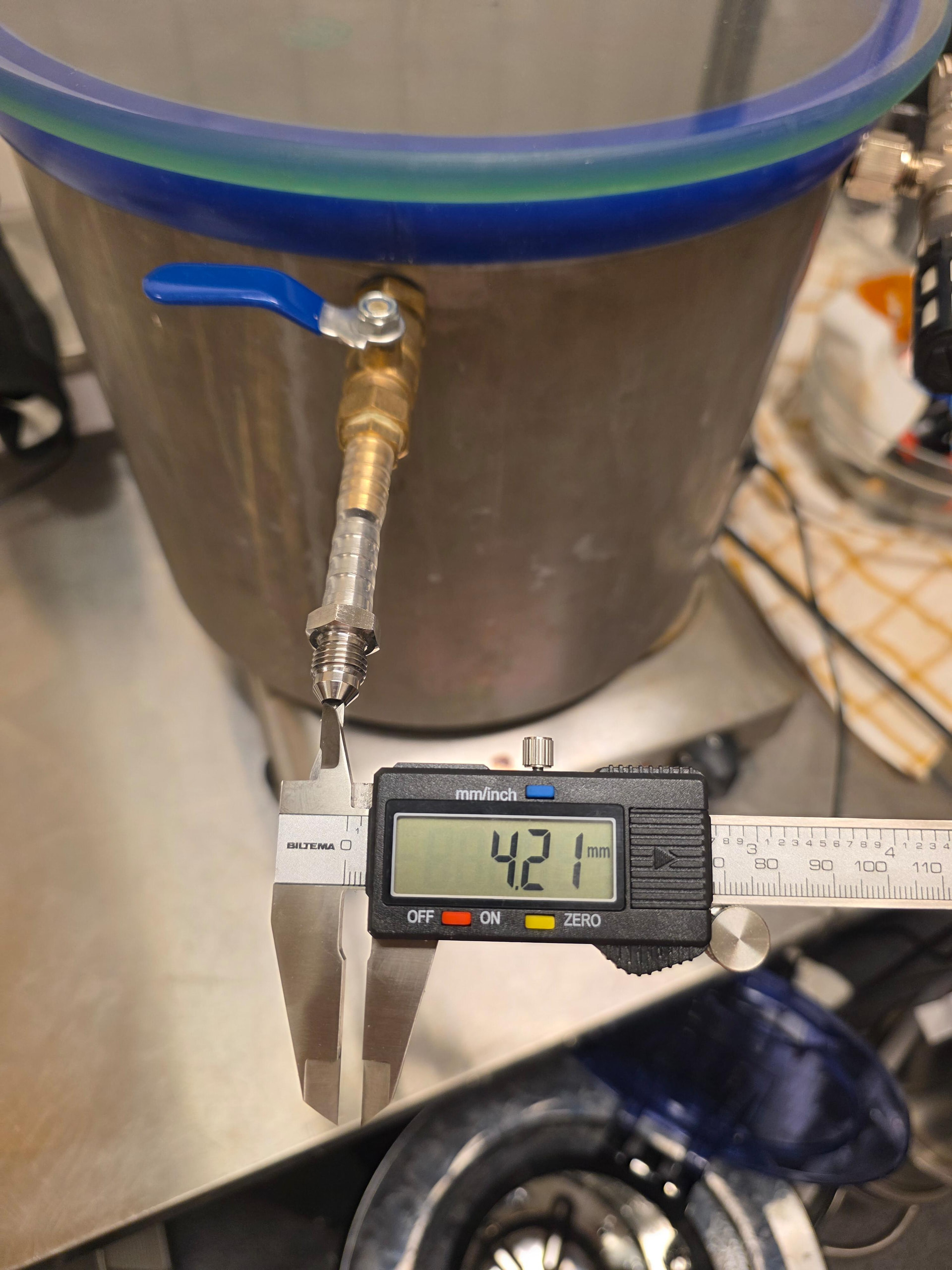
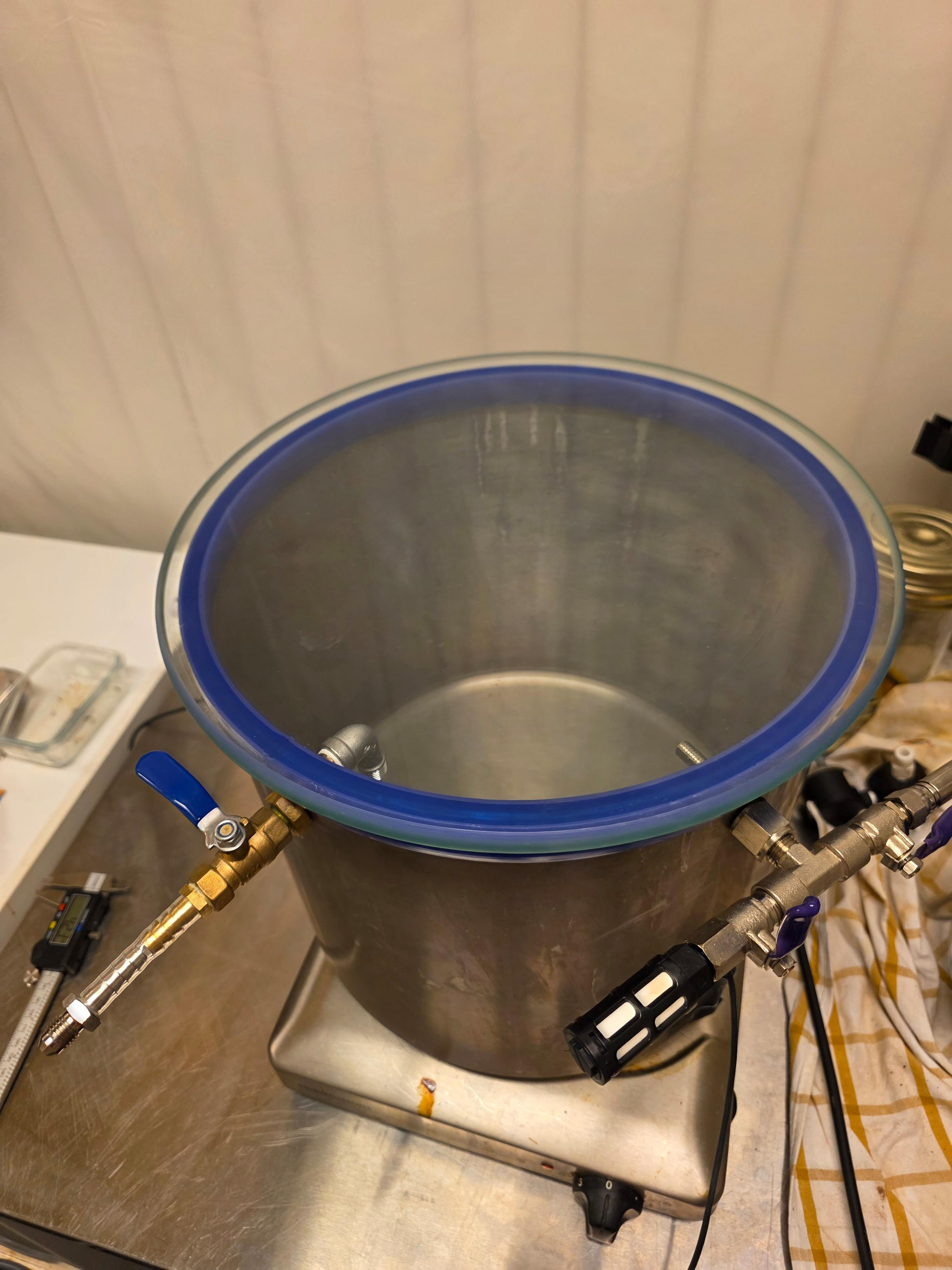
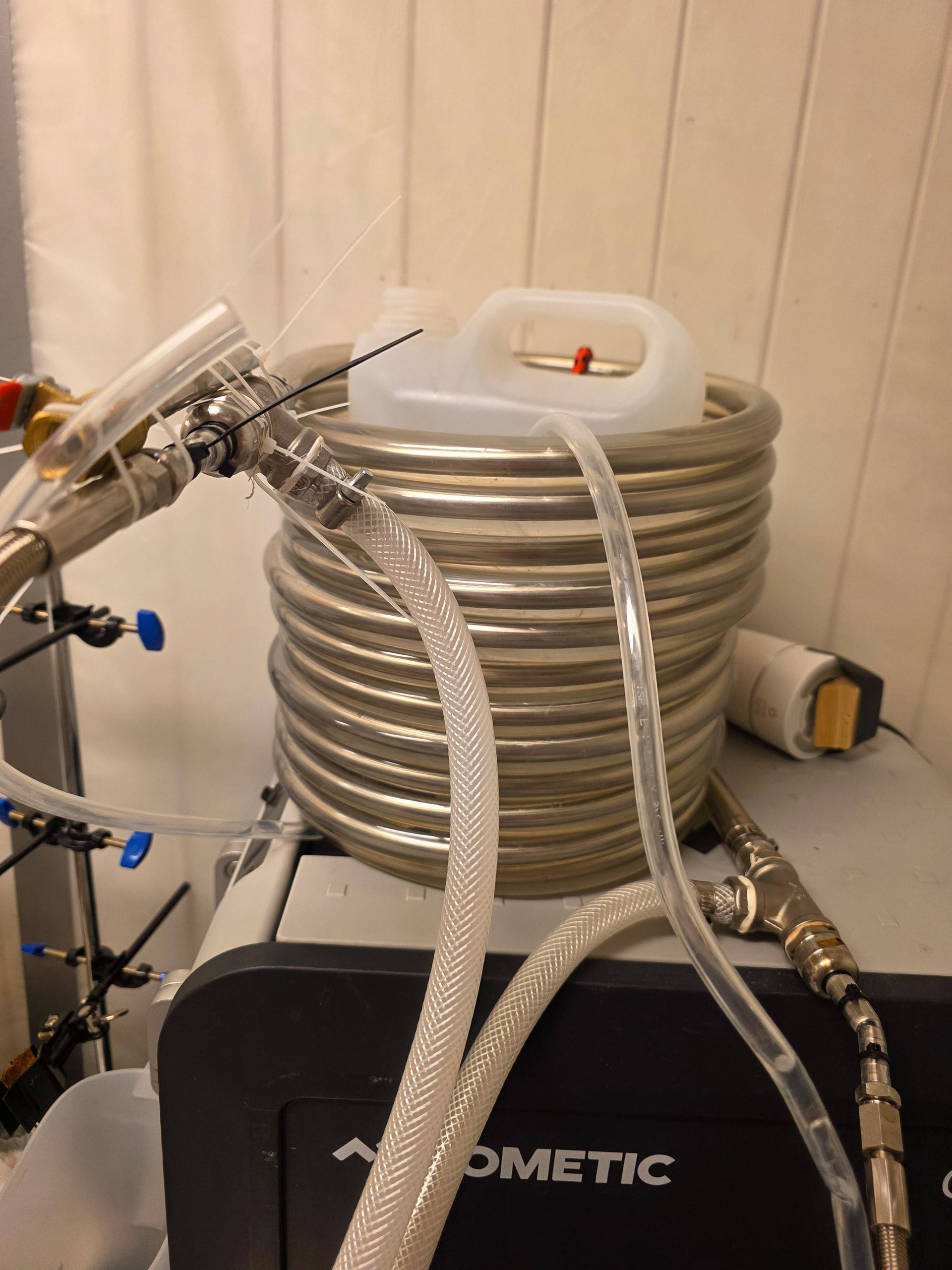
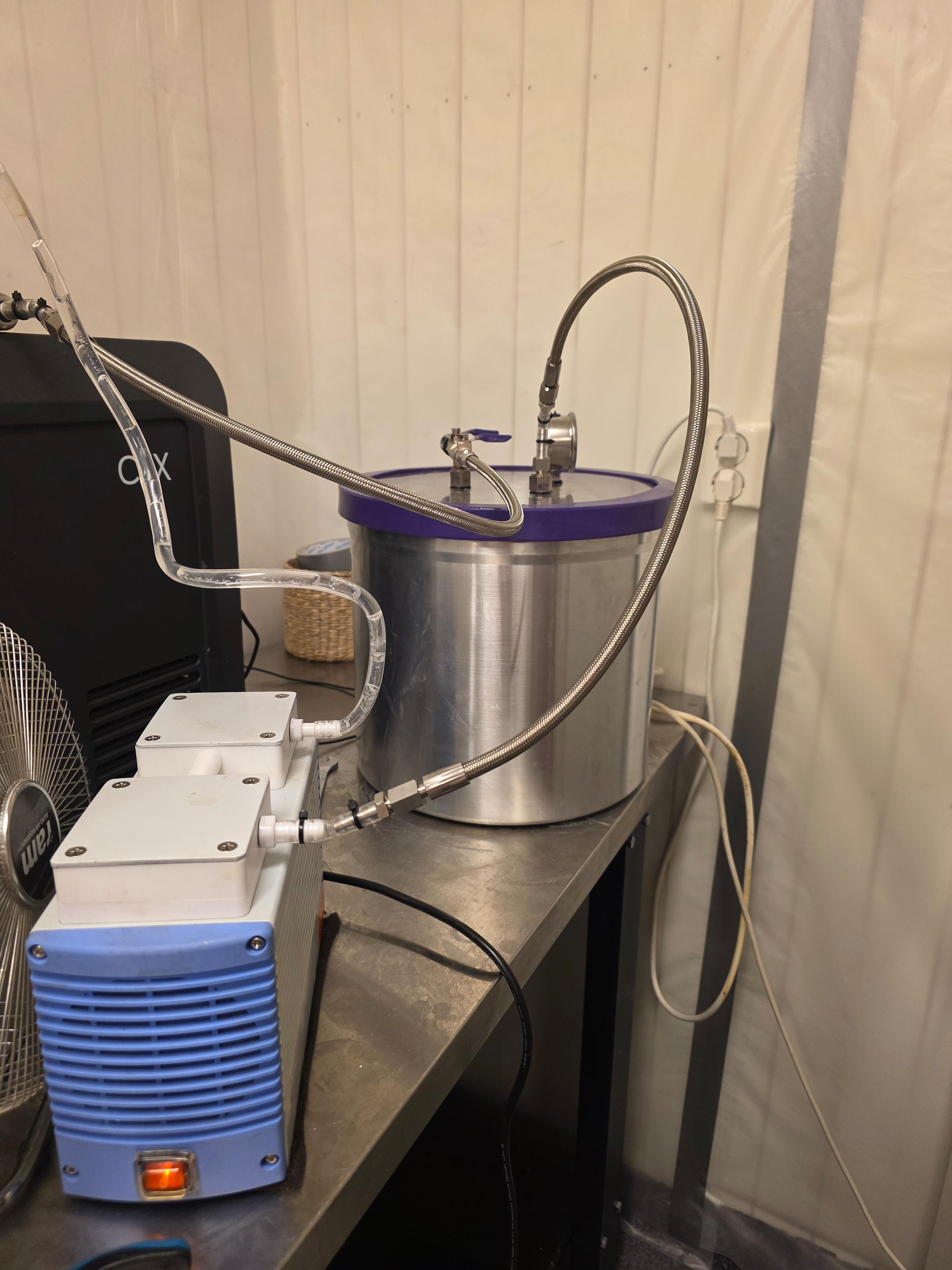
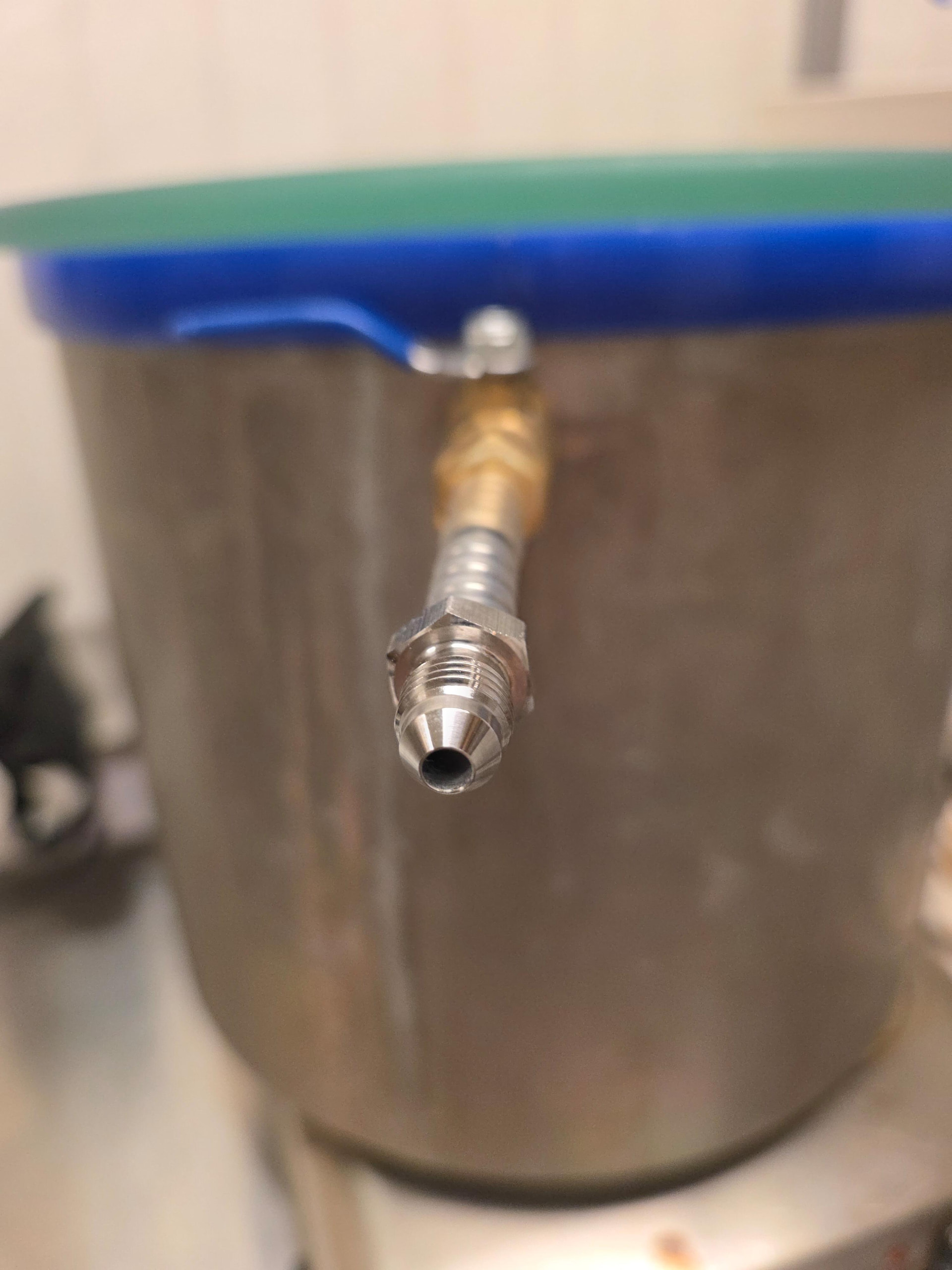
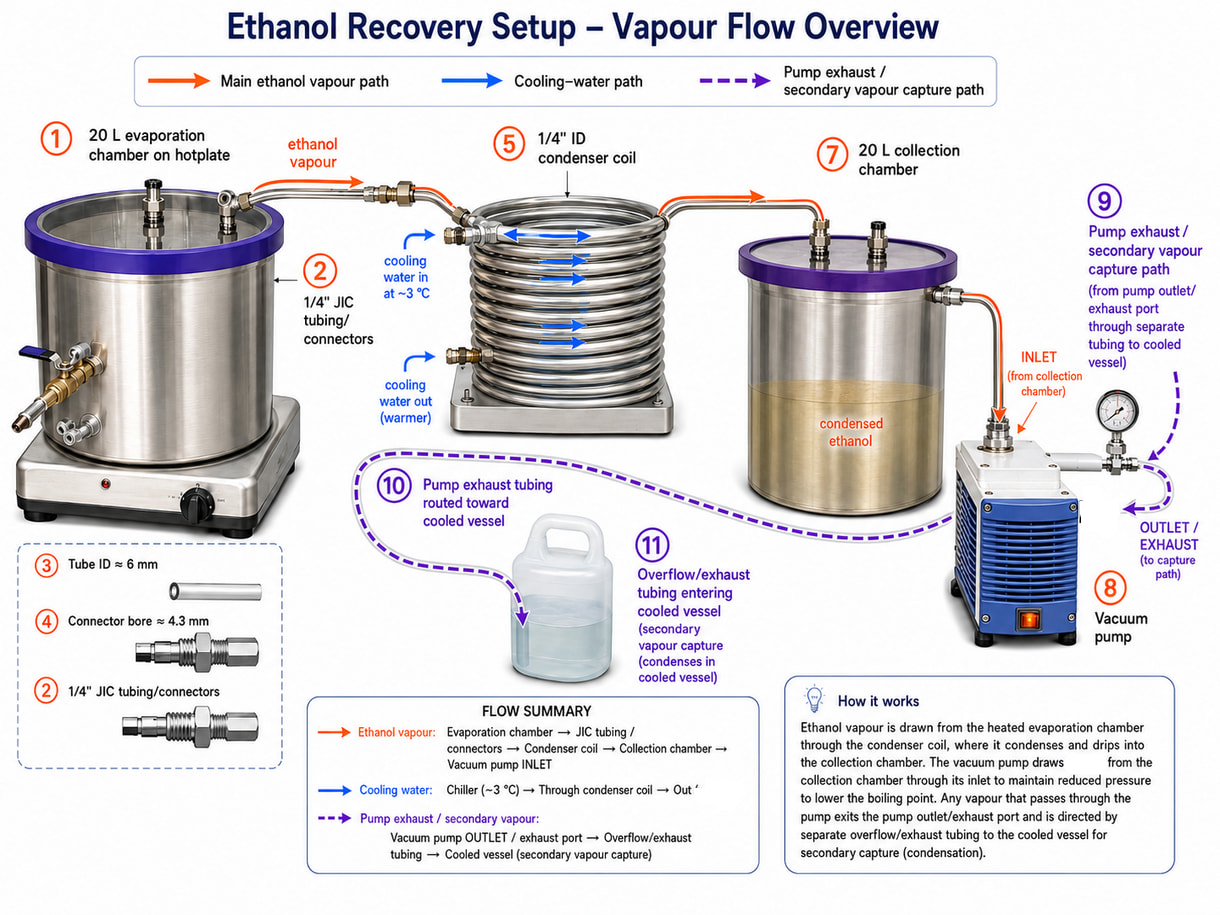
20 L evaporation chamber on hotplate → 1/4" JIC tubing/connectors (6mm ID, 4.3mm connector bore) → 1/4" ID condenser coil → 20 L collection chamber → vacuum pump
Pump: dual-stage diaphragm pump, 18 L/min / 0.64 CFM, rated ultimate pressure 10 mbar
Tubing/fittings: nominal 1/4", but some JIC connector bores appear to be around ~4.3 mm ID
Please excuse the somewhat rudimentary (and messy) setup:
Pump isolated: ~-30 inHg almost instantly
Collection vessel isolated: ~-27.25 inHg after 30–60 min
Full system dry: ~-25 inHg after 30–60 min
Full system wet / evaporating ethanol: ~-24.5 inHg
My question:
Does the full system only reaching ~-25 inHg when dry point mainly toward leaks in the assembled system?
My instinct is that I should leak-test the full system first before upgrading the pump or vapour path. The likely leak points would be valves, gaskets, manifold connections, or fittings.
I also suspect the 1/4" vapour path and ~4.3 mm connector bores may be restrictive for this scale, but I’m not sure if that should be addressed before or after leak testing.
Would you prioritise:
leak testing the full assembled system,
upgrading the 1/4" vapour path to 3/8" or 1/2",
upgrading the pump,
or upgrading the vapor path and vacuum pump
any other suggestions are warmly welcome
I’m trying to avoid buying a larger pump if the real issue is simply leaks or restrictive plumbing.
The fastest thing you can do to upgrade your speeds is going to be replace your hotplate with one that can spin a magnetic stirrer.
That you aren’t complaining about bumping/overboiling using your current setup at 50-55*C suggests to me that you have some combination of leaks and a plumbing issue. The thin ID hoses/connectors isn’t helping your speed but I don’t think it’s a problem with your condenser coil diameter
Is the blue/white thing with the red switch your vacuum pump? You need to make a drawing of how your vapor path is flowing, because from what it looks like from your pictures you might be drawing vacuum on your chamber independent of your condensing coil.
What’s bubbling up in the clear line off (what appears to be) your vac pump?
What temp is the water flowing thru your condensing coil, and how fast that cooling water flowing?
I have considered a hotplate with a stirrer - but there is somehing stopping me.
The chamber is aluminium, and I have heard that using a stirrer in these chambers will cause microscopic fragments of aluminium to scrape off (and/or fragments of the stir-bar) that will end up in the solution, as these magnetic stirrers are designed for glass surfaces.
But yes, I have been looking at some MSE Pro Hotplates with Stirrer (1000-1400w) for this purpose.
I am experiencing quite a substantial amount of bumping, but it has not been a problem, the bumps don’t escape the evaporation chamber. I was also considering upgrading the evaporation chamber to a much larger size (20gal) allowing me a lot more headspace when it comes to bumping, if I fill it half full.
Yes the blue/white thing with the red switch is my vacuum pump. I will make a drawing of my vapour path asap.
The “bubbling” coming from the vacuum pump is basically pump exhaust / secondary vapour capture path. There is a slight amount of ethanol that escapes the collection chamber and vacuum pump (close to 1-5%), which I feed through tubing that is cooled again, before entering a final cooled container.
The water temp is around 3c (37f), not sure about the exact flowrate, but the water temp after the condenser is at most 2c warmer, so there is neglible loss of water temperature during condensing.
and suggests you’re approaching the corrrect range at
are you recovering slower, or are you actually recovering LESS?
indicates that your condenser not cold enough or that your vac too deep.
are you keeping your condensing container at -20C? (cause it will evaporate if you don’t chill it.
cold should go in at the bottom of your coil (counter flow to vapor).
I would start by solving your vacuum leaks. I would also drop that condenser in a bucket of ice to lower temp some more (your collection too). if you add salt you can get it even colder.
You will experience far faster recoveries with a rotovap. Granted you would have to refill a 2L boiling flask probably 10 times at the scale you are working with, so it would be a lot more hands on labour. The high surface area thin film that is produced by the rotation of a rotovap is just easier to heat and vaporize. Not sure if that is in budget but something to consider. I have done a lot of ethanol rotovapping at 40 C in a rotovap to preserve THCA, recovering closer to 5-8 L/hour.
Edit: If not, I agree with greenbuggy - switch to a mag stirrer
I think the picture you’re referring to where it looks like they are drawing vacuum on their chamber was taken during a pressure test of the chamber alone, not during solvent recovery (I hope!)