It seems pretty evident at this point that the main cause of the issue is the gas, and that the spread of this issue probably correlates to old supply being used up and gradually a complete shift to more recent production batches. The cause also is likely not a main component but some kind of catalytic impurity. It was shown in the other thread that H2O2 CAN cause this effect, but that doesn’t mean that it is the primary cause on all incidents, or rule out gas as the cause. It does point towards the idea that the contaminant in the gas could be something like H2O2.
What exactly can even be done about this? If there’s 1,000,000 gallons of “bad gas” out there, you’re going to have a hard time avoiding it. The solution must be to implement some kind of cleaning method to use on the gas before ever extracting with it, if such a thing be possible…
Does anyone currently have a verified batch of “good gas” that they can make available for analysis?
oh ya a bunch of our going through this. there are a few competing theories as to what it could. Propylene, benzene in the hydrocarbons and h202 contamination. i see no detectable amounts of benzene in any of my COfA’s I did see a doubling of propylene when this issue started but we are talking about 7 ppm to 14 ppm. so im testing that theory currently. im trying a new source of gas. i just received some COfA’s which were nearly identical to our current supplier in every way, including Propylene, which I find perplexing as they had never heard of the issue as of it yet. The new potential supplier made a comment on the process which got me thinking, could the “contaminant” be introduced during the cleaning of the empty cans? this I think is also possible.
i just got a CofA from them a couple of days ago but it looks very suspect to me. it looks like it was scanned over a gas innovation CofA. the certification signature is the same from both companies as well. Cannagas is showing less than 1 PPM of propylene but the Gas innovation CofA is showing 10ppm of propylene while our current supplier, who turns out gets it from Gas Innovations has 14 PPM in just the propane fraction. I’m a little perplexed. no detectable benzene on any of the Cofa’s either. I’m having the gas tested by a third party. i was thinking maybe the contamination, whatever it is is coming from the cleaning of the tanks maybe? idk need to figure this shit out pronto though
Yeah, i know! QA is not a fan, as everything is now a deviation from our SOP. i have some gas coming from other suppliers right now. I’ll share results as to how it works out. the CofA’s from all suppliers I have contacted don’t seem to have to many differences tbh. definitely going to be hard to pinpoint the cause.
If I was to take a wild guess, i think the contaminant is something not being shown on the COAs at all, probably a non-hydrocarbon. Something introduced in cleaning at some stage is definite possibility.
Just sayin….it is something that just started happening, what, a year ago? Before that the issue hadn’t occurred so unless it’s a new way of cleaning gas that everyone uses now and didn’t use before, I don’t think that’s it
So it is obviously the source of the gas…and I don’t know enough about hydrocarbon fractioning and shit to even begin to guess, I just know it ain’t that(or people starting to use h2o2…)
My two top guesses are the change in crude input material at the refinery. Natural gas vs. crude oil. This change definitely happened around the same time the issue started showing up.
Or number two, a change in a catalyst used in the refining process necessitated by supply chain issues.
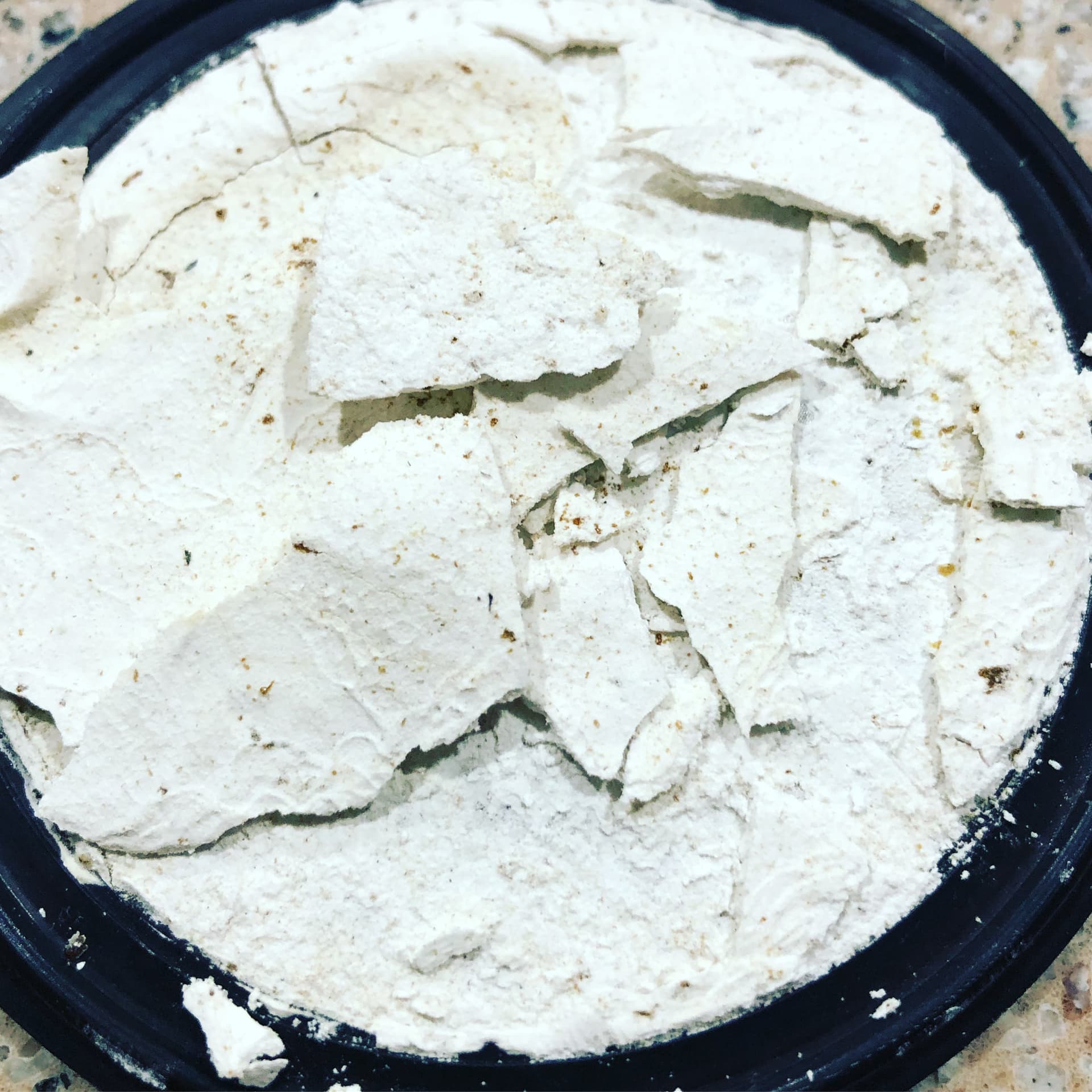
Spot on @Waxplug1 . My theory is that isobutane is being trapped in the lattice and it finds its way out eventually forming a chalk. I theorize this isobutane inclusion is happening with a solvent blend of n butane and iso. This may also explain why I don’t see any of the “medusa” polymorph (bar shaped diamonds) as I have not been running any n butane. I will update if I get any of those shapes since I just grabbed some n butane.
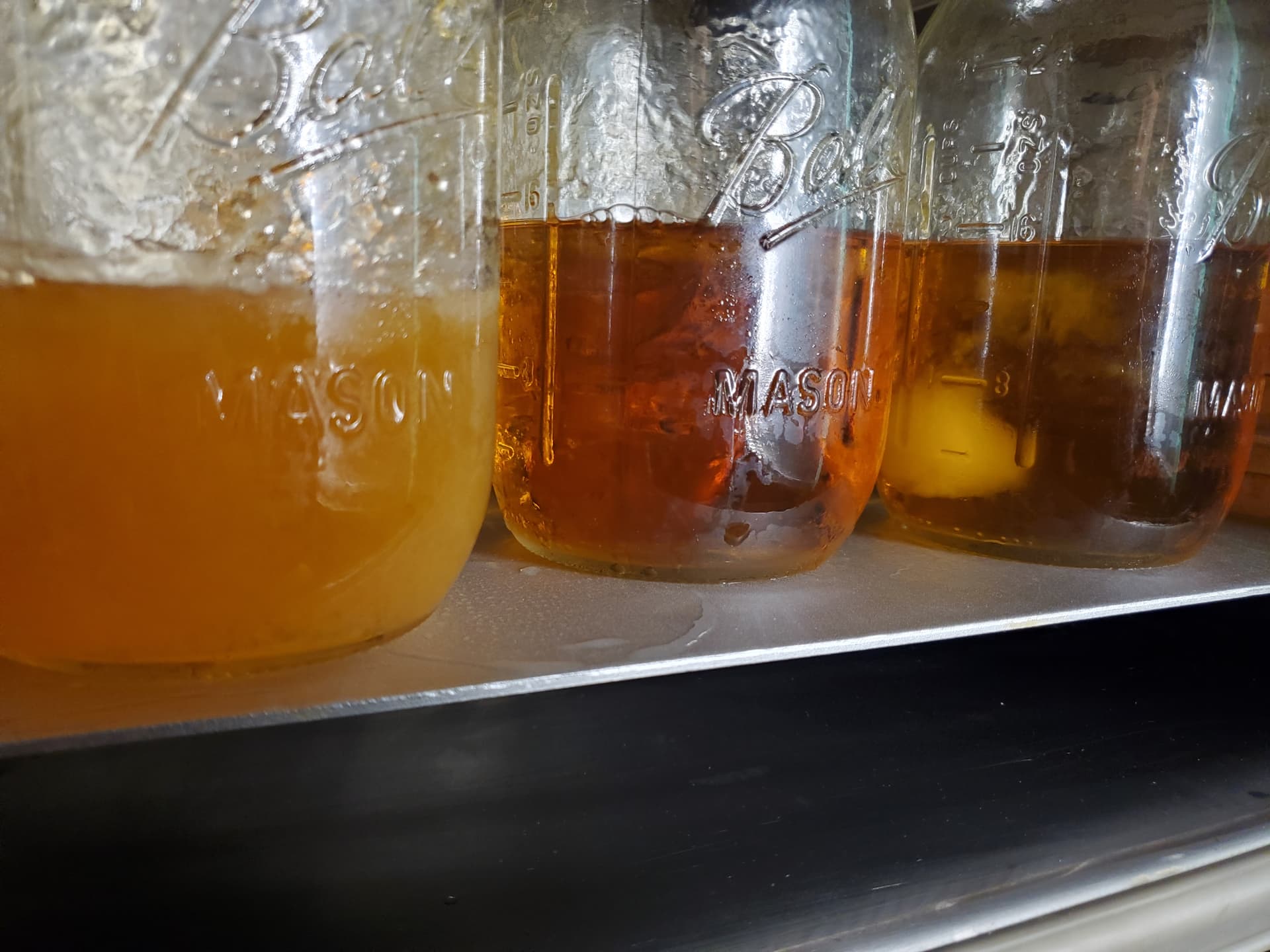
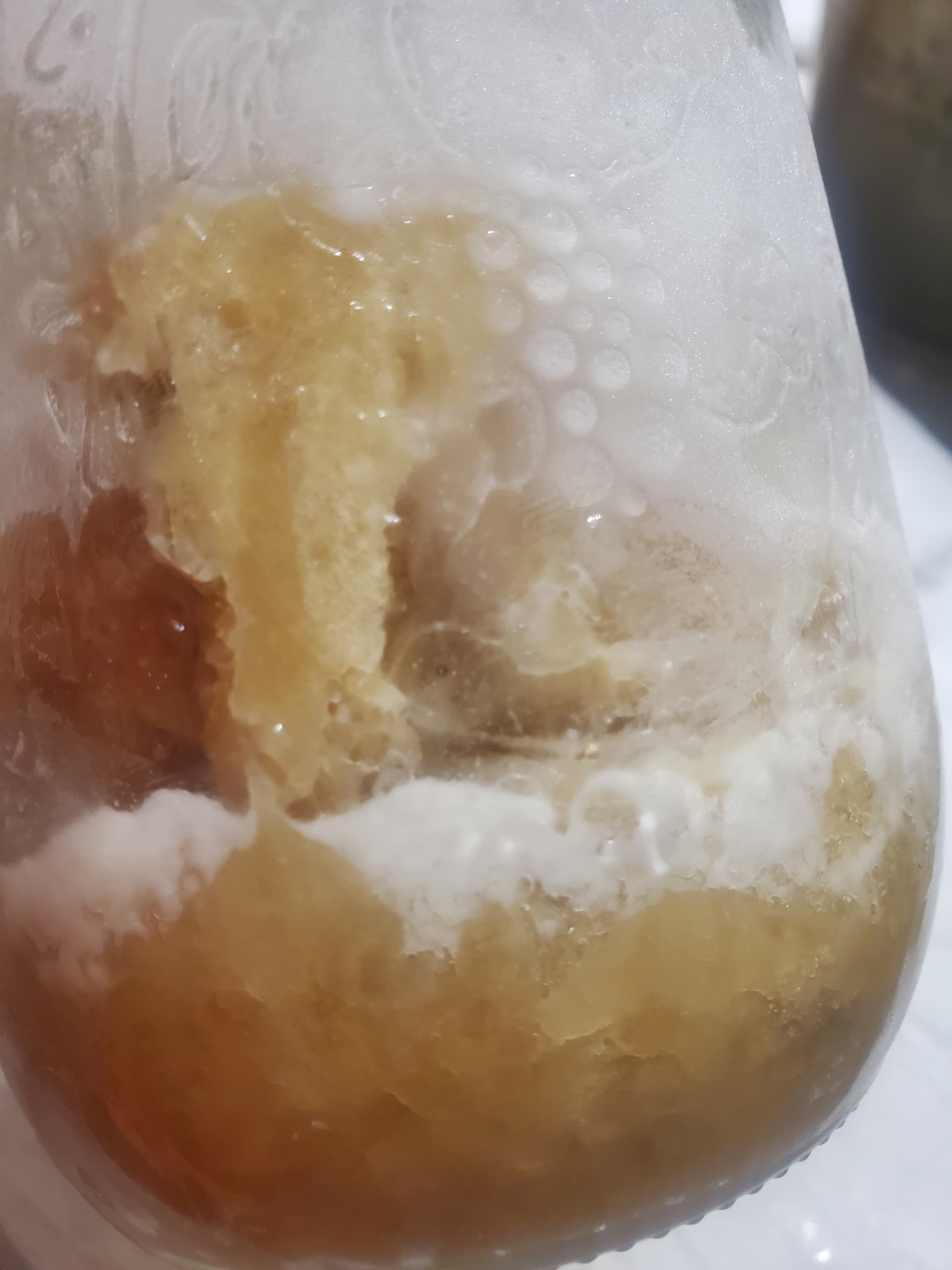
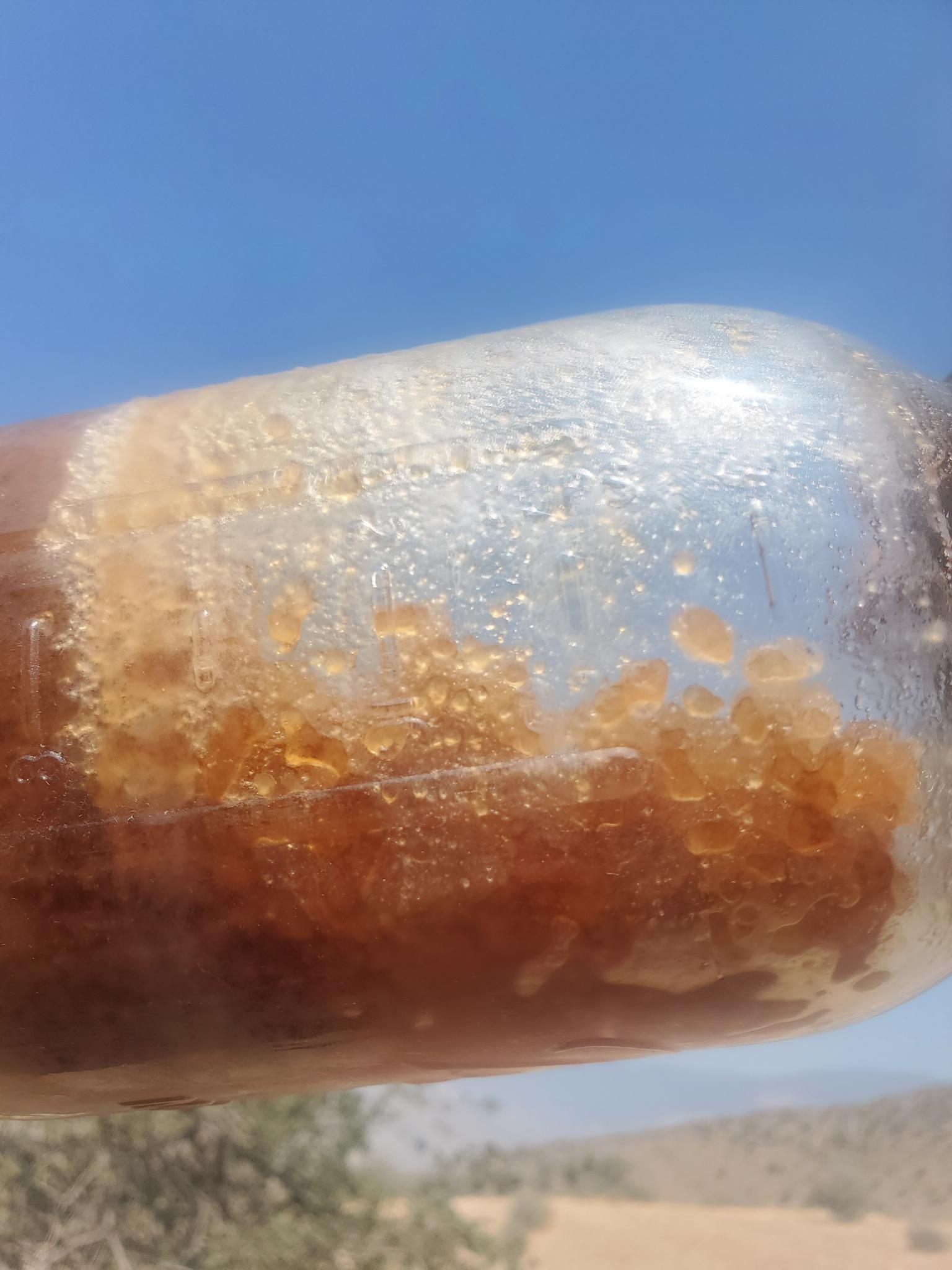
Take a look at some of my armchair experiments below.
Jar on the left is offgassing and crashing out. I placed this jar in the warm oven last. Jar in the middle is sealed and has been in the warm oven for long enough to dissolve the clouds of precipitation. Jar on the right is sealed and is in the process of redissolving the precipitation but has been in the warm oven for less time. If these jars stayed sealed they would definitely blow the lid off.
Next here’s a jar of high purity extract being redissolved in isobutane. You can’t seal the jar for too long so I had been forced to attempt redissolving with the lid sealed but then cracked open a smidgen to reduce pressure. As the gas evaporates the temp drops and the solubility becomes fairly poor causing a snowglobe of chalky thca. @moronnabis had a great suggestion as to move this process into a stainless steel column, evaporate to precipitate and then pressurize with nitrogen to push those solids to the bottom. Would be a great quick crash thca tek.
How many times do I have to tell you I used to run 100% iso? Made diamonds for months with no issues. Would cycle cold and heat on them and they would come out great. I’ve poasted the pics of them last time.
@johnbigoilco I can make diamonds in isobutane too famalam. There are a couple variables that will dictate my success in forming diamonds, but yes it is possible.
You still got that 10k to put on the table if I teach u a thing or 2? Or was that just bait for
I dont do spec work, but if you want to put a down payment down I can come whisper in your ear “isobutane”
Here’s some isobutane diamonds that cycled on heat and cold over a week or 2. Usually with dry material I’m not able to get such nice diamonds but since these are fresh frozen, the terps acted as the main solvent in the reX