Hello can you send picture of this please ?
Of the probe between mantel and flask ?
I run it with some aluminium foil wrapped around the probe tip
And insulating the top rim with some foil as well
Probe should fit about 5 cm in between
1 Like
I have 4 heating mantles with pt100 probes. Only on one of them can I slide the probe 5 cm into the heating mantle. On the others it requires raising the boiling flask from the bottom of the heating mantle.
you’d be better off measuring the liquid temp with a thermowell
3 Likes
Hmm that sucks what size mantel or flask the larger they are the easier it go s
As for @pdxcanna thermowell recommendation that is indeed the best solution and most accurate but to keep the thermowell clean silicon oil is needed wich I don t always have available and using sunflower oil or avocado oil works but it gets dirty quick from oil scorching and well doen t look great and they are a bitch to clean
1 Like
In my humble opinion, putting a thermocouple between the mantle and the boiling flask for the purpose of distilling THC or CBD is a terrible idea. I same as the other people who advised you, think you should be using a thermowell to measure the temperature of the liquids inside of your boiling flask will work much better for you. And yes you should put some small amount of oil inside of your thermowell but just enough to dip the part of your thermocouple that is actually taking the measurement into for better thermal connectivity and better more accurate reading. Some of my distillation heads has thermowells/key on topand I use hydraulic oil since I always have some around and if I don’t then I’ll use just a small bit of pump oil.
3 Likes
Thank you all for your response. I will soon be having thermowells made for each of the boiling flasks I use. I currently use standard glass thermometer adapters. I received a PTFE adapter for the thermometer. What do you think of the PTFE adapters?
I only have small sizes. 250, 500, 1000, 2000ml
1 Like
or just measure your vapor temp and call it a day
the liquid temp doesnt really matter when you can see vapor temp and vacuum
running the probe in between the boiling flask and mantle helps prevent over shooting, I have a glascol mantle with a top mantle and i get mine in there no problem so people saying its a terrible idea have obviously never tried it
1 Like
I agree. I’ve never seen more than a 2 degree C difference when using probes inside/outside the boiling flask. really just a matter of convenience unless you have reactions going on inside the flask that need closely monitored.
1 Like
Do you mean a PTFE adapter that allows you to place the probe inside the boiling flask? If so, they’ve always worked well for me.
Something like this I’m guessing?
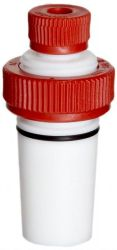
2 Likes
Yes, that’s exactly it. Thanks for your comment.
2 Likes
No problem. That should solve your issue! 
1 Like
I too am working with a glascol mantle. And I got a J-Kem controller on it. While I’m not saying it’s impossible to run with a thermocouple between the boiling flask and the mantle, I am most definitely saying it is not your best solution. I mean you don’t even have to have a temperature probe controlling the mantle, you can just slowly (very slowly) ramp up the temperature and keep an eye on head vapor temperature (preferably you will also keep an eye on liquid temperature inside your boiling flask but for this arguments sake, it’s not completely and wholly necessary)… But is it the best and smartest way to do it with what is available nowadays??? Hell No!!!
1 Like
Thats your opinion and you know what they say about opinions right?!
I know more people who do it the way i do then people who use a thermowell
Whats nice about running the probe outside too is that you never have to worry about running the system dry either, if nothing is touching the probe or well youll keep heating until either it reaches temp somehow or maxes out the mantle (ive had this happen when i use to run the probe inside)
Plus when i clean i pour ethanol into the system and distill it, never have to worry about it running low and doing what i described above
2 Likes
I absolutely agree with you. We see eye to eye on this one.
At least from what I know of you, I have great respect for your capabilities and knowledge but the amount of people you know that use their thermocouple that way has no bearing on the validity. I think it’s been around 35 years or so since I first started synthesizing and distilling psychoactive compounds and the equipment that was available to me back then pales in comparison to the equipment that that is available to every Tom, Dick and Harry nowadays, now having said that, I would never decide to retrograde and go backwards unless I had no choice, and what you are suggesting is a step backwards. @WolfeXtracts tells you he never seen more than two degrees difference which I would say it’s nice but it’s not as nice as knowing the actual temperature in the boiling flask. While ramping up the temperature you will never have the correct temperature of liquids inside of your boiling flask which could cause you a problem. Running the system really low or as you call it dry (not touching the temperature probe / sensor/thermowell) it’s not so much of a problem as you say. What I mean is are you really worried about that last gram inside your flask? Is it really that important to know the exact temperature of the last gram or so of liquids you’ve been watching finishing getting distilled? Are you not taking head temperatures and know your vapor temperature going into your condenser? Especially when you are expecting a possible fraction change are you not watching the head temperature? And your temperature probe inside your flask will give you the vapor temperature inside your flask once you run as you say “dry” anyways… Now if you’re worried about running so low while leaving it unattended to where it will burn off undesired compounds… Don’t leave your boiling flask unattended toward the end of the run (no matter where you are taking temperature at). Are you seriously worried about the last few milliliters of alcohol when you distilling it? But regardless when distilling alcohol you should be more concerned about head temperature then boiling flask temperature… Although to be clear I have clearly stated -
As I started this post by agreeing and reiterating your statement about “opinions” I will close by saying this is just my opinion but it’s been working for me for somewhere around 35 years now and so I tend to believe it’s a good one.
Now having said all of that, I want to be clear that none of It is meant as a dig at you, as I have respect for you, your knowledge and capabilities.
I’m of two minds. I typically prefer a thermowell because I don’t trust my techs to not break things and that seems like a good way to break a boiling flask. However, I have persistent trouble with isomerization to d8 and d10 and have done everything I can to lower temperature. Having the thermowell under the flask is good for strictly limiting the maximum temperature and apparently thermal runaway which I did not think about.
I also have a Glas-col J-chem setup (5L); curious about the temperature delta, I measured this a week ago.
The mantle-glass interface temperature was measured with a naked thermocouple about 2-3 inches up from the center since there’s a cold spot in there to protect the motor. The mantle was set at 174C for my main fraction and was reading 190-191C underneath the flask. The run was 1000mL total so the point at which I measured this, the thermocouple was not in the liquid, but there was liquid splashing the thermowell.
1 Like
what kind of pump do you use to pump the 150c liquid for the condenser?
Something like this
2 Likes