You kind of answered your own question.
Dronabinol is often defined as a “synthetic stereoisomer of THC” in scholarly journals. They wouldn’t call it a stereoisomer if it was the same as naturally derived D9. That’s enough information for me.
We know that there are two stereo centers, thus four stereoisomers. Whether natural D9 vs synthetic are enantiomers, diastereomers, etc. I couldn’t tell you, nor do I care. I don’t consume synthetic D9 and barely smoke the real stuff.
My initial response was to answer the persons question that started the thread. I wasn’t really looking for a debate and/or to get a bunch of requests to prove something. I promise you, with that definition, you can find the deeper scientific answer.
I personally don’t have the the time to dig through dozens of scholarly journals, but if you do, please share results.
I apologize if my response was harsh. I didn’t even start reading the rest of the thread until right now. Been far too busy for my liking.
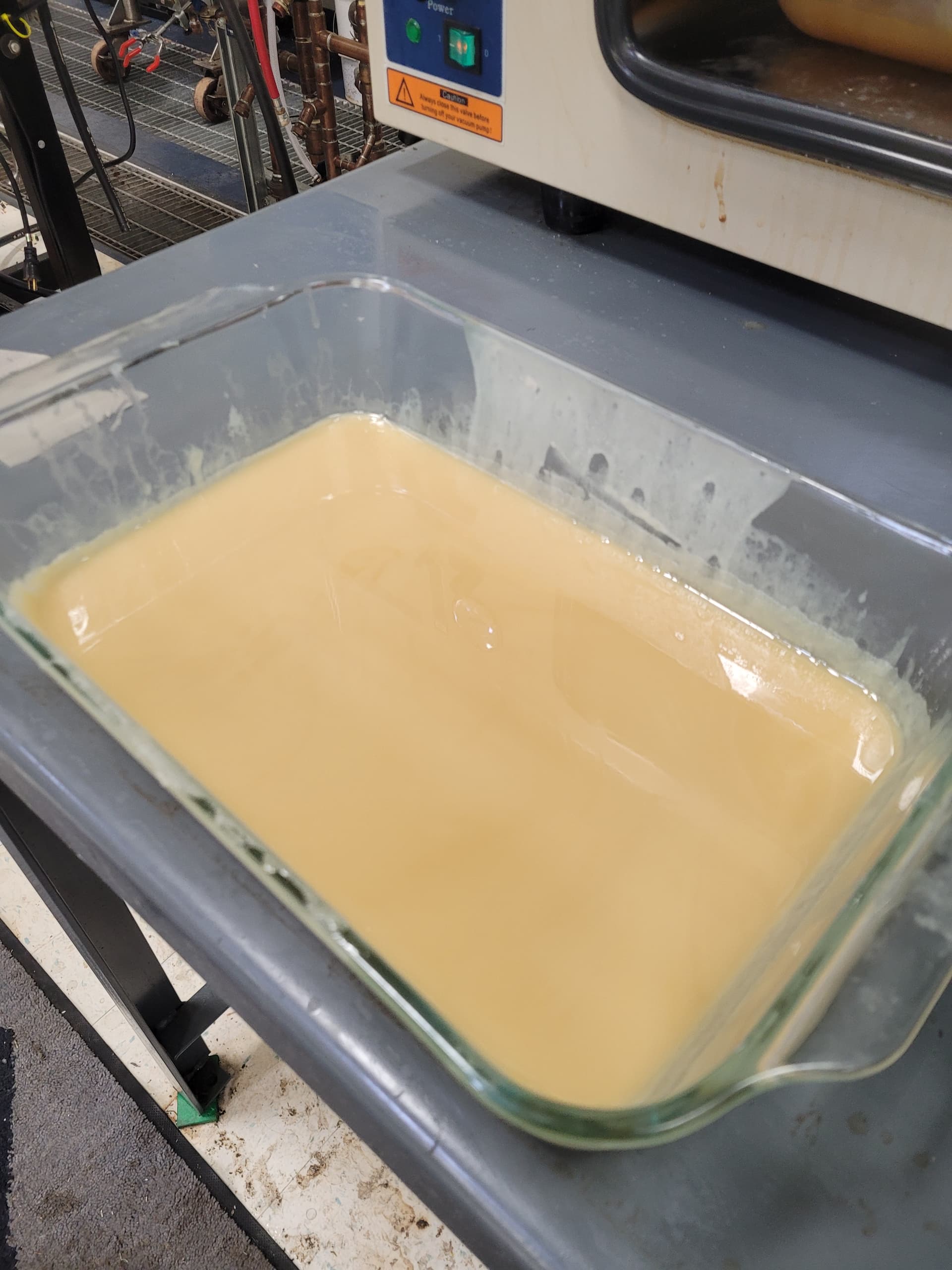
We’re still finishing up recovery and scrubbing from our test run, but it looks like our pentane yield will be as good or slightly better than the butane system with slightly lower quality.
Cbda is crashing, so thca should too.
1 Like
Add a drop of acid to your solvent hcl /iso in my case will speed up the crash
4 Likes
To clarify… “not real delta 9 THC” means WHAT to you @GJLConsulting?
my (continued) reading (because wtf gives up) suggests “real D9 is a scalemic mixture” and dronabinol is just a single isomer…
Substitute “real” for “natural”, and you’re closer…
The most potent stereoisomer occurs naturally as Δ9-THC where the two chiral centers at C-6a and C-10a are in the trans configuration as the (−)-trans-isomer, and this stereoisomer is also known as dronobinol.
US20200102283A1 - Methods for Obtaining Purified Cannabis Extracts and THCA Crystals - Google Patents
8 Likes
Thanks for the extra research. So there’s you answer.
I think I’ll personally continue to use synthetic or converted. It’s still not “real” as real to me is plant derived.