TLDR: Don’t do it, please. <3
So I’m sitting over here with my quality hat on - and I know people do pesticide remediation, I’ve even done pesticide remediation.
But this stuff is not safe for humans. And the byproducts of the UV degradation (N-methoxyethylpyrrole-2-phenyl-3-cyano-4-Bromo-5-difluoromethylinum cation, N-methyl ethyl ether (2-trifluoromethyle-5-pyrrolium cation), 2(P-chlorophenyl)-3-carbonitrile pyrrolium cation and 2 (P-chlorophenyl)-3-cyano-4-oxo-5-trifluoromethyl pyrrolidine) are also nasty.
So you might “pass” a test for Chlorfenapyr - but what else are you then pushing into your customers?
Chlorfenapyr isn’t designed to be used on plants that will be consumed by humans OR animals.
So in this case - this is a bad idea because you won’t be removing the nasty from your product, you’ll be breaking it down into other nasties.
Gonna have to find a way to remove it without breaking it down into other terrible substances. I think you plan will work (there’s good evidence that it will degrade under UV) but I don’t think that will get you to a safe product for consumers.
If you mess this up - but still manage to pass testing… people could die.  And if someone was ingesting your product over a longer period of time they could build this pesticide and its degradants up in their bodies - leading to long term exposure deaths.
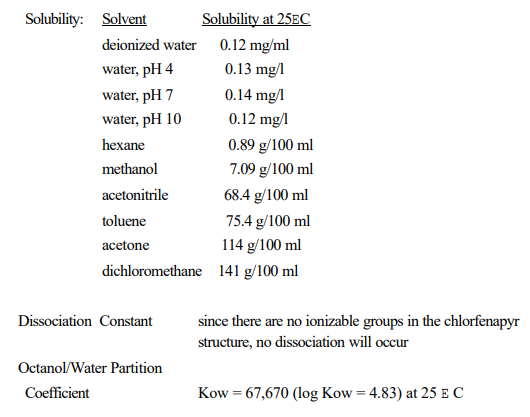
It seems to me that a liquid-liquid extraction and/or chromatography would be the safer option for the consumer. EPA has published the solubility information for this pesticide - the log Kow seems to be different enough to me that separation via some method should be possible.
There is a patent listed online for using Bentonite for chlorfenapyr removal. I haven’t ever sprayed this on my plants or at the plants of any of the companies I have worked for, so I haven’t tried this method. Maybe you could ask those guys - if this is actually effective and see if they have a specific mix/powder you can buy to do this work.